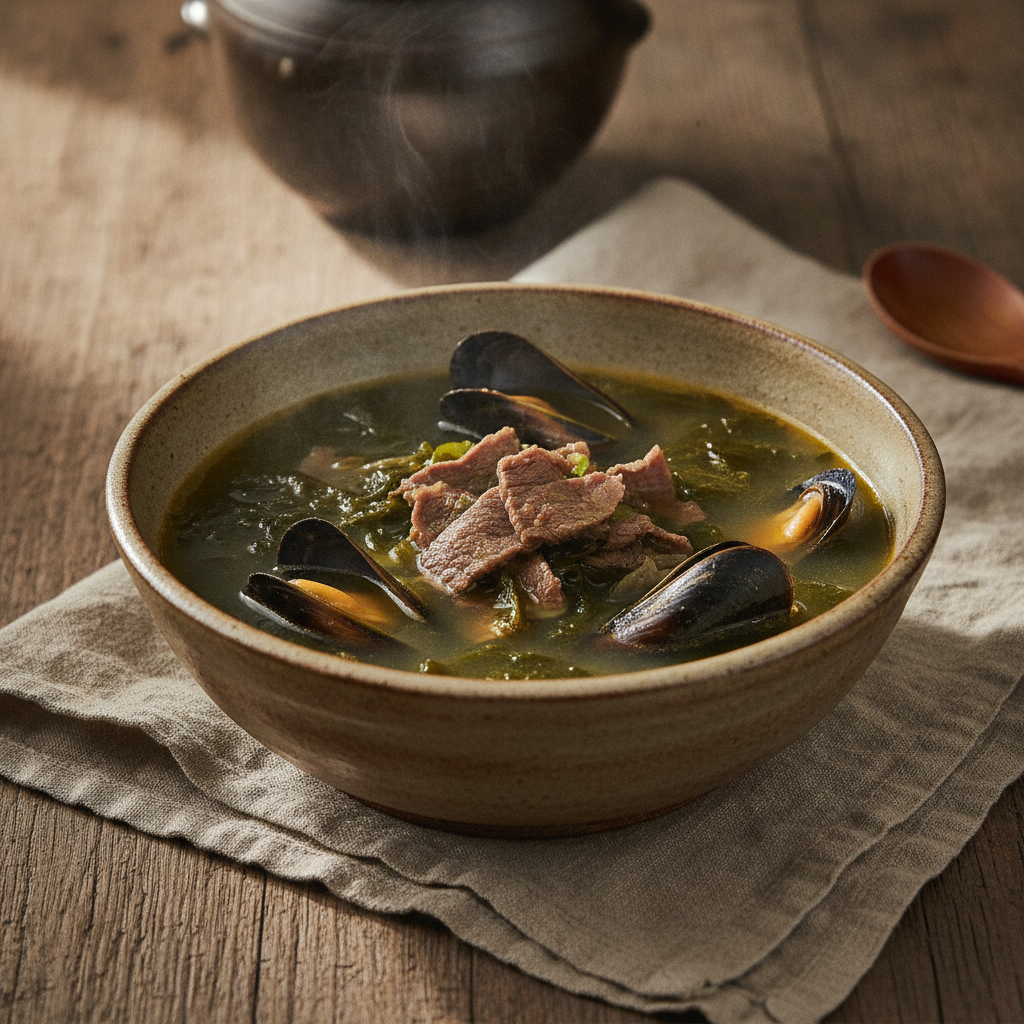
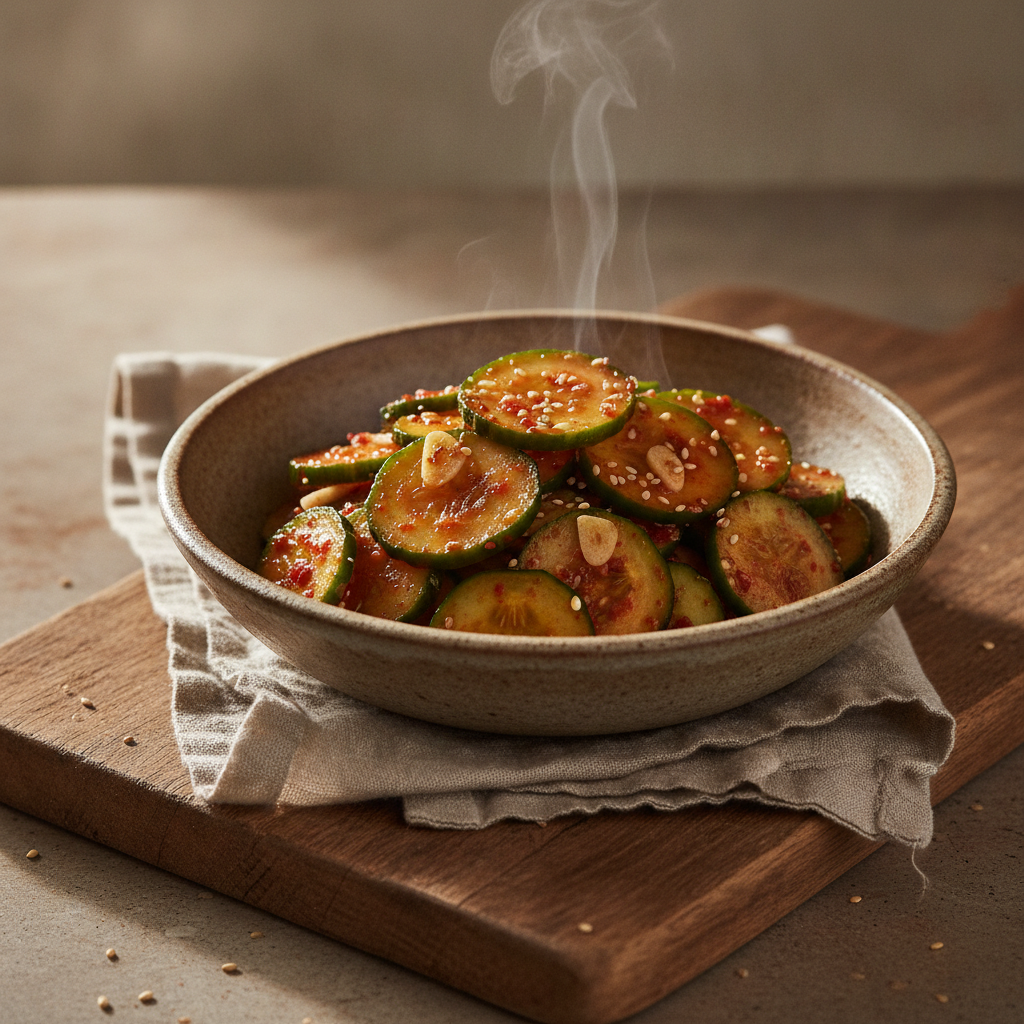
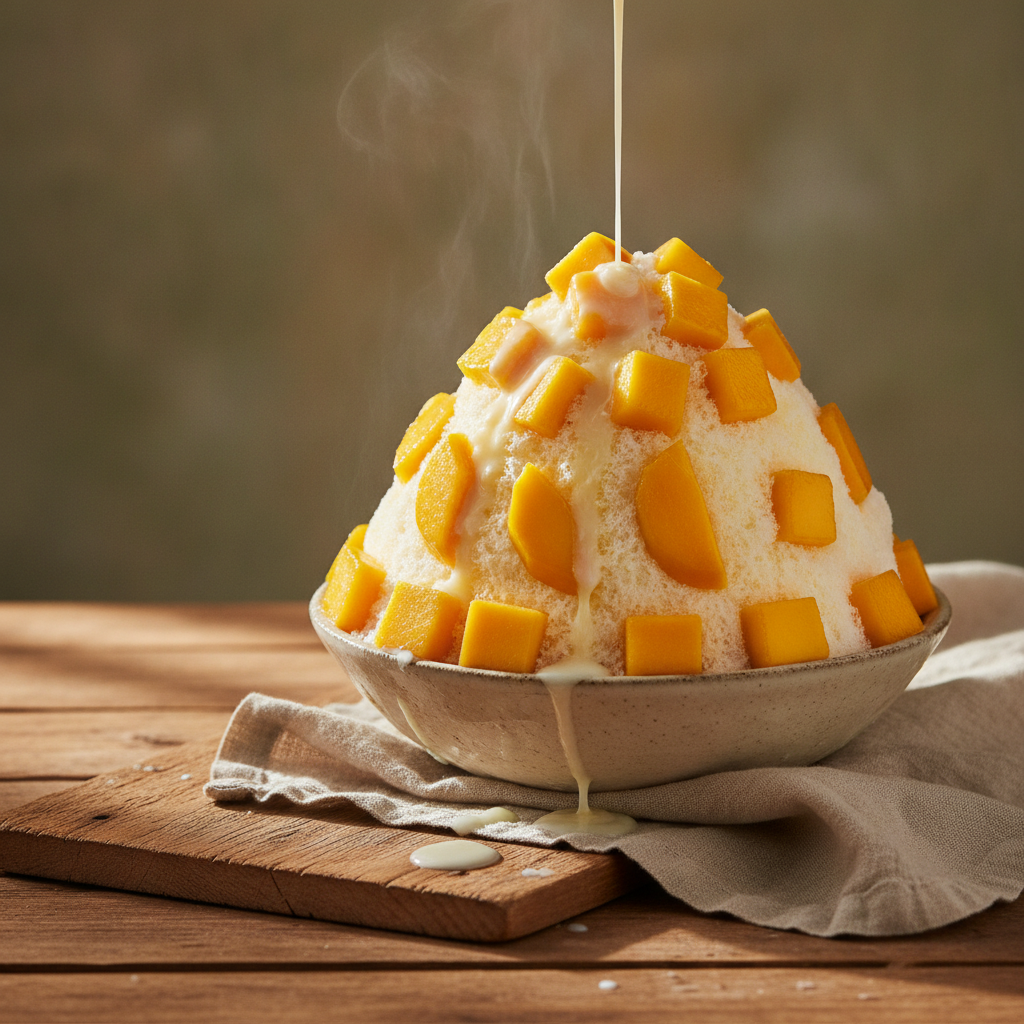
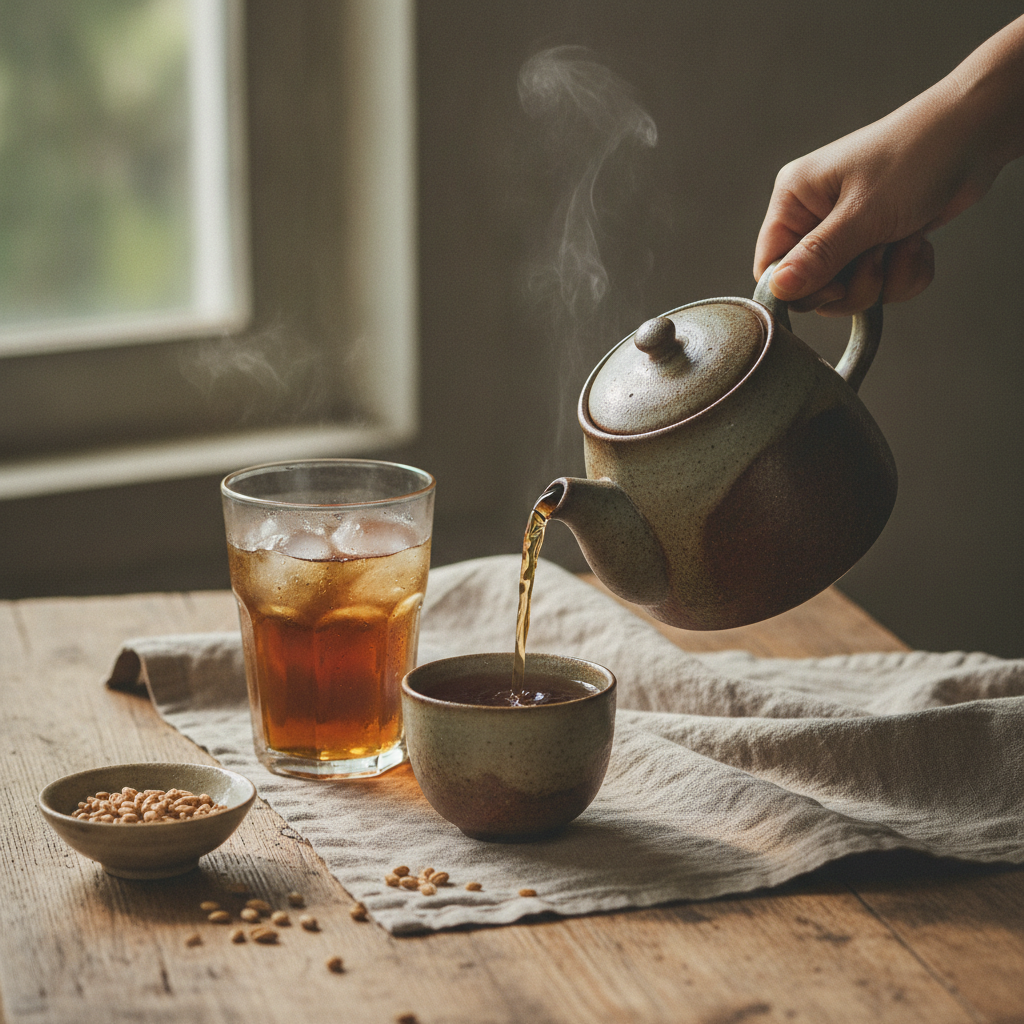
01 / Cuisines · East Asian
Korean.
Time is an ingredient. Ferment everything.
02 / Intro · The shape of it
Korean cooking treats time as a cooking method — not a wait, but a transformation. Kimchi gets better when you ignore it. Doenjang ages on the rooftop for months. Soy sauces are graded by year. The Korean kitchen is the world's most fermentation-fluent.
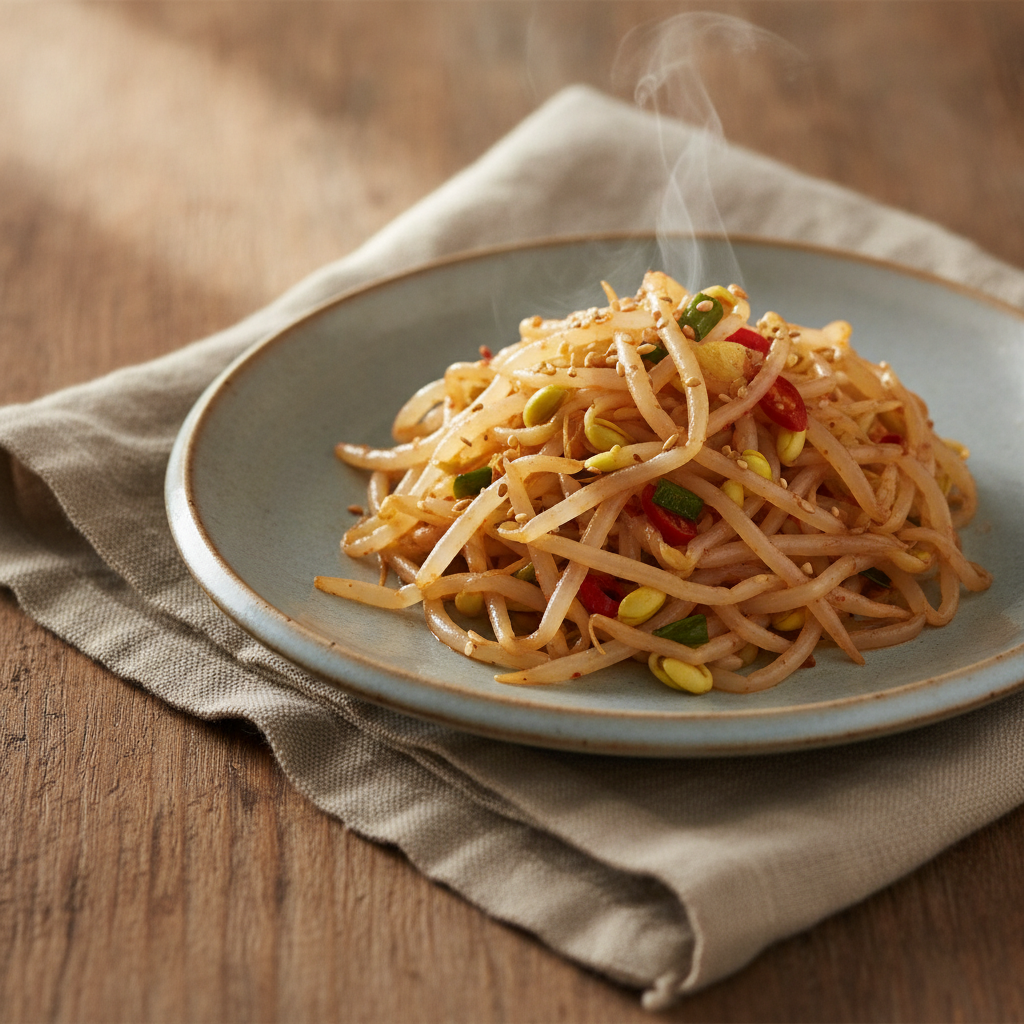
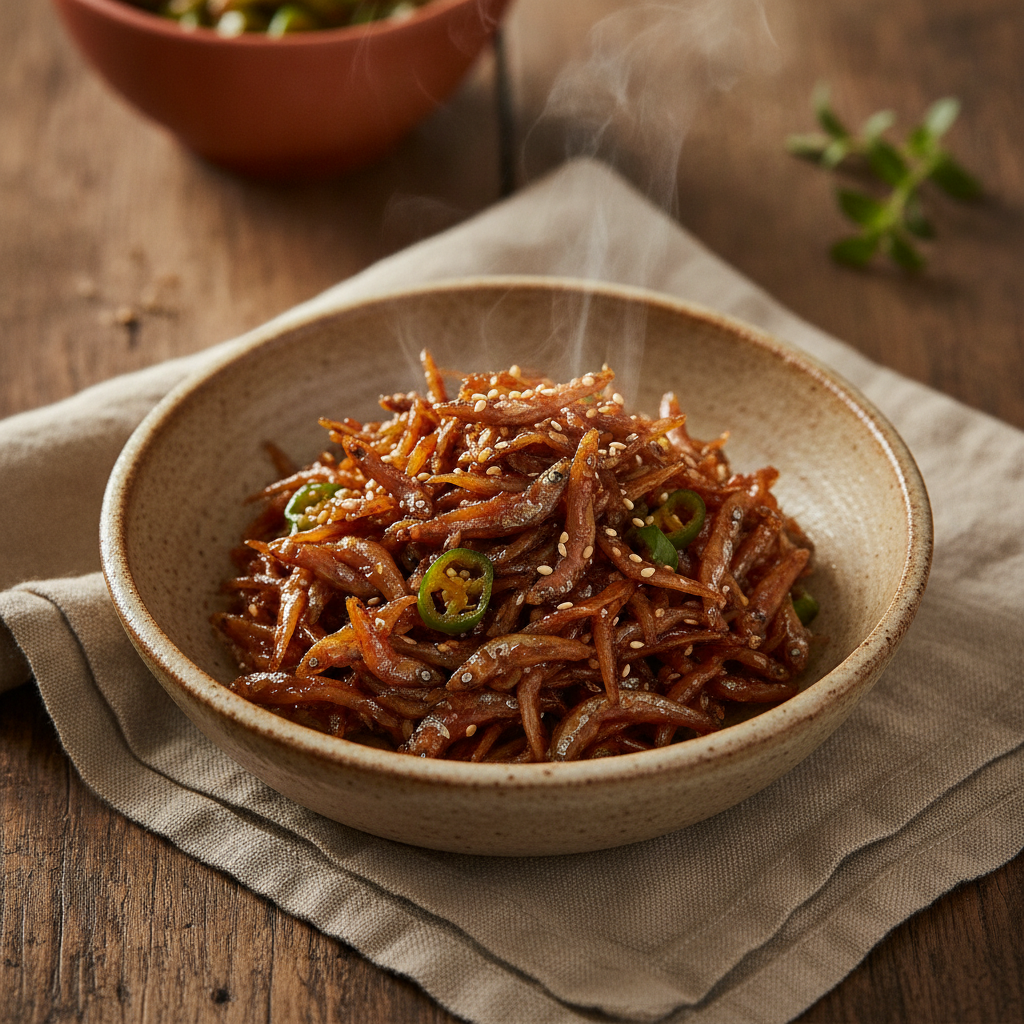
The home-cooking framework is built around banchan — small side dishes that anchor a rice-and-soup meal. A weeknight Korean dinner is a bowl of rice, a fermented stew, and three or four banchan from the fridge. The cook isn't preparing four dishes; she's pulling already-cooked components together at the last minute.
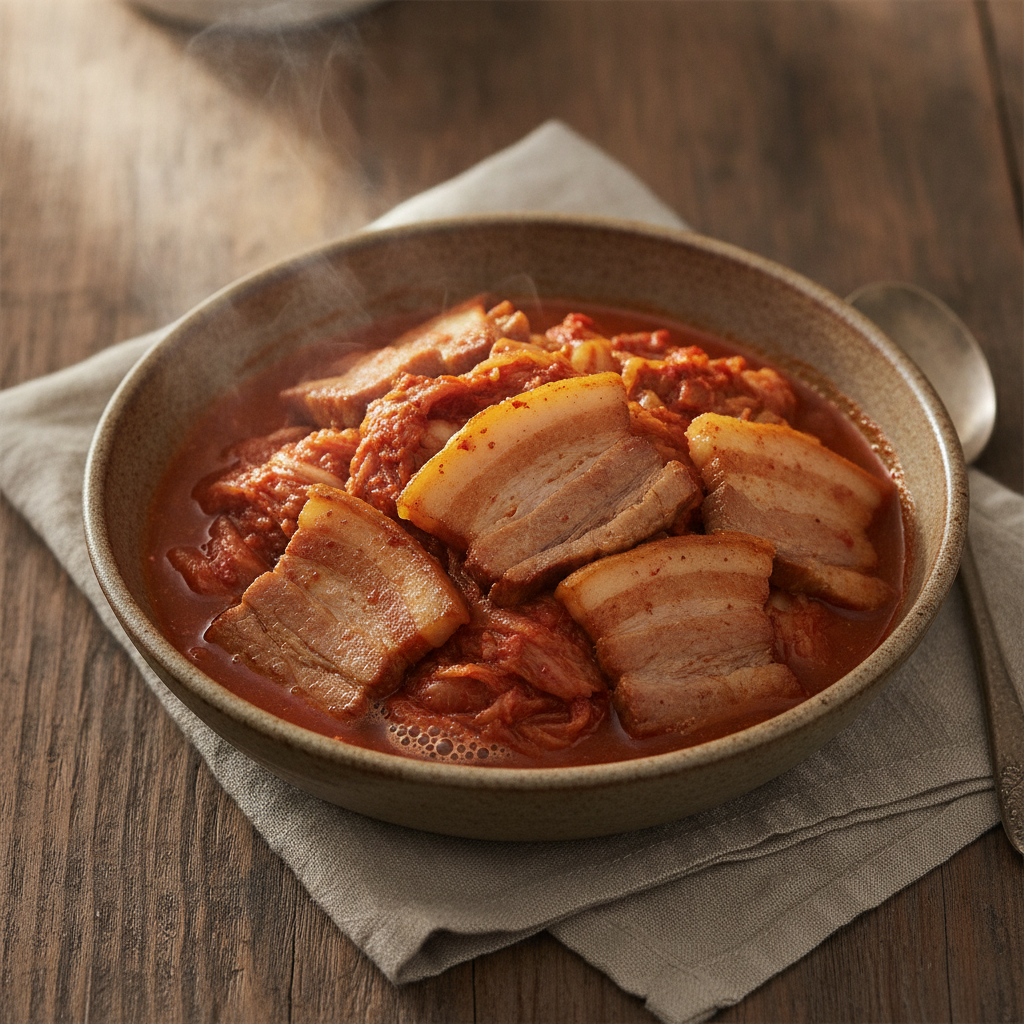
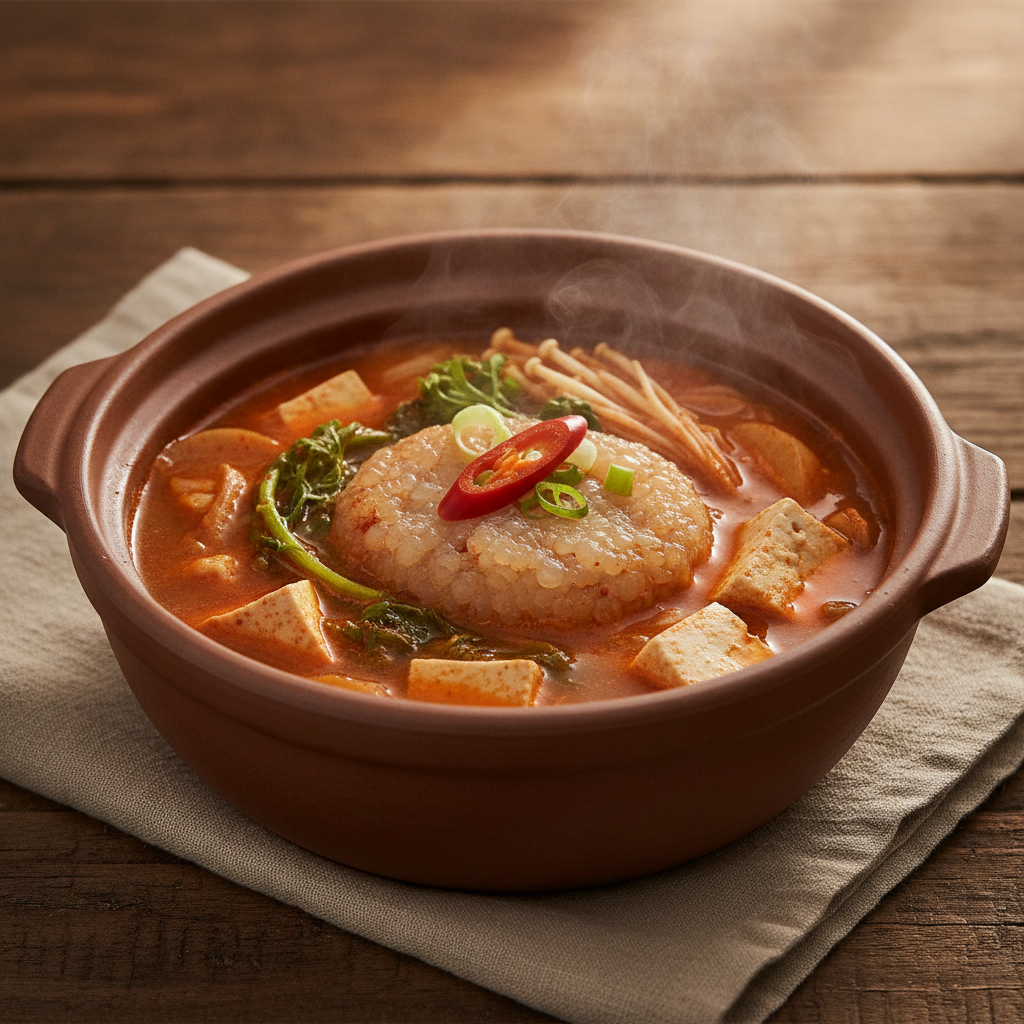
Souschef's Korean recipes are weighted toward fermentation, stews, and what Minji calls "the food halmeoni made on a Tuesday" — kimchi-jjigae, doenjang-jjigae, japchae, the kind of cooking that scales easily and gets better in the fridge.
03 / Techniques · The four that matter
Master these first.
Salt-cure kimchi base
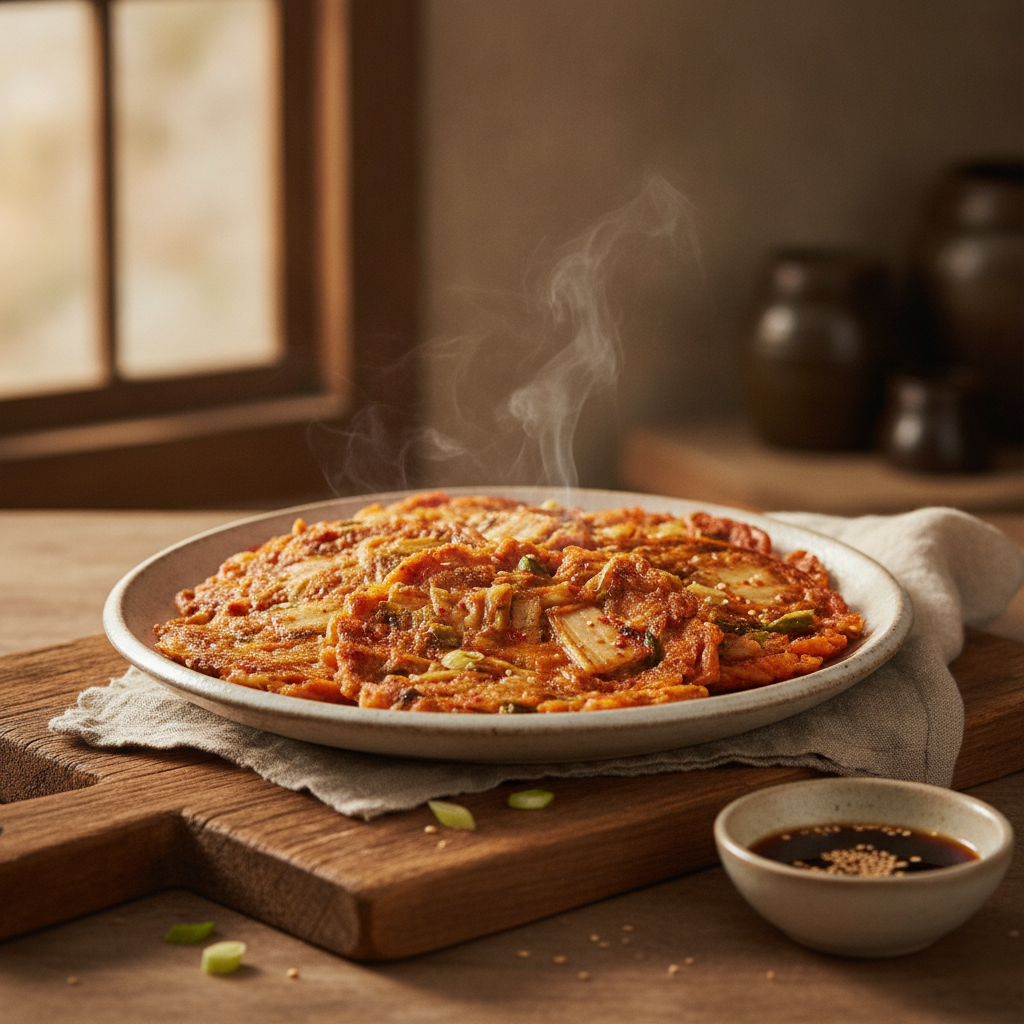
Layer napa cabbage with coarse salt for 2–3 hours, drain, then build the paste (gochugaru, fish sauce, garlic, ginger, pear). Salt-curing creates the brine that the fermentation lives in.
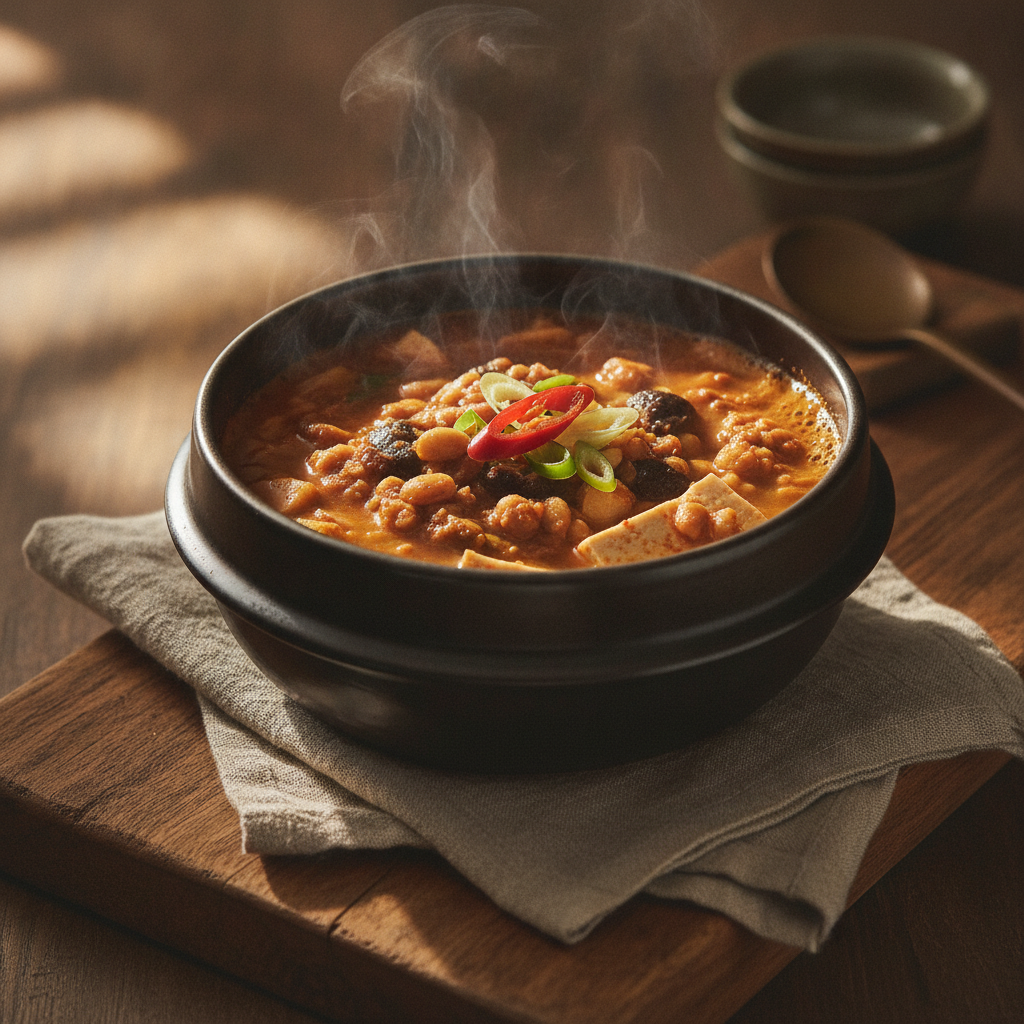
Building doenjang stew
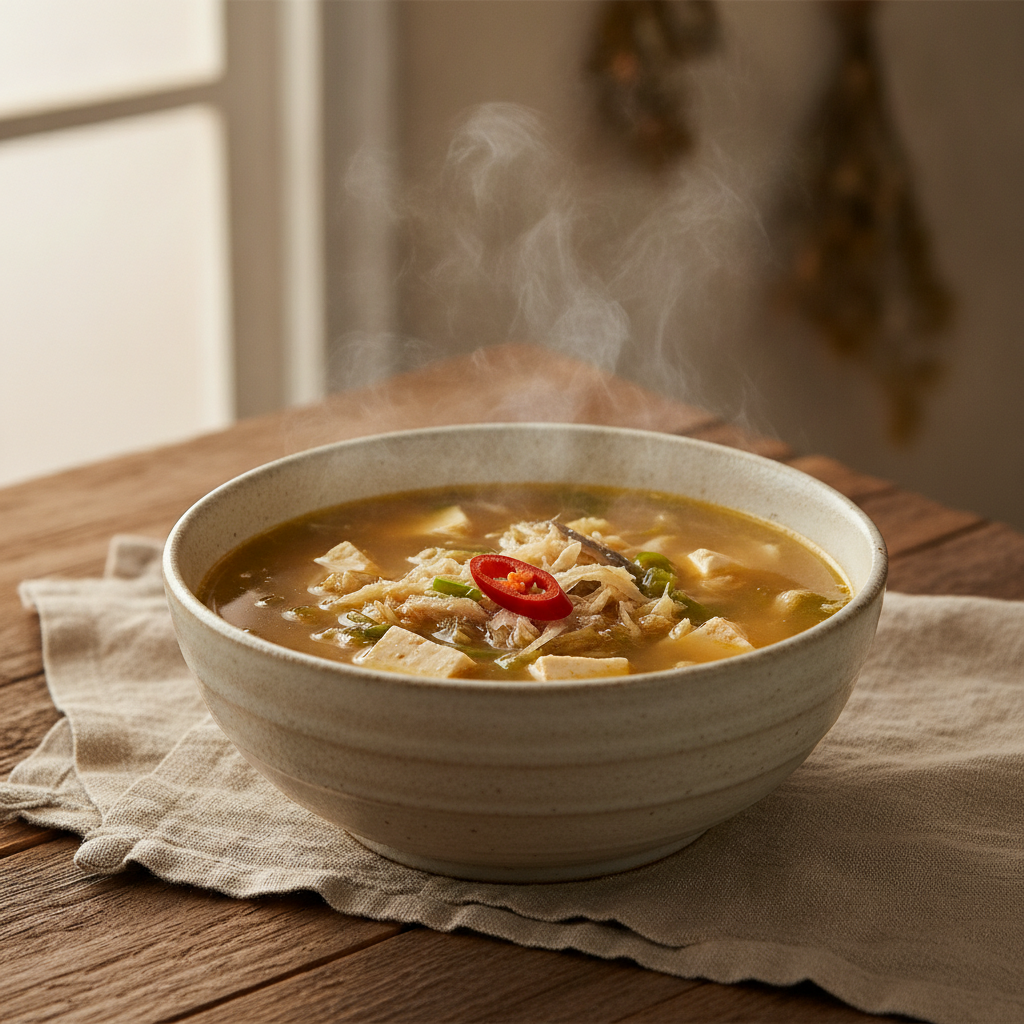
Doenjang stirred into stock at the start, not added at the end. The funk and umami need time to integrate; finished doenjang stew tastes nothing like a quick miso soup.
Anchovy-kelp stock
Dried anchovies (heads and guts removed) plus a square of kombu, simmered for 10 minutes. The base of every Korean soup and stew. Skip and the dish will taste flat in a way you can't fix.
Cold-tossed banchan
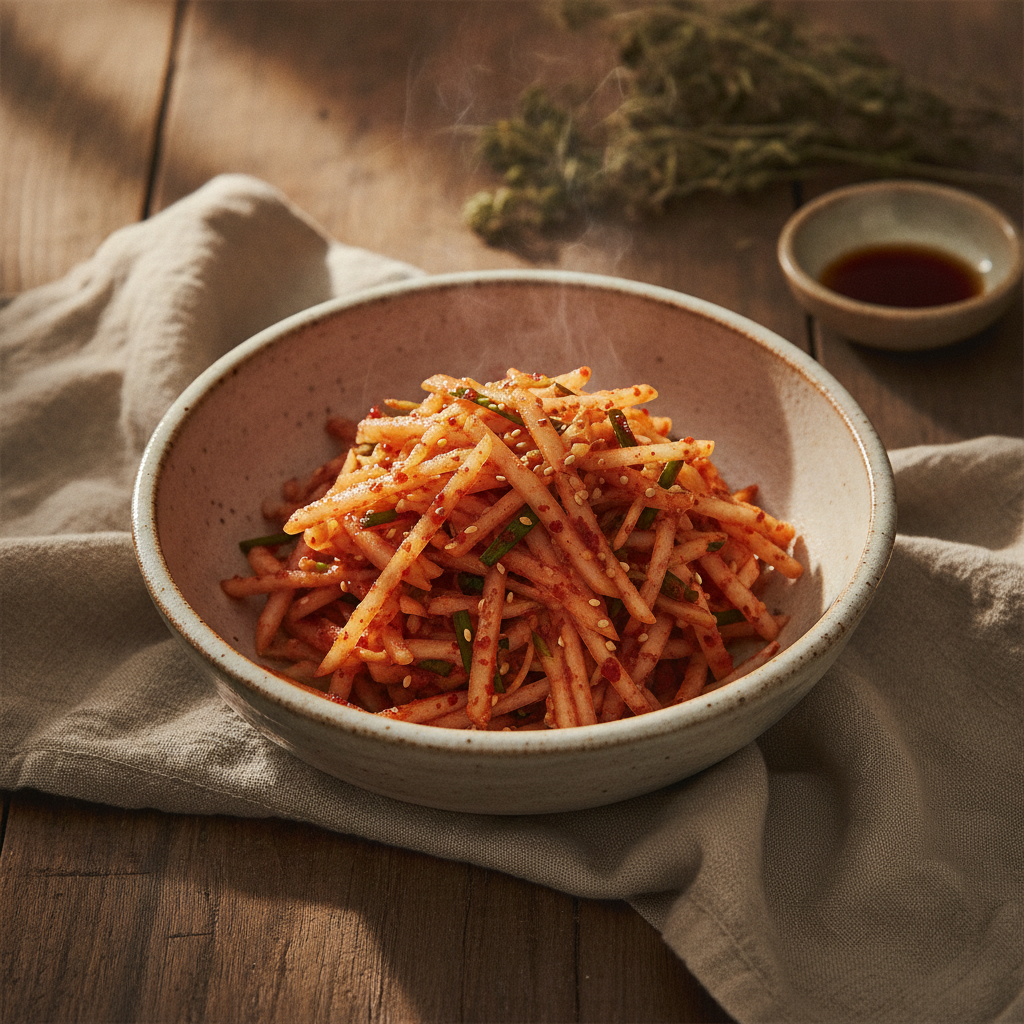
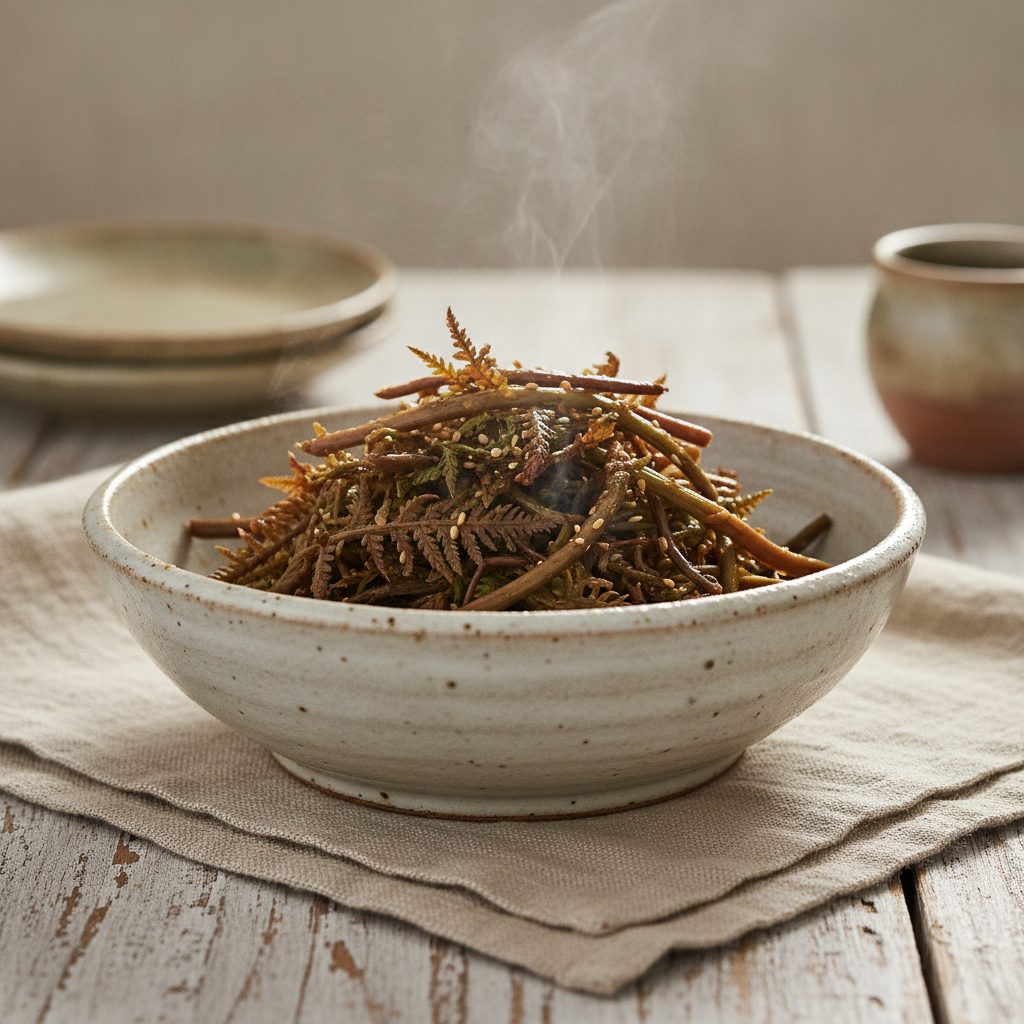
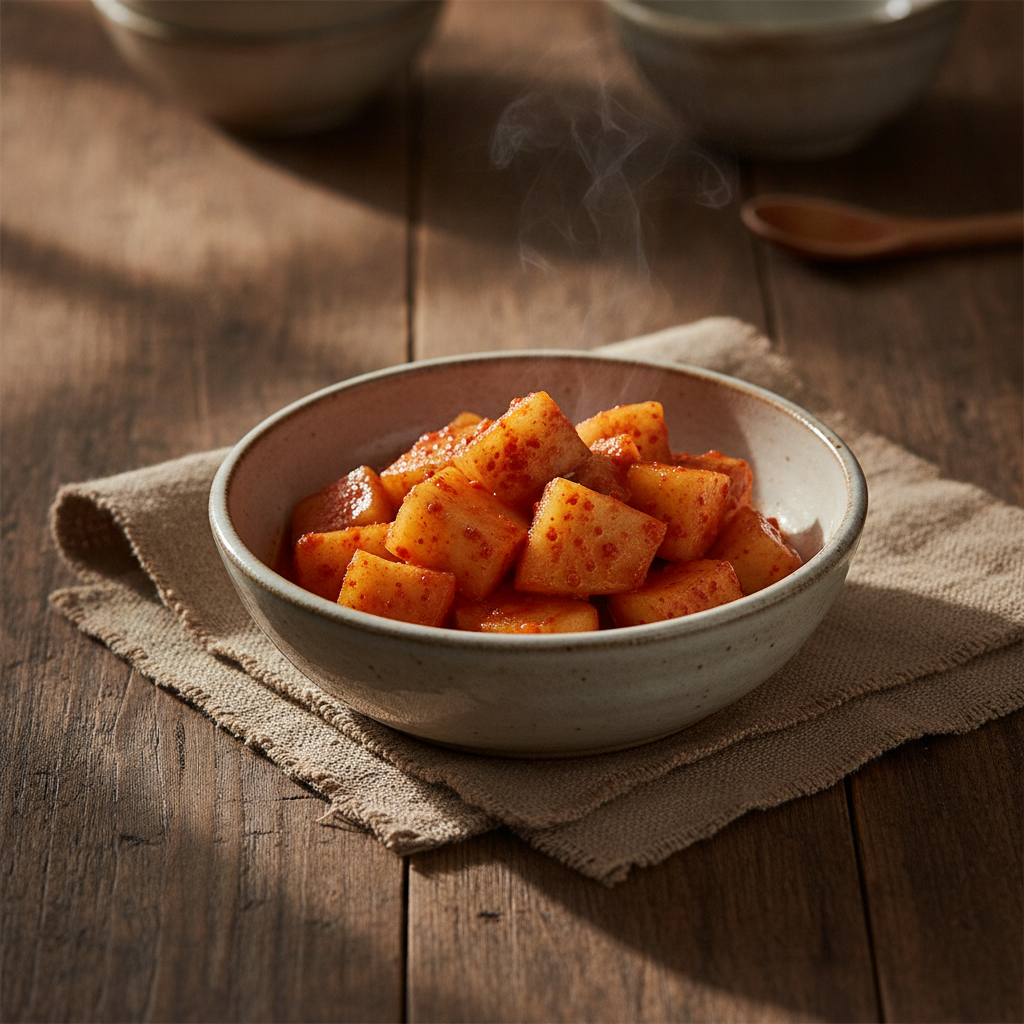
Vegetables blanched briefly, then dressed with sesame oil, soy, scallion, sesame seed. Cooled and served at room temperature. The discipline behind everything from spinach namul to dried-radish kkakdugi.
04 / Soundtrack · Seoul Cozy Indie Cafe
Cook to this.
05 / The library · 3 korean recipes
Tonight's dinner.


Bibimbap
A Korean rice bowl where each component is seasoned separately, then mixed at the table. The runny egg yolk becomes the creamy binder that pulls everything together.

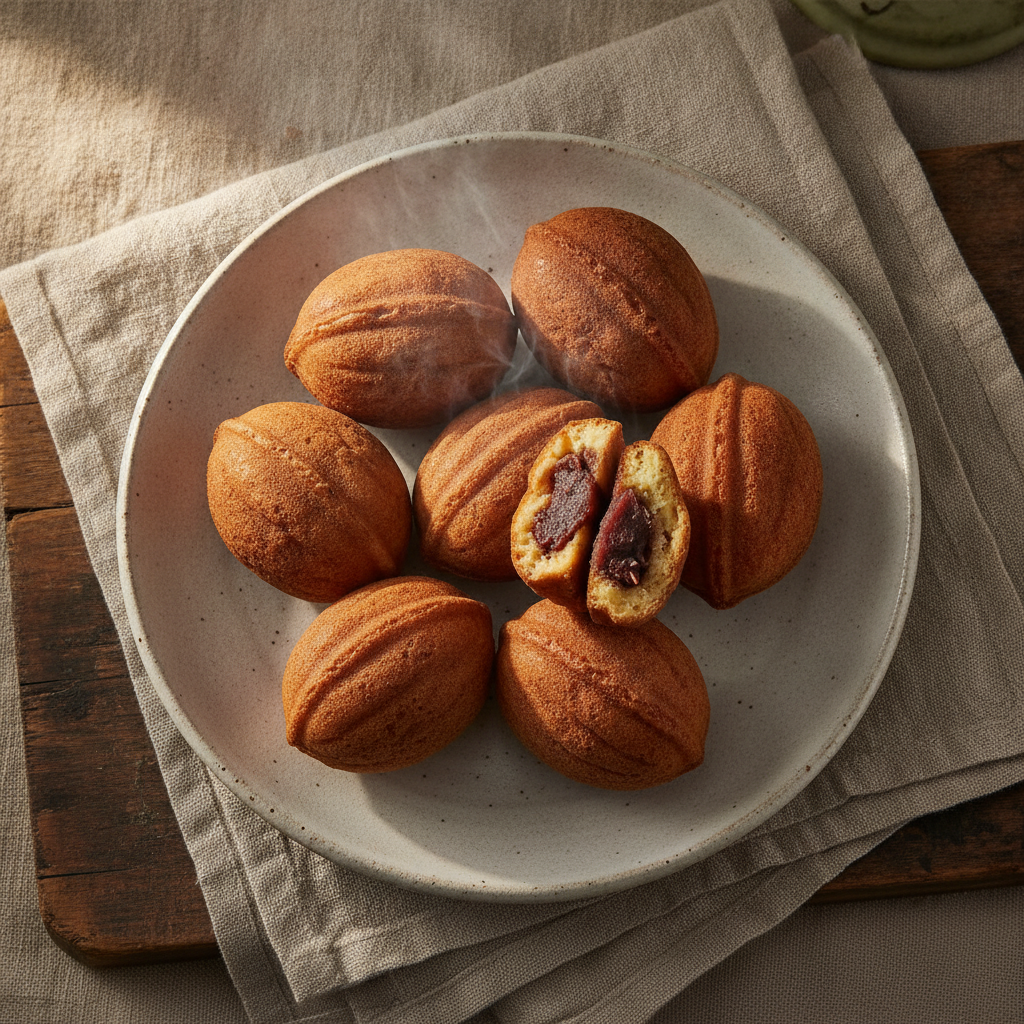
Gyeranppang auf Deutsch (German-style Korean Egg Bread)
06 / FAQ · The cook's questions
About korean.
How long does homemade kimchi take?
Ten minutes of active work, two days on the counter to start fermenting, then weeks-to-months in the fridge to mature. Most home cooks rush it. Don't.
Is gochujang the same as sriracha?
No. Sriracha is a Thai chili-garlic sauce. Gochujang is a fermented Korean paste of gochugaru, glutinous rice, soybean, and salt. They are not in the same building. Use the right one.
Can I make Korean barbecue at home?
You can grill bulgogi or galbi at home and it'll be good. But the restaurant experience — table grill, banchan, group dining — doesn't replicate well at home. Minji's recommendation: cook stew instead.