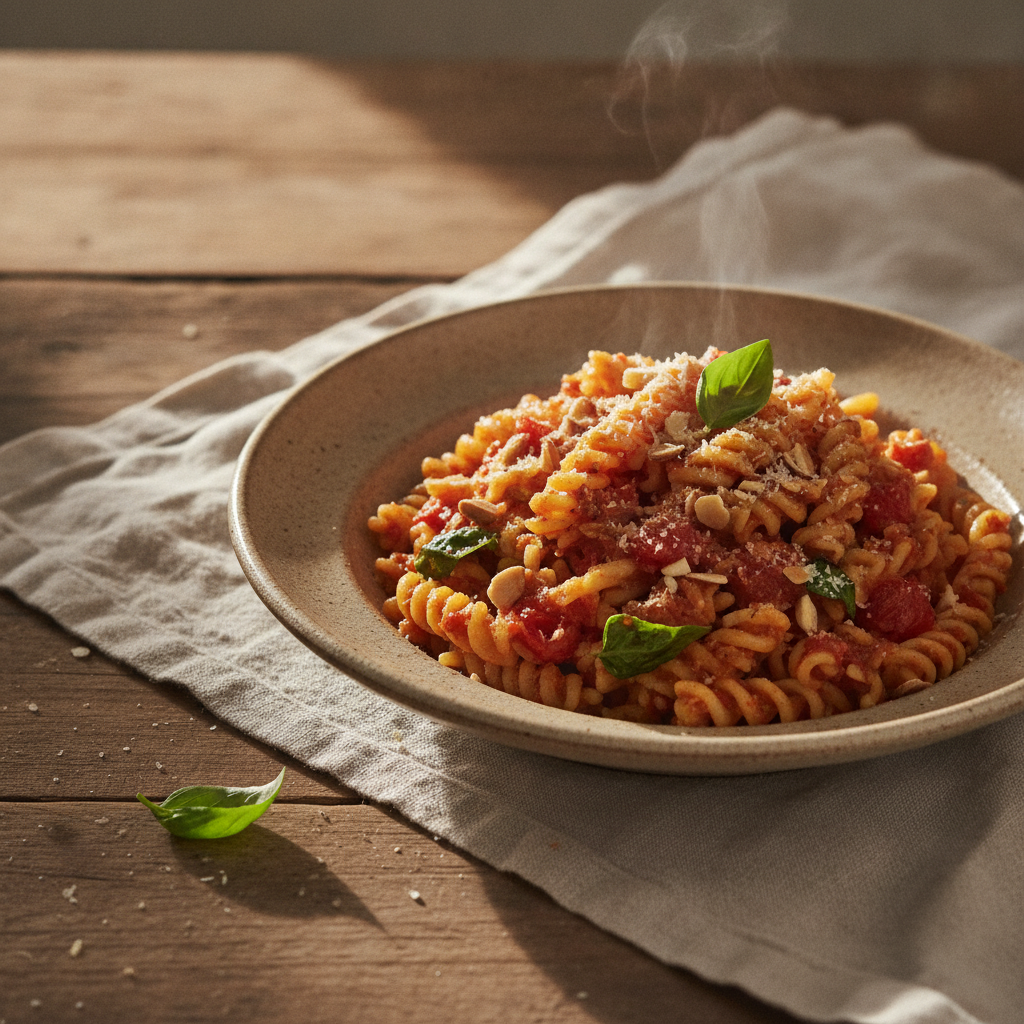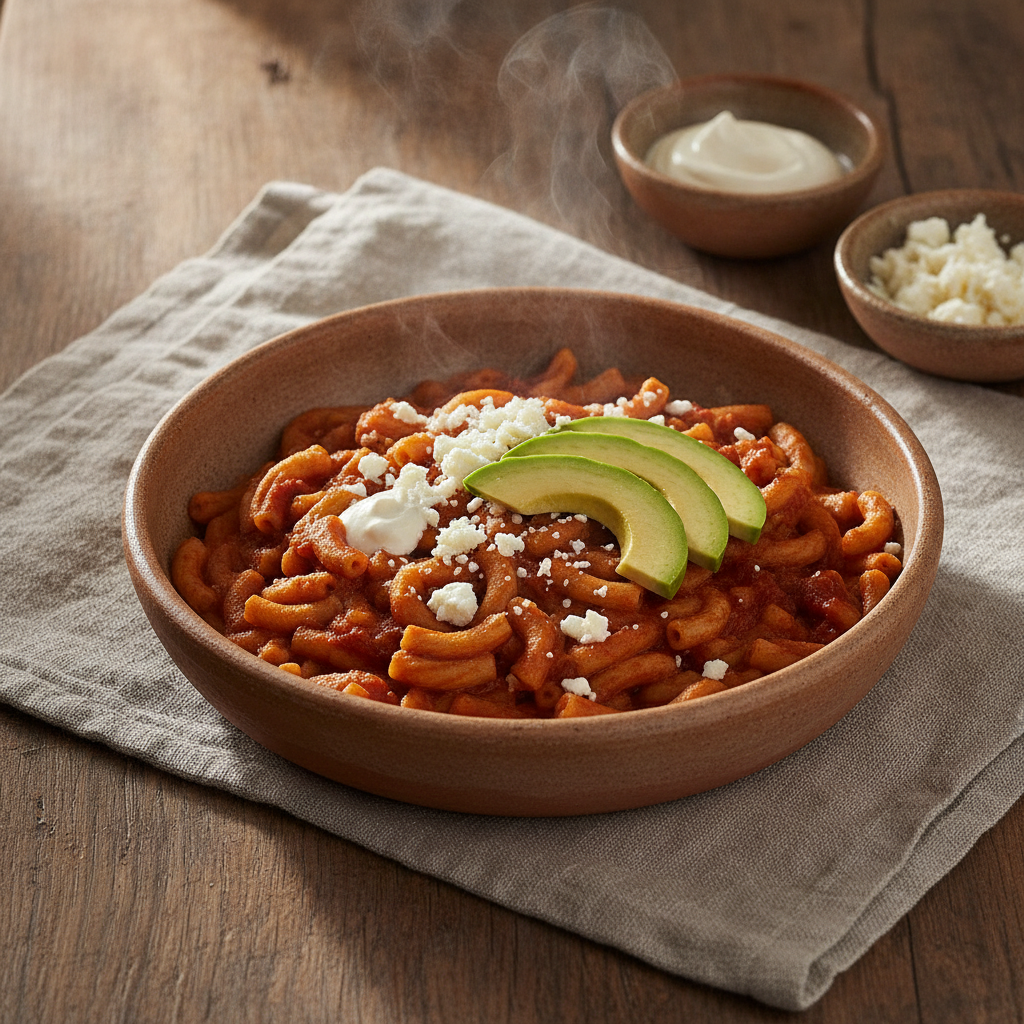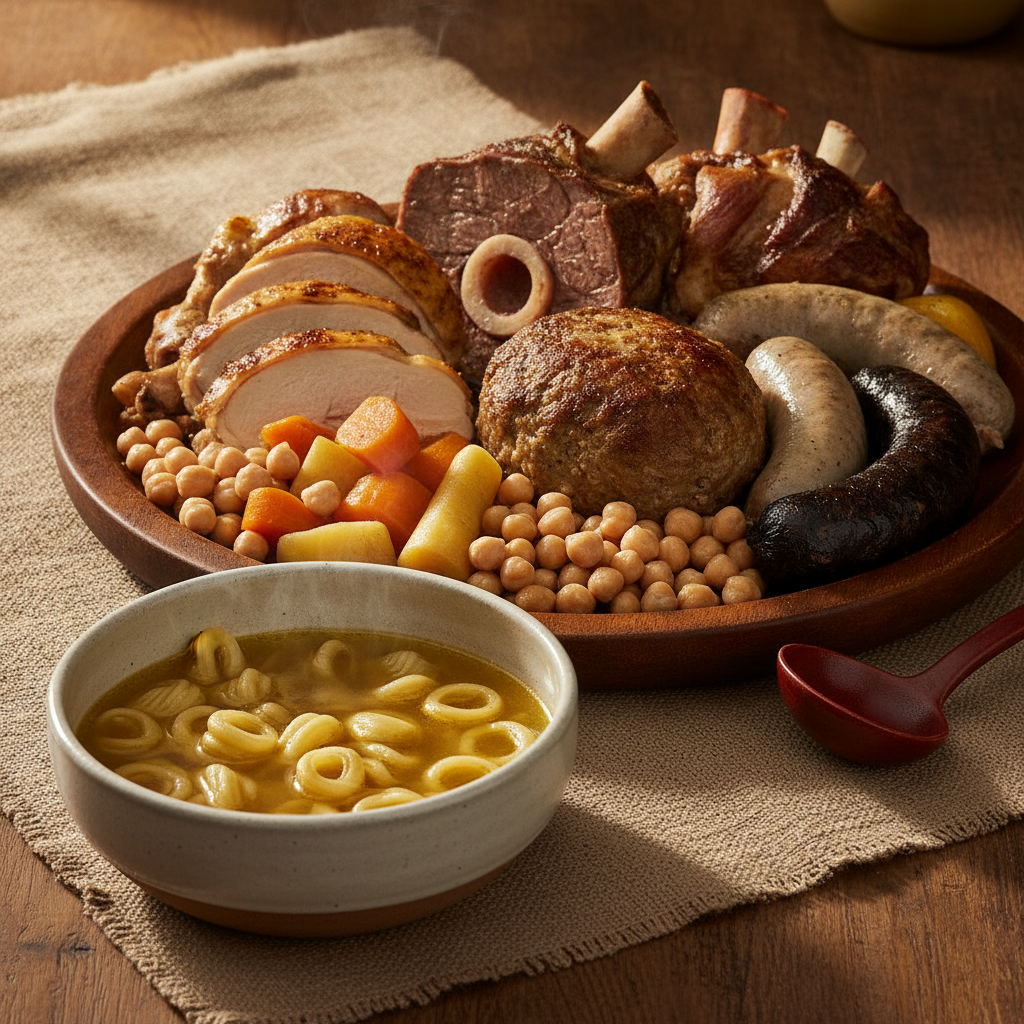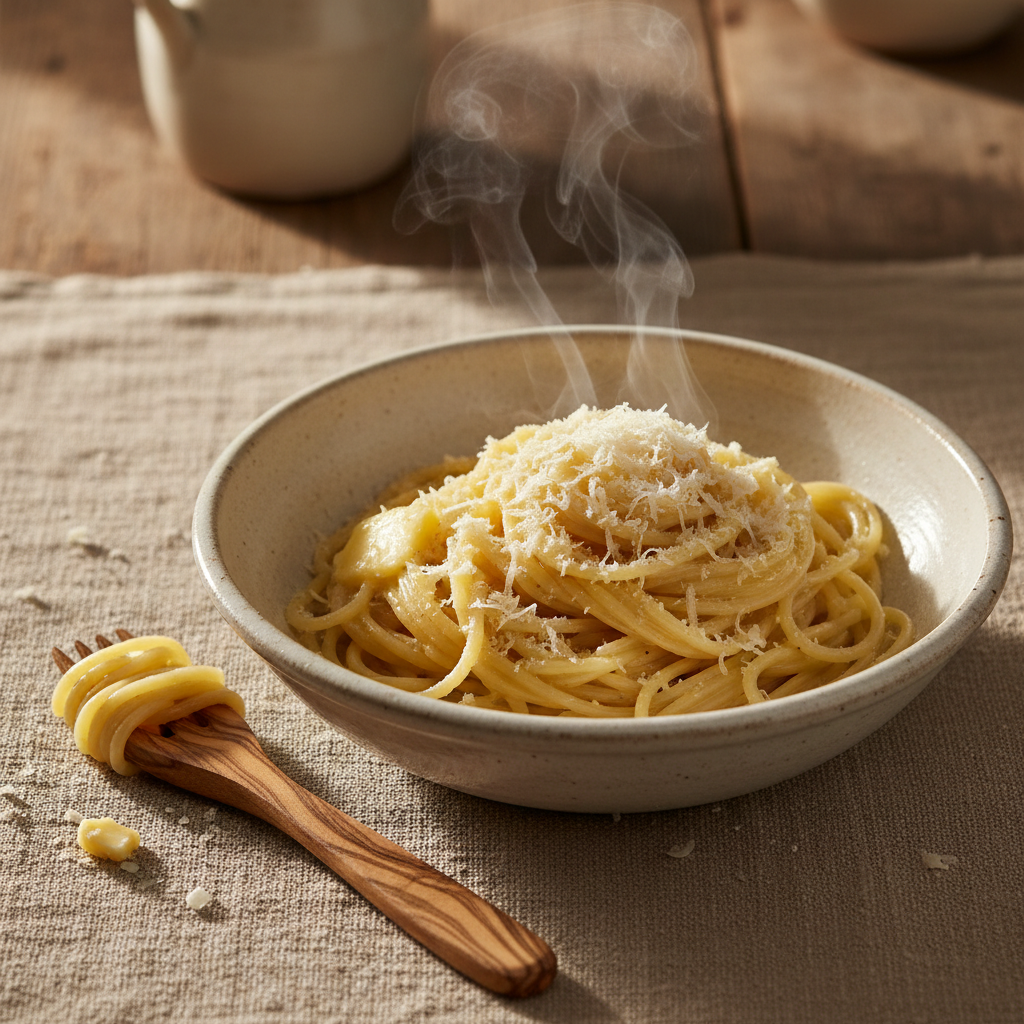
Cacio e Pepe Done Right — No Cream, No Clumps
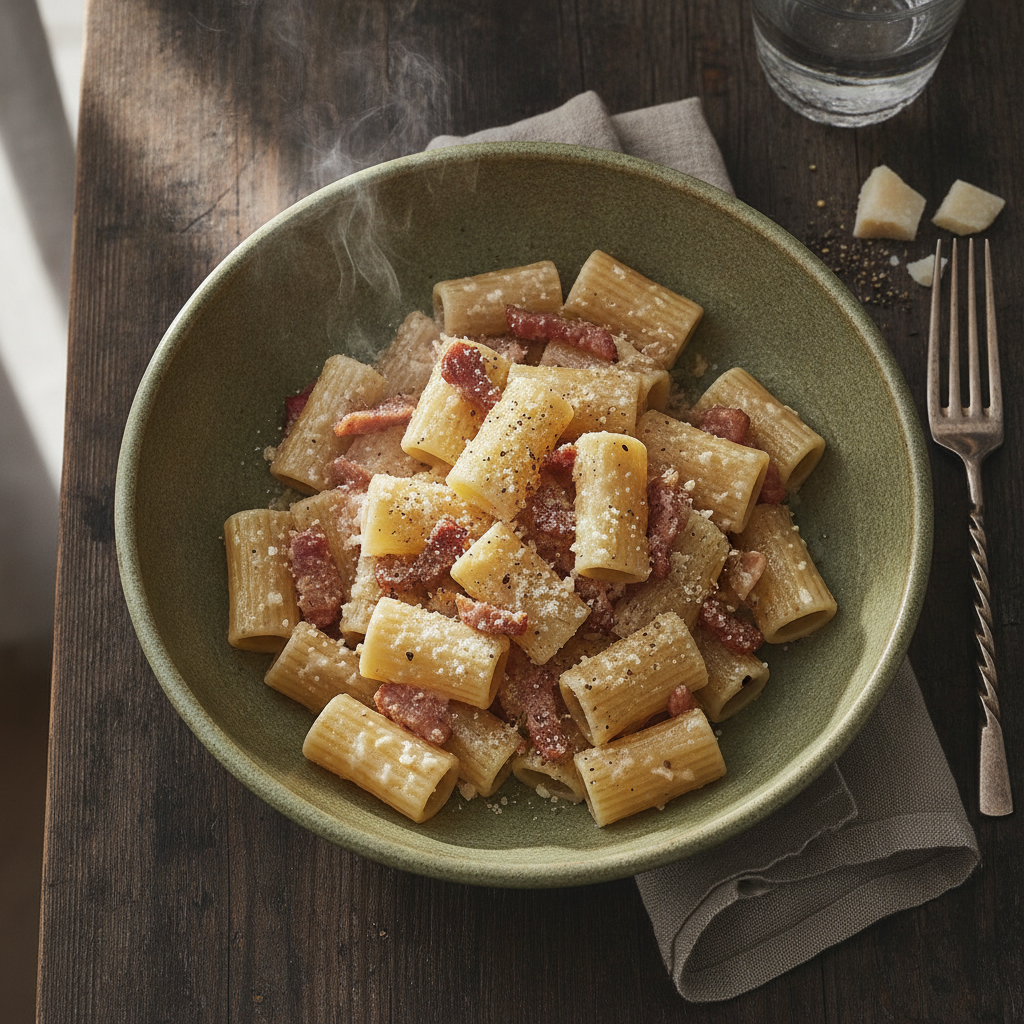
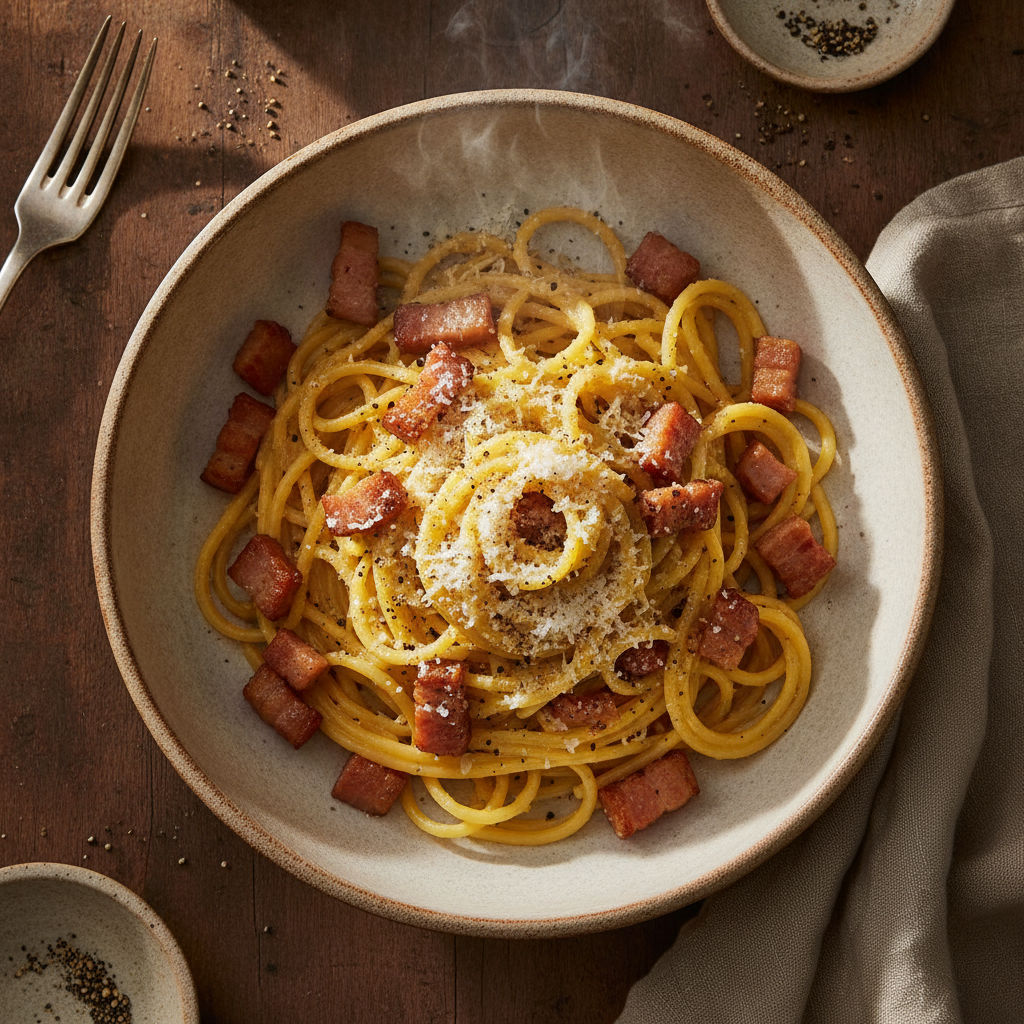
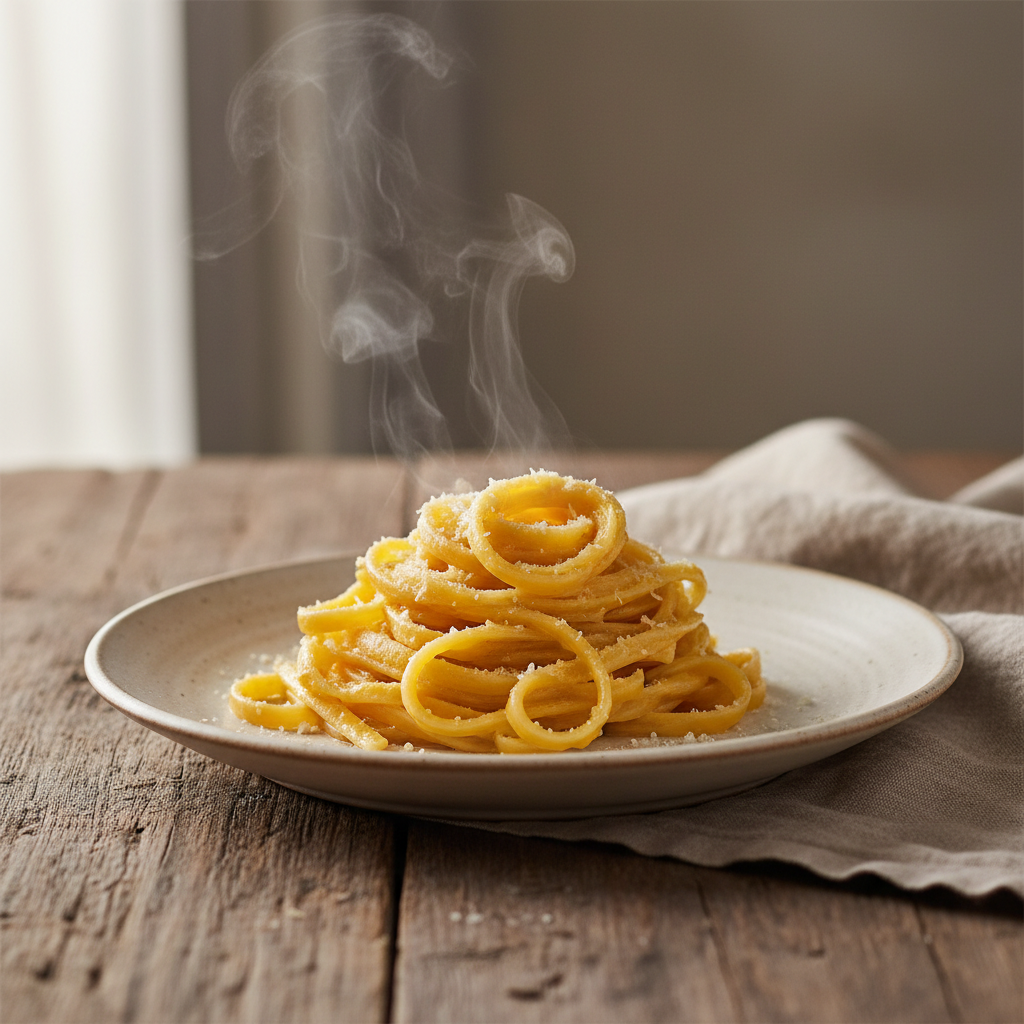
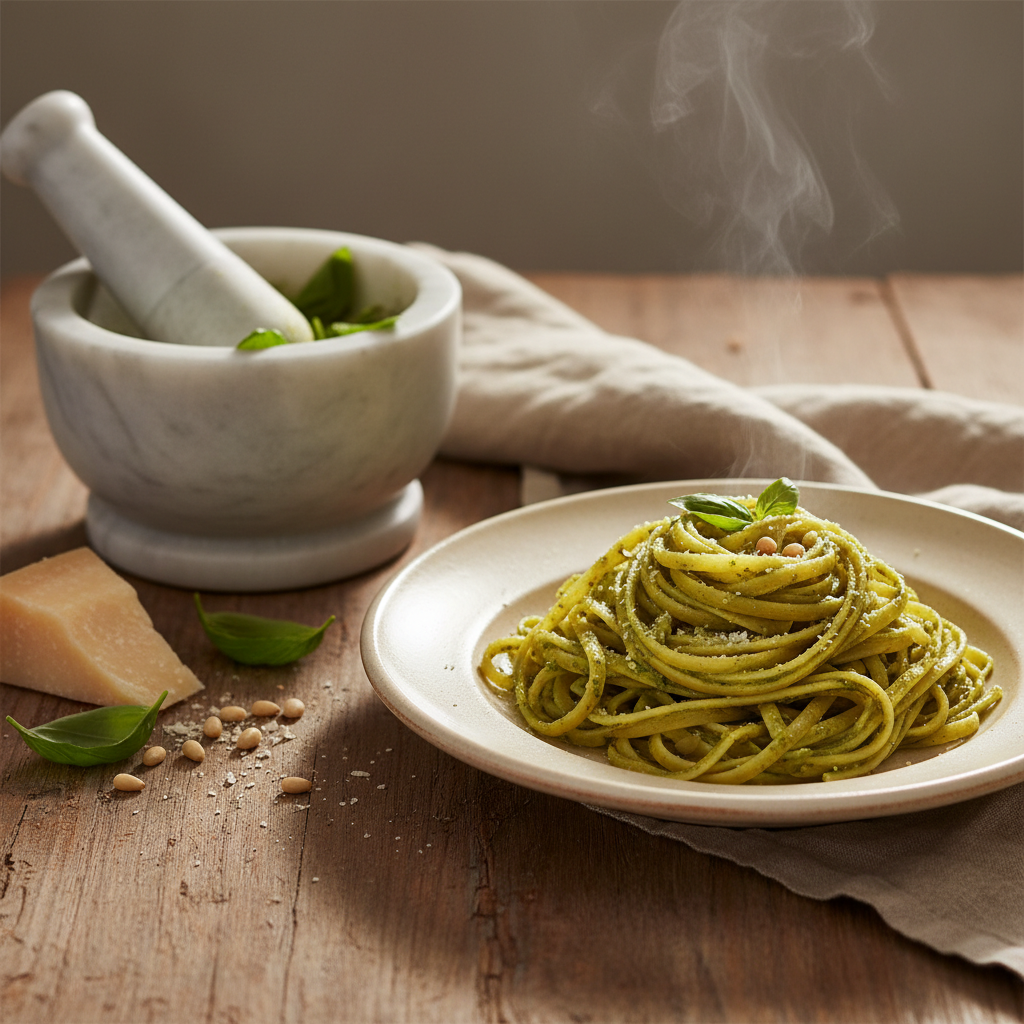
Cacio e pepe is a technique problem wearing a three-ingredient disguise. The difference between a glossy, clinging sauce and a bowl of grainy clumped cheese is a matter of degrees — literally.
01 / Ingredients · Grain
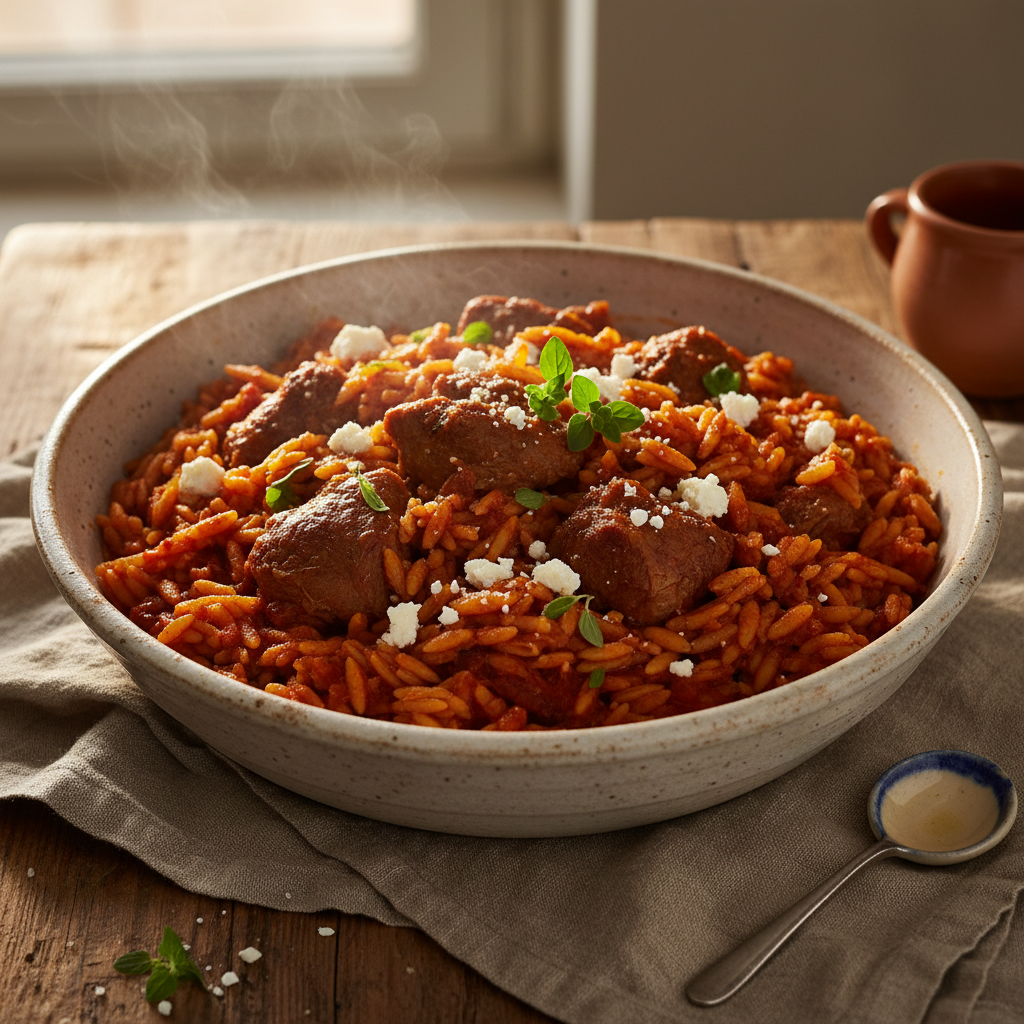
Dried wheat, salted water, hot pan.
02 / The story
Pasta is the most forgiving staple in any well-stocked kitchen. A 500g box of dried spaghetti is twenty meals waiting to happen, and the entire technical literature fits on one index card: salt the water, cook to firm bite, save some of the water, finish in the sauce. That's it.
The marketing around "artisanal" pasta hides the actual quality lever: bronze-die extrusion. Industrial pasta uses Teflon dies that produce smooth strands. Bronze dies leave a microscopic roughness that holds sauce. The bag will say "trafilata al bronzo" or "bronze-cut". Pay the extra euro.
Fresh pasta is a different food. Eggs and 00 flour, rolled thin, cooked in 60 seconds — silky, rich, expensive in time. Worth doing for tagliatelle, lasagne, and stuffed shapes. Not worth it for spaghetti or anything you'd serve with a long-cooked sauce. Both forms have their place.
03 / Varieties · Know your options
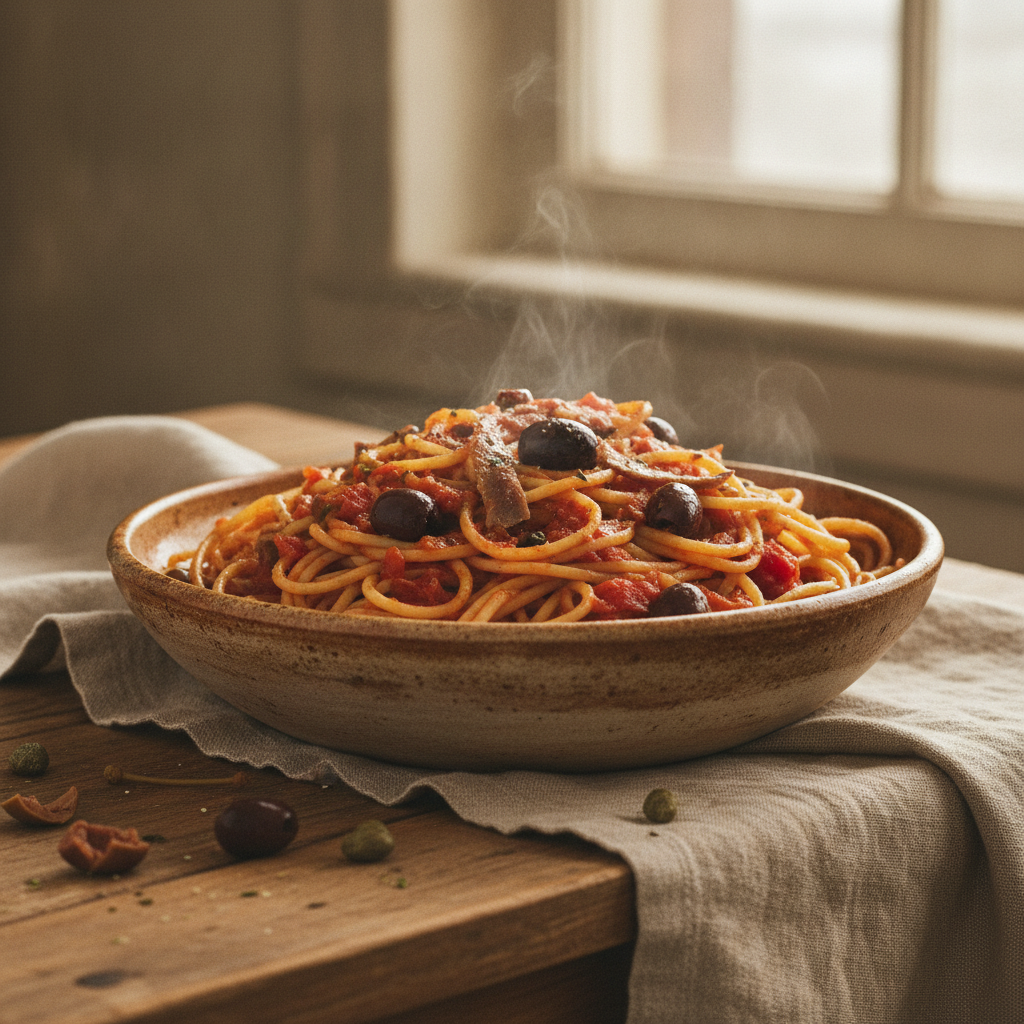
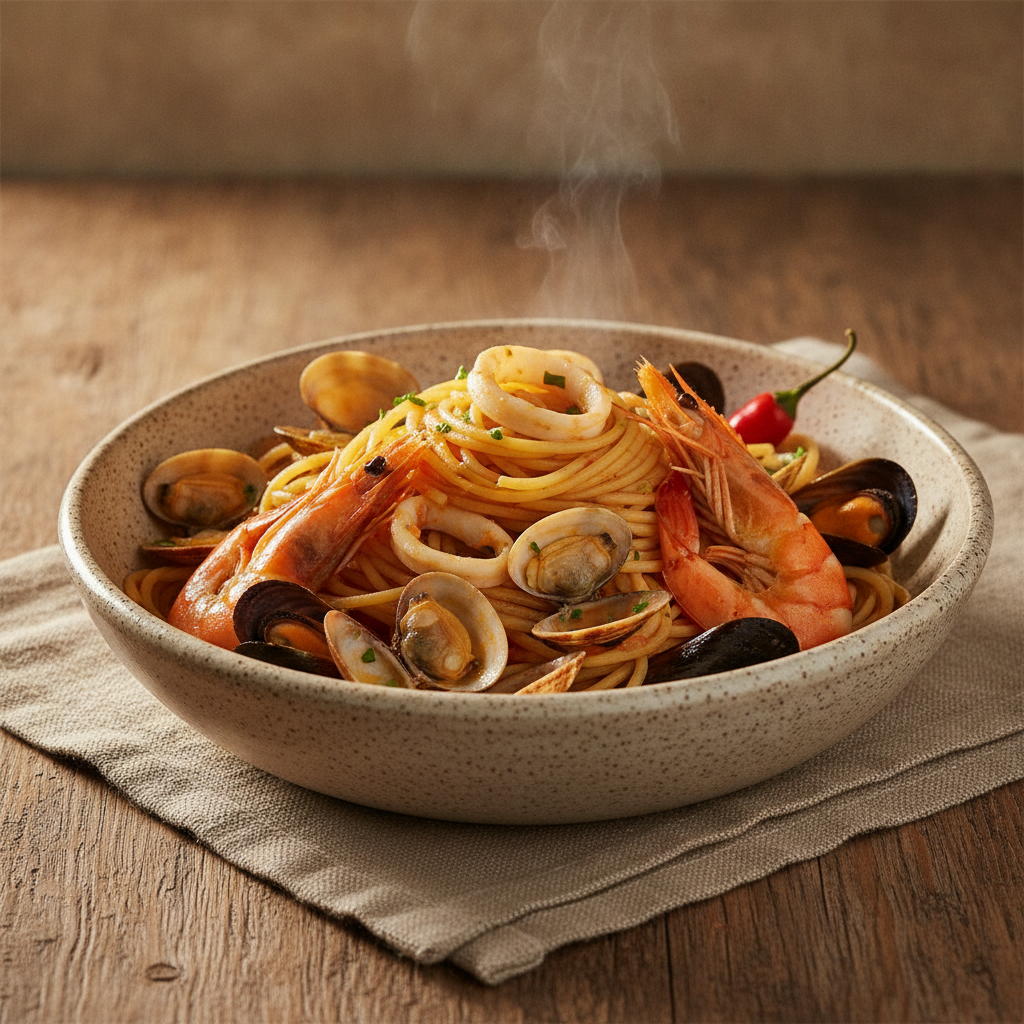
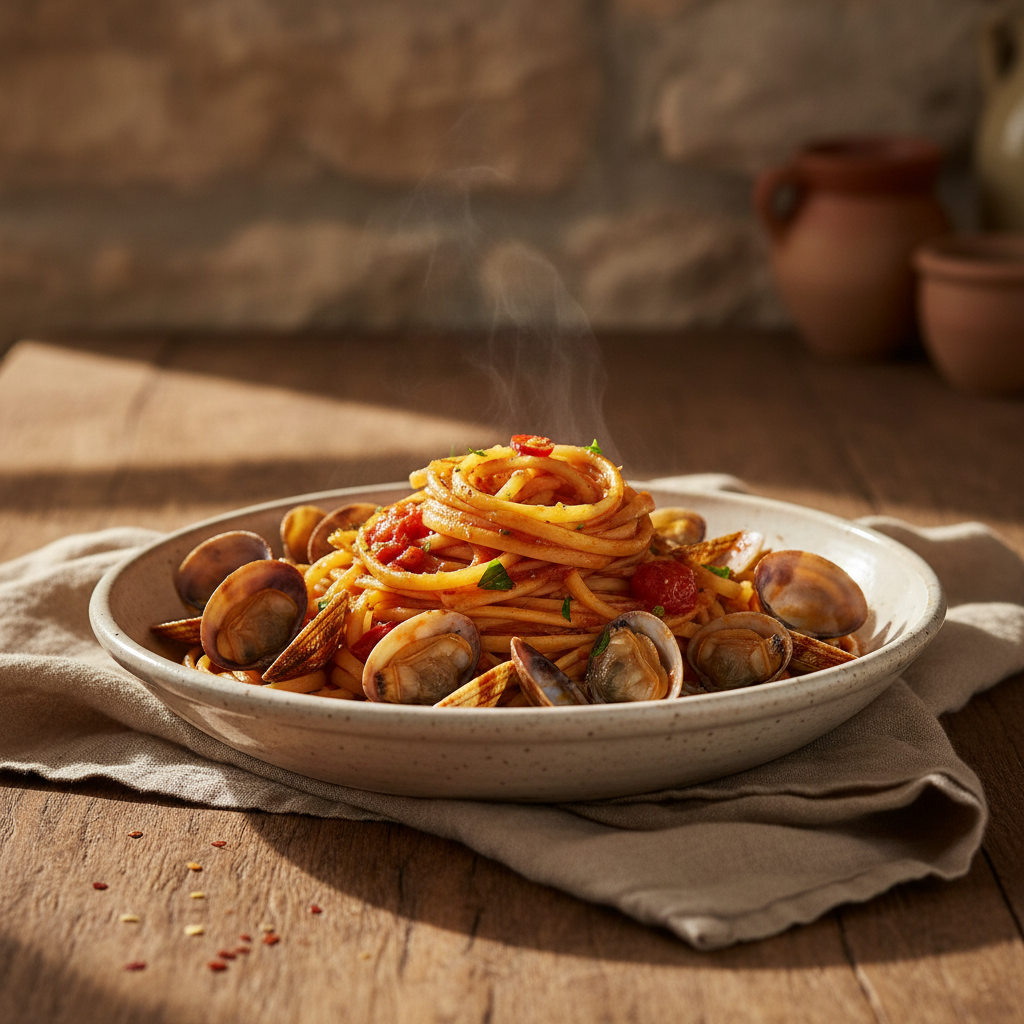
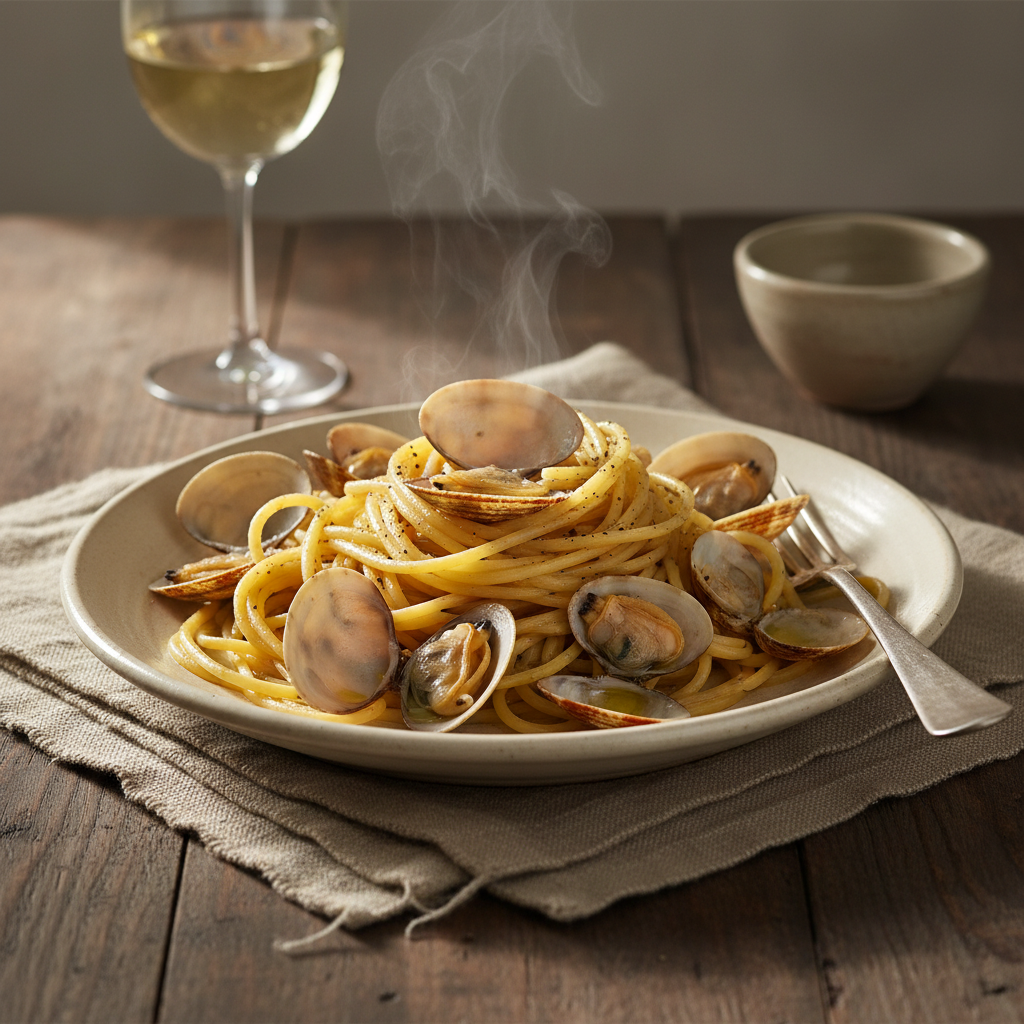
Long thin strands. Best with oil-based or light tomato sauces — aglio e olio, marinara, vongole. Linguine is flatter and holds slightly heavier sauces.
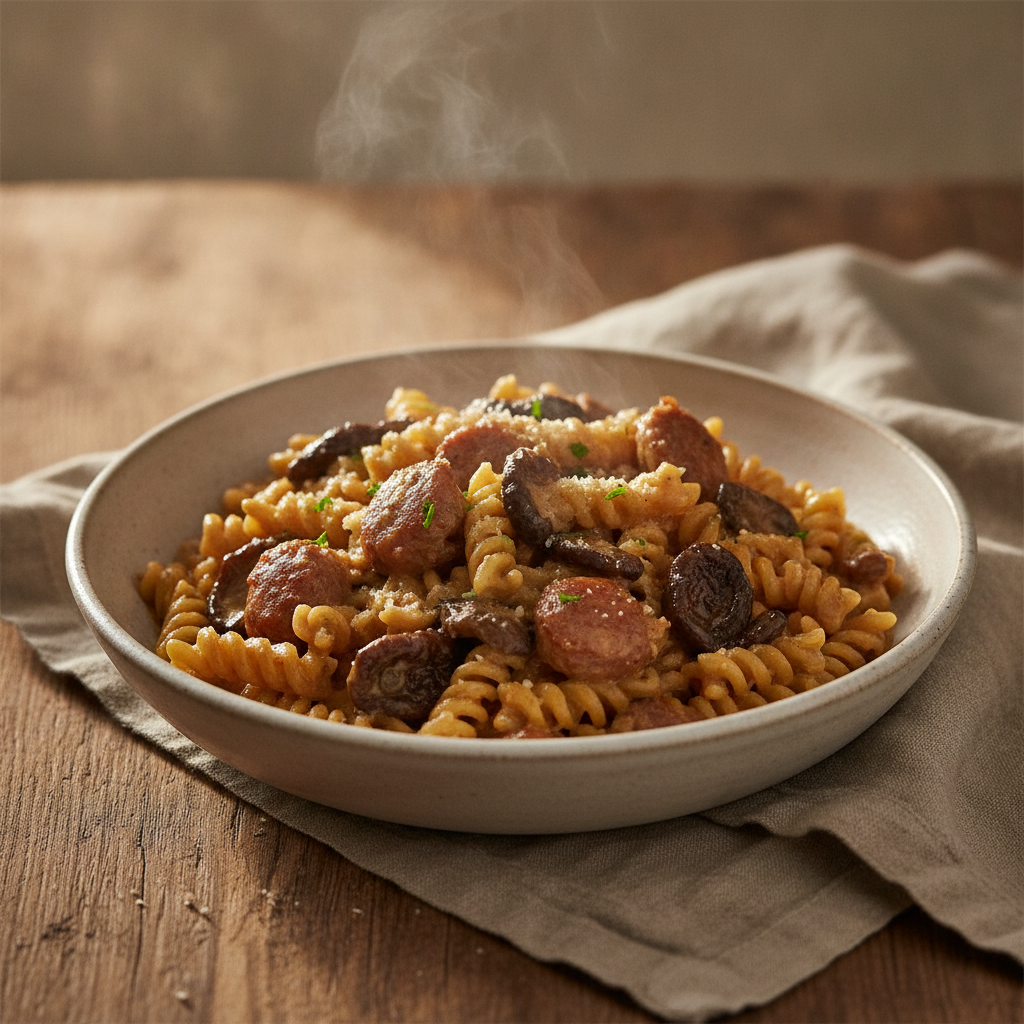
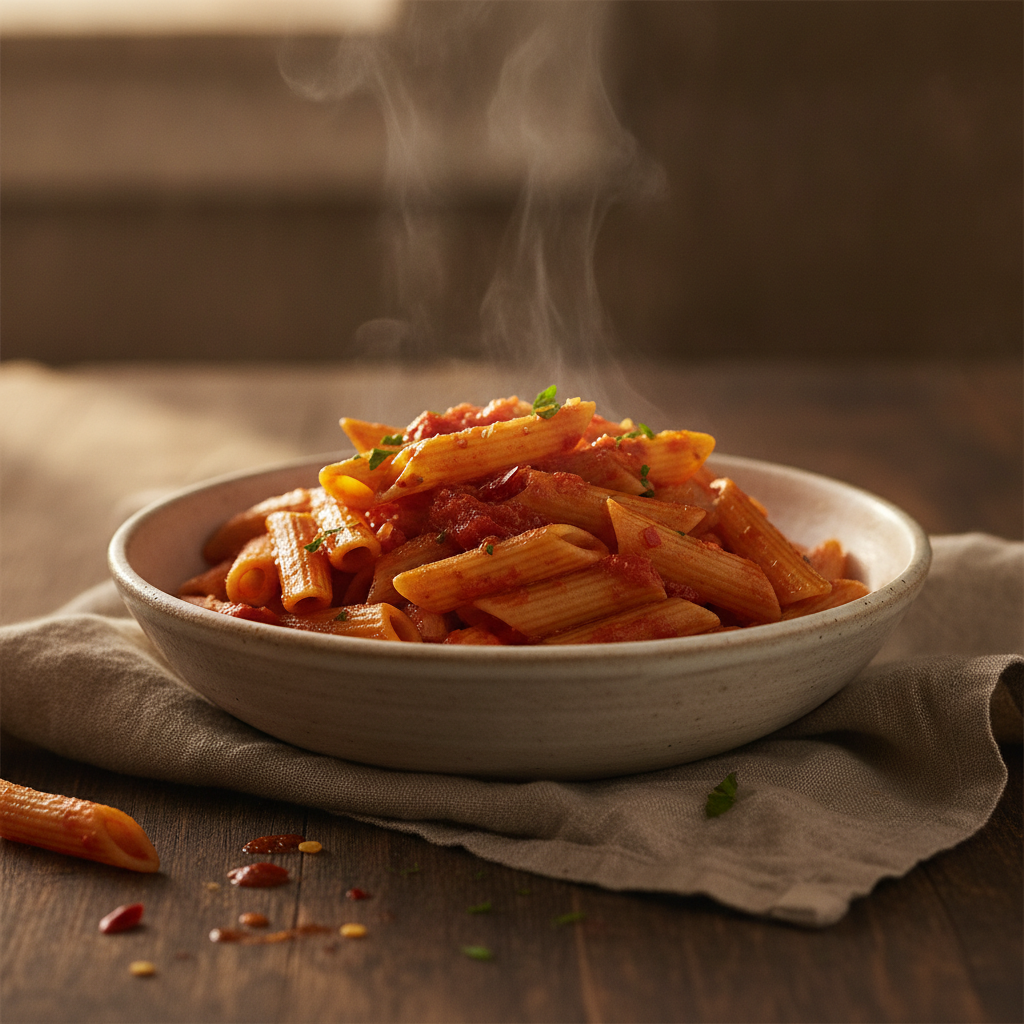
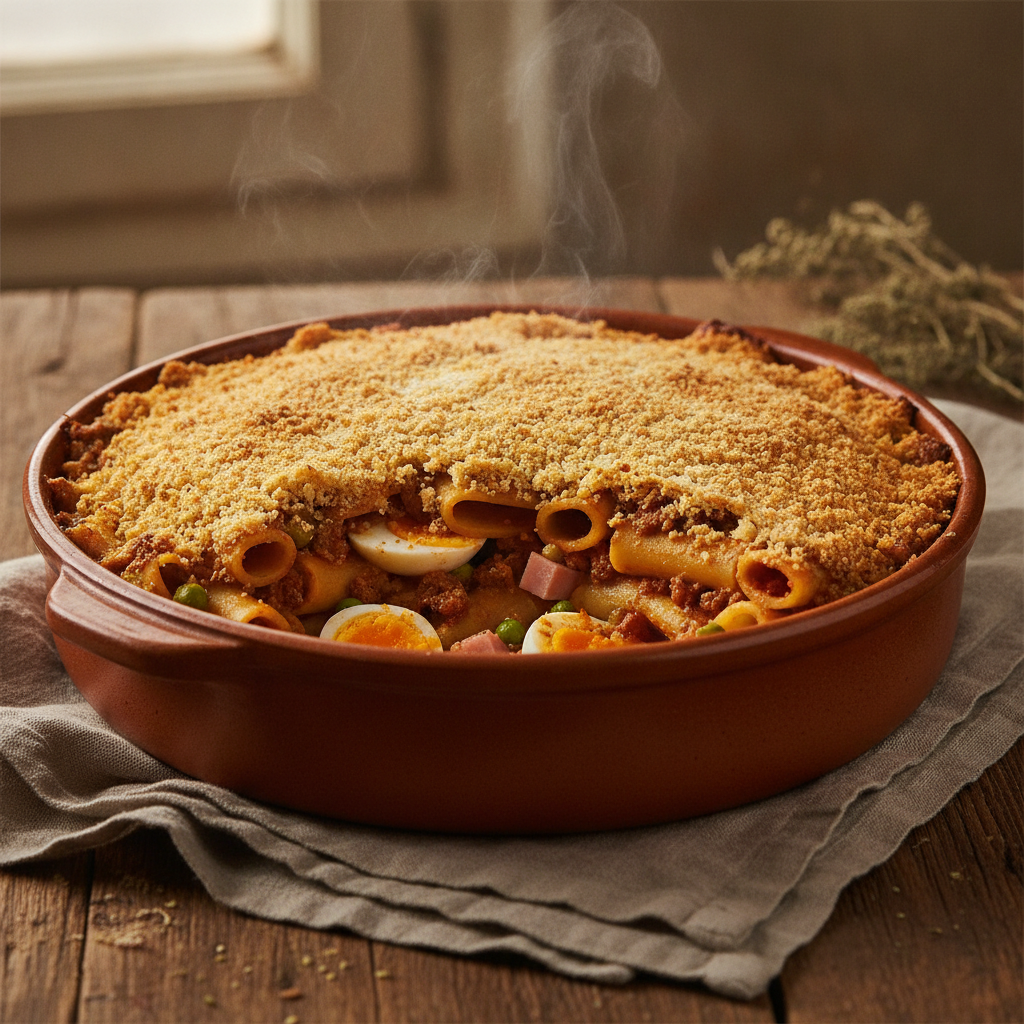
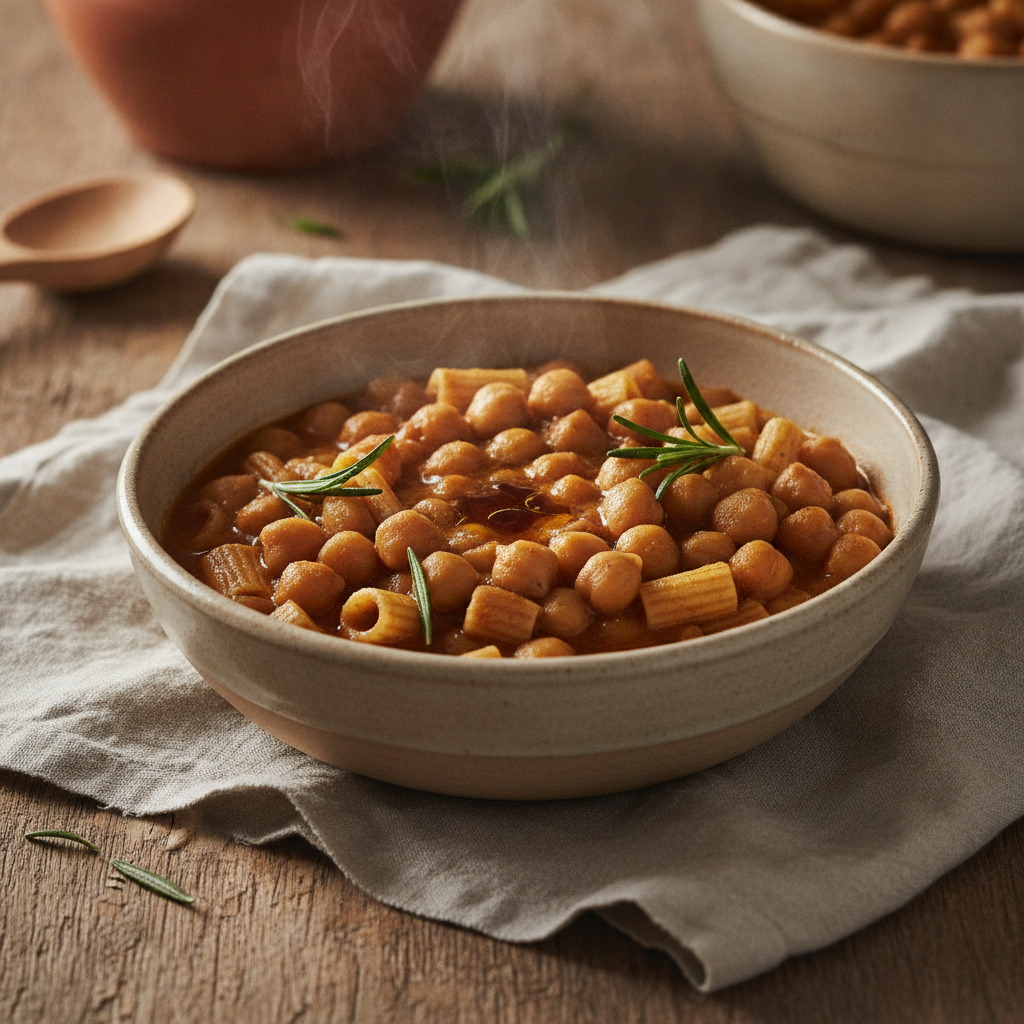
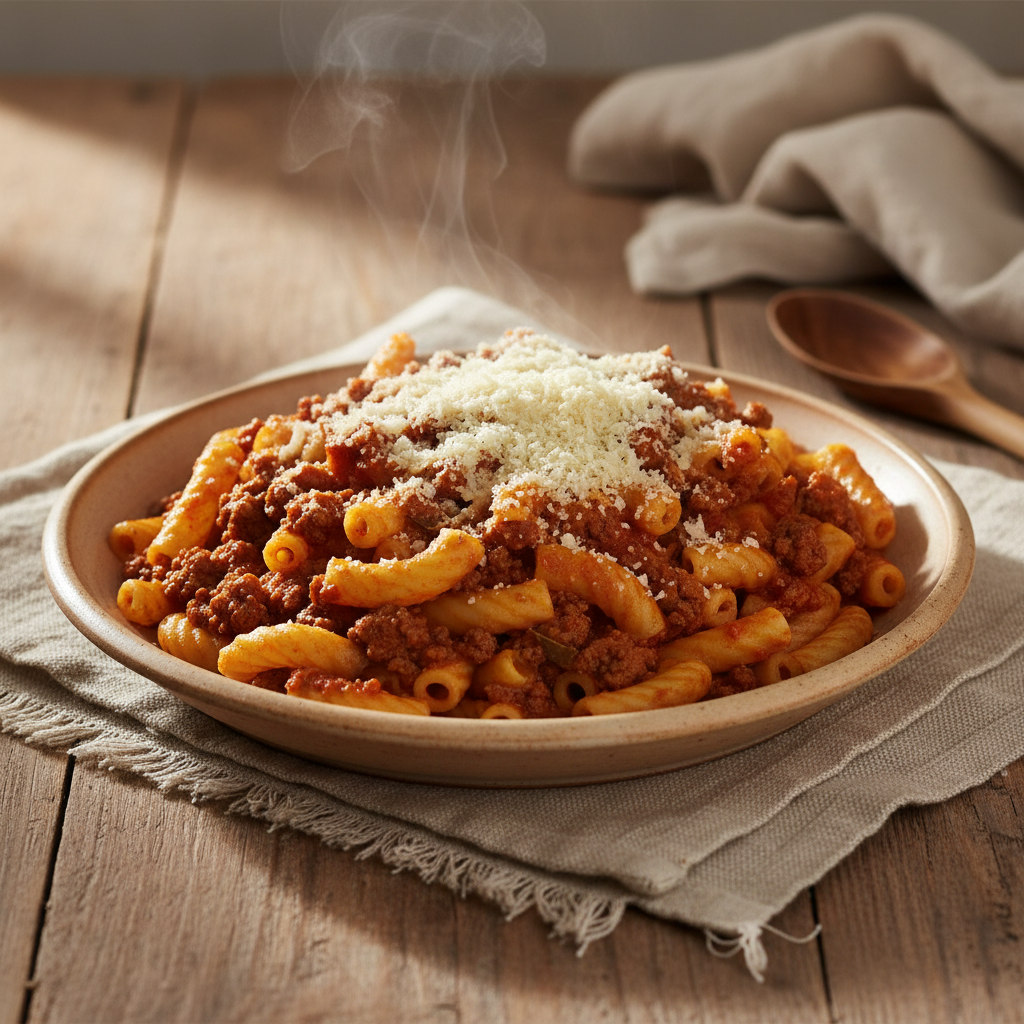
Tube shapes with ridges. Engineered to trap thick meat sauces, ragùs, and baked-pasta sauces.
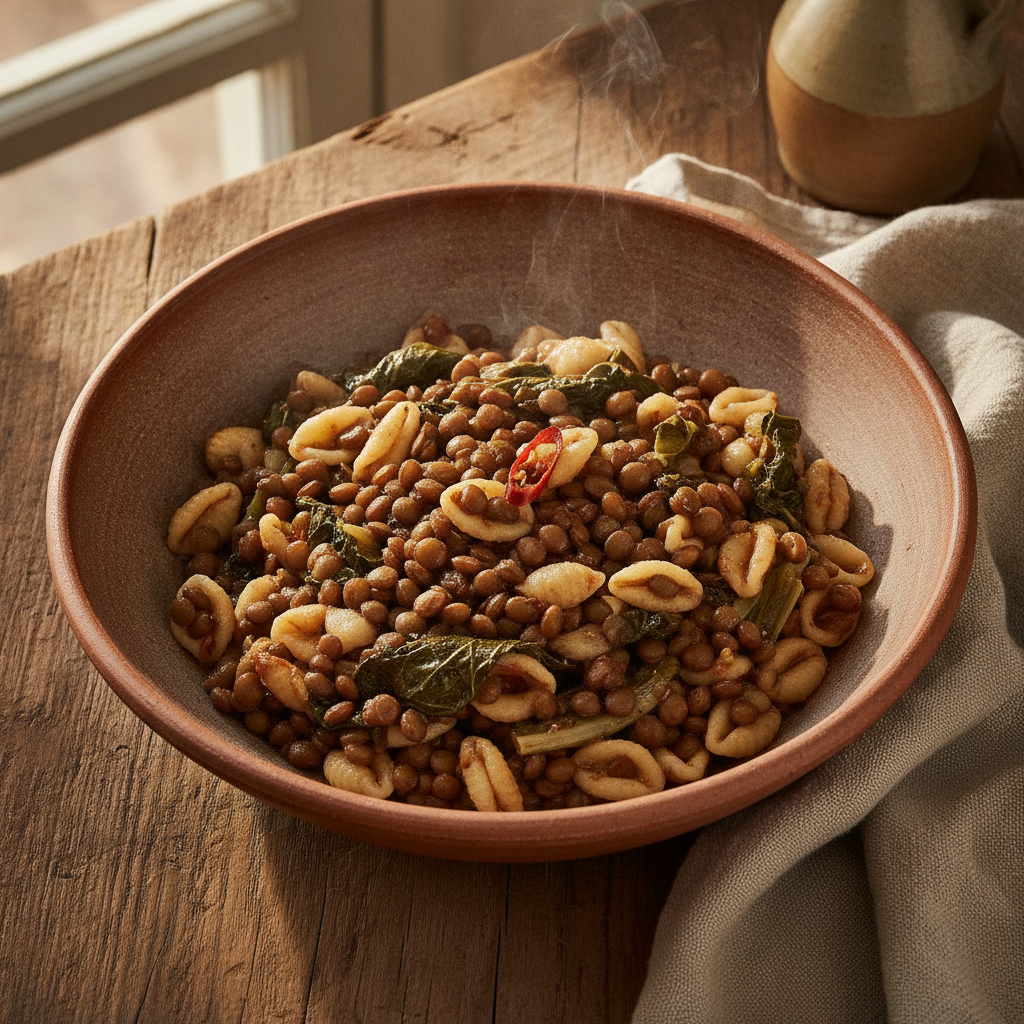
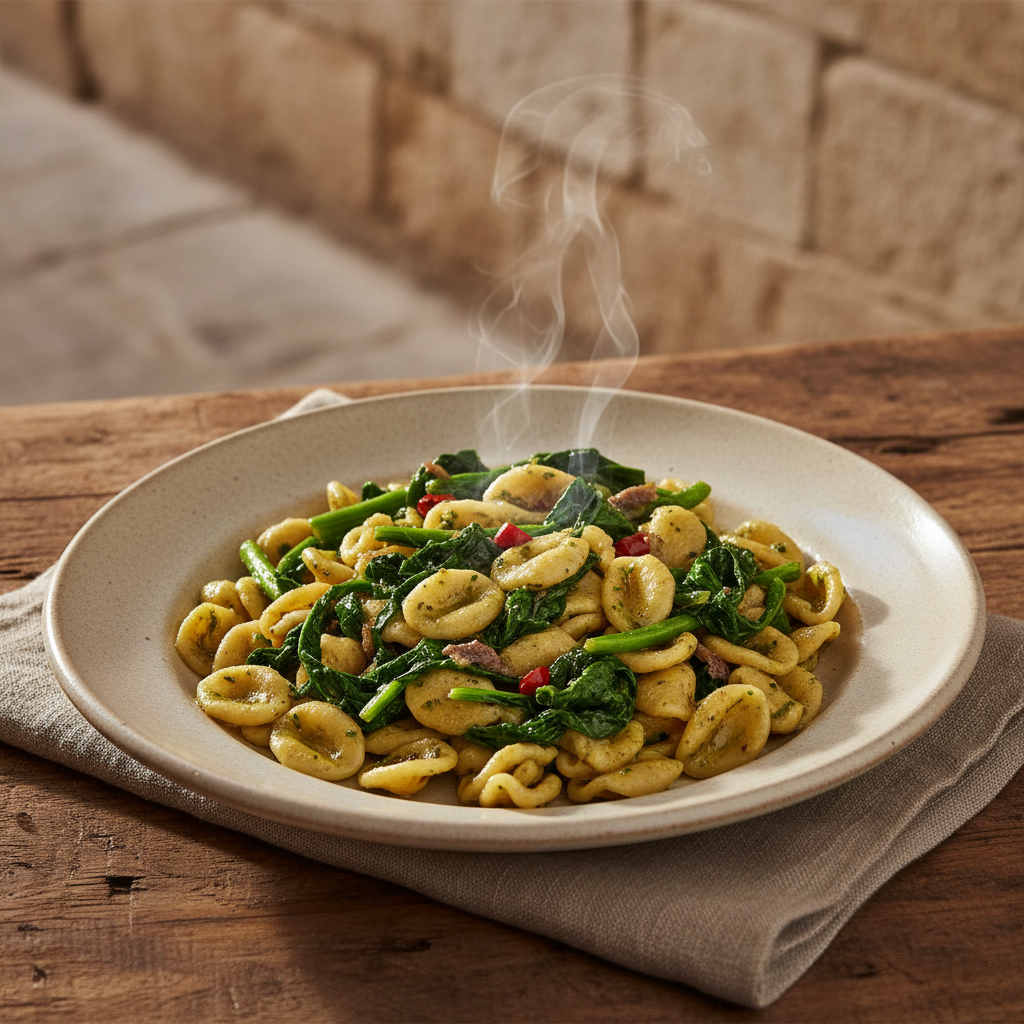
Pugliese ear-shaped pasta. Holds chunky vegetable sauces — broccoli rabe and sausage is the canonical pairing.
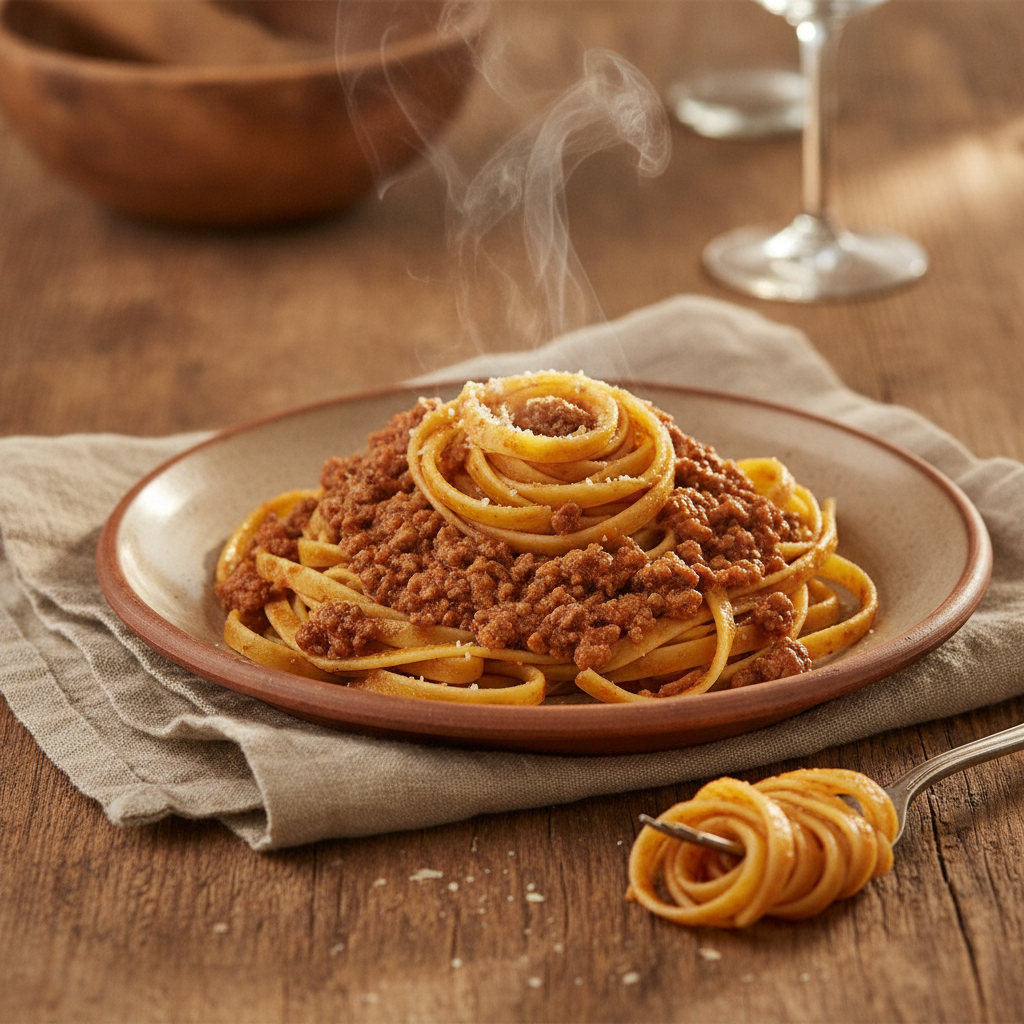
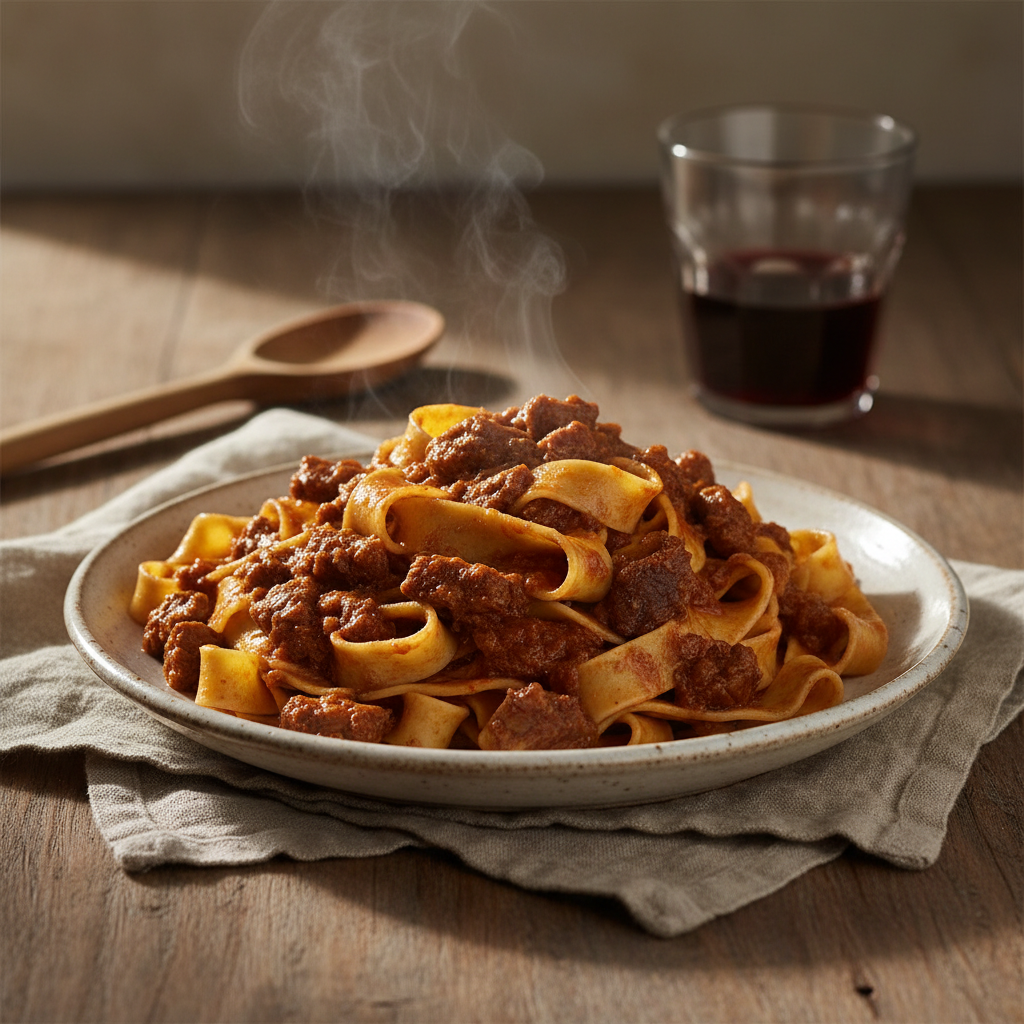
Wide ribbons, usually fresh. Built for long-simmered ragùs that need surface area to cling to.
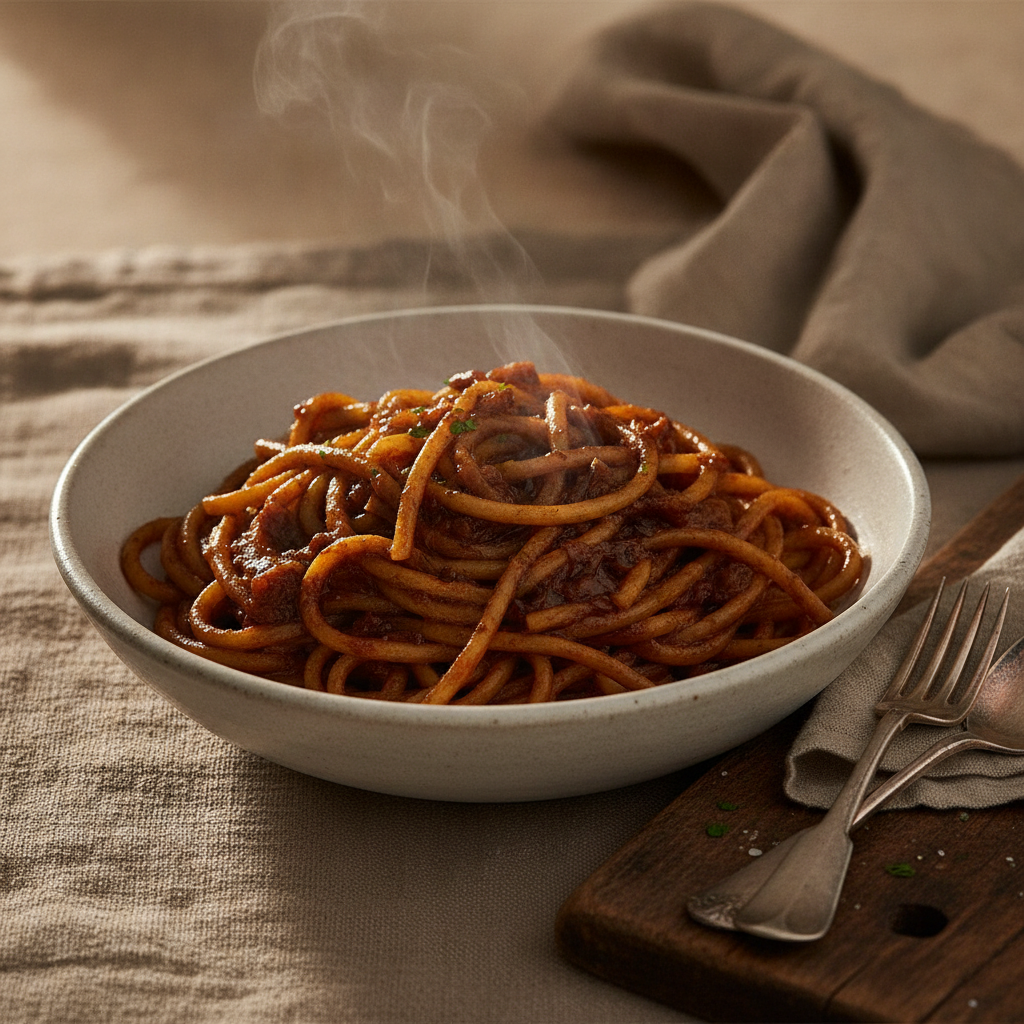
Spaghetti with a hole through the middle. Heavier than spaghetti, holds amatriciana and cacio e pepe beautifully. Splatters more — a known hazard.
04 / Technique · How to handle it
About 1 tablespoon kosher salt per liter of water. Pasta absorbs salt while it cooks — fix this here, not at the table.
Drain when the pasta is two minutes shy of the package's al dente time. It finishes in the sauce, absorbing flavor.
Scoop out at least a cup of pasta water before draining. Starchy and salty, it's the binder that turns oil and cheese into a glossy emulsion.
Drained pasta plus sauce plus a splash of pasta water, tossed over low heat for 1–2 minutes. Wood spoons or tongs, not a stir — you want each strand coated, not bruised.
05 / Recipes · 12 using pasta

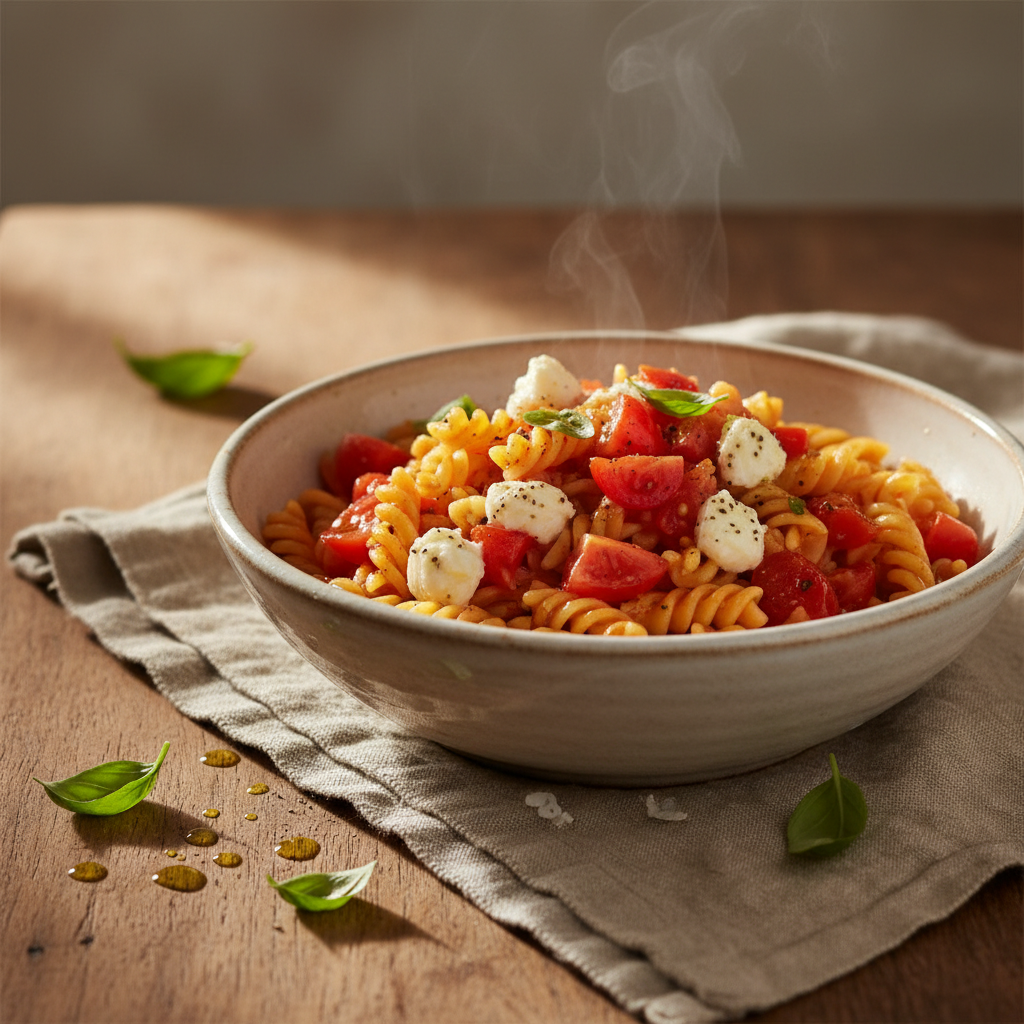
Cacio e pepe is a technique problem wearing a three-ingredient disguise. The difference between a glossy, clinging sauce and a bowl of grainy clumped cheese is a matter of degrees — literally.

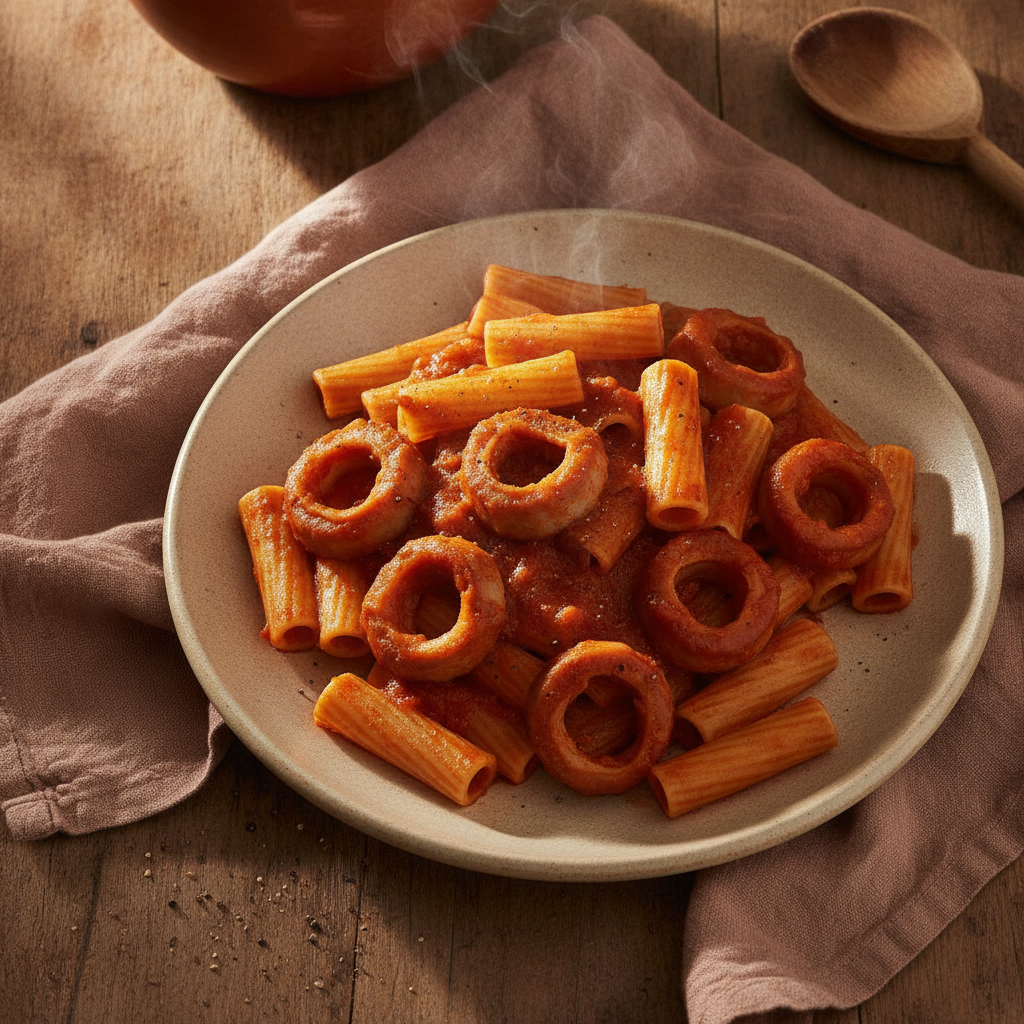
Gricia is the common ancestor of amatriciana and carbonara — no tomatoes, no eggs, nothing added across the centuries. Four ingredients, one pan, and a technique you can nail on the first attempt.
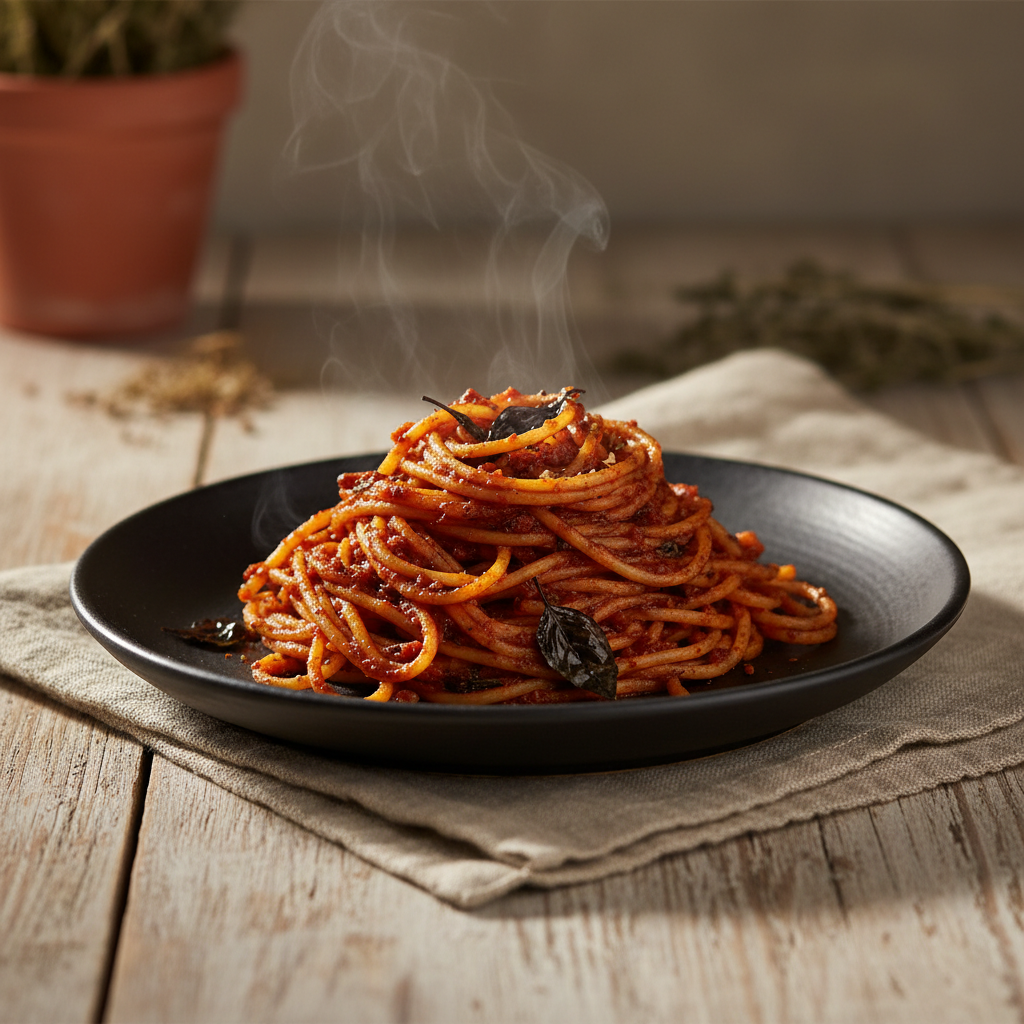
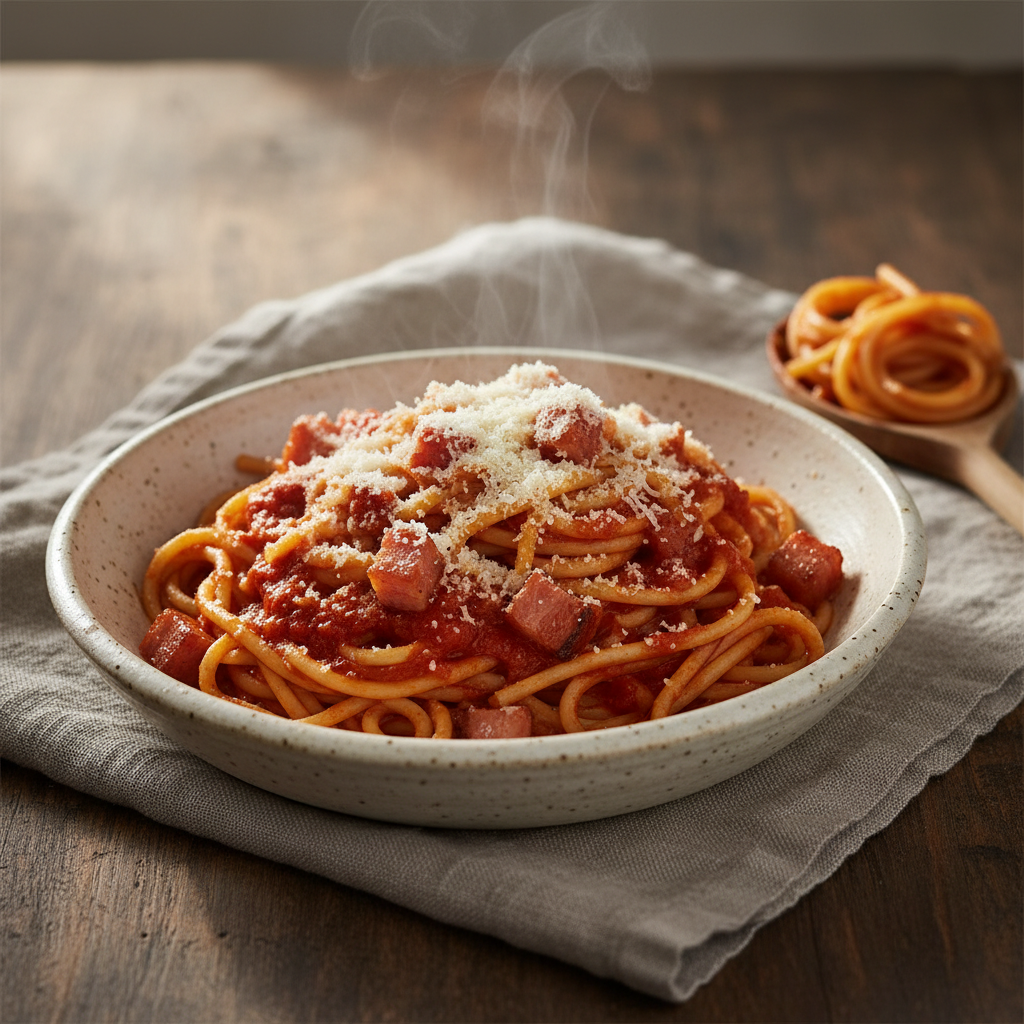
Amatriciana is not a Roman sauce — it is from Amatrice, a mountain town 150 km northeast of Rome, and the formula is fixed: guanciale, San Marzano tomatoes, Pecorino Romano, dry white wine, peperoncino. No onion, no garlic, no cream. The recipe below follows the original closely.

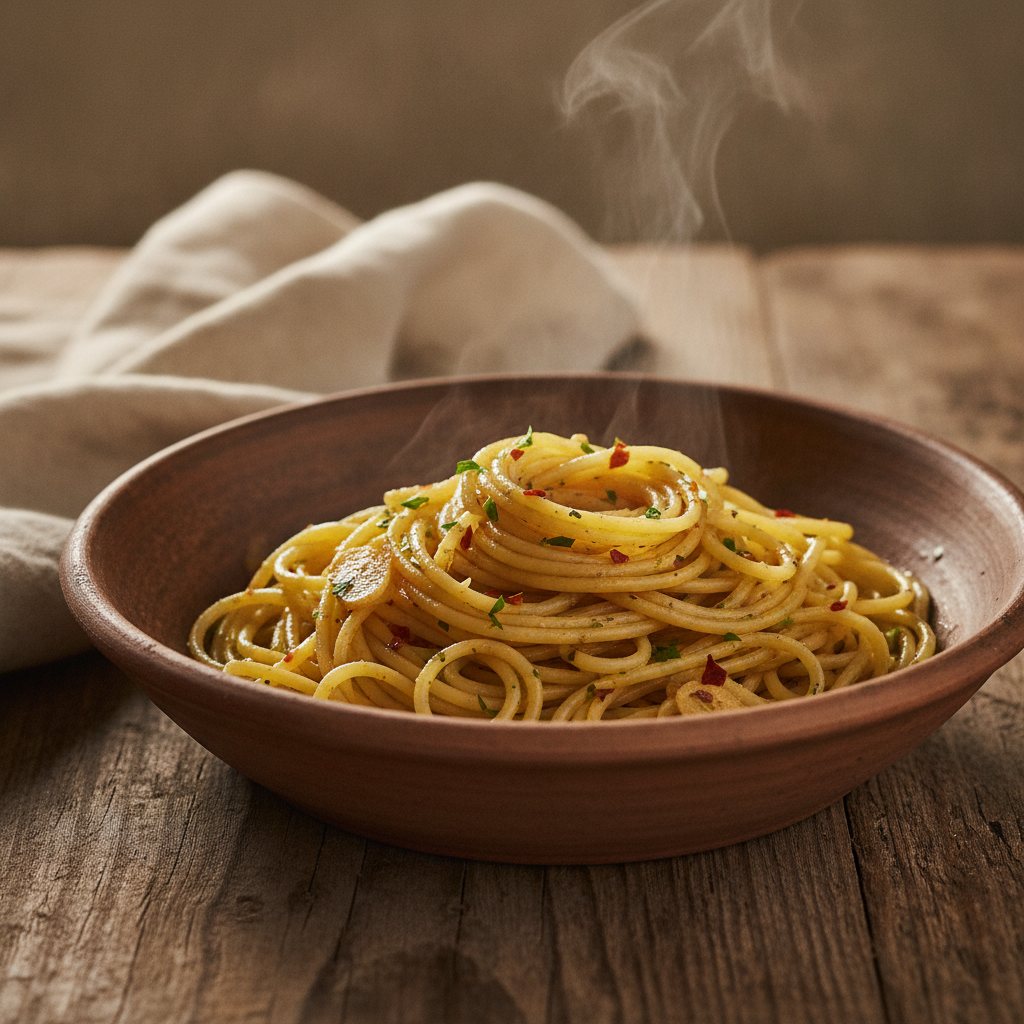
Aglio e olio is Neapolitan, not Roman — the 'Roman' label stuck because English-language cookbooks needed a dateline and it sounds better than 'Campanian pantry pasta.' Whatever you call it, five ingredients and 20 minutes is the contract, and the technique is the whole job.


06 / FAQ
No. The oil floats on top and coats the pasta when you drain it, which makes the sauce slide off. Just salt the water and stir occasionally to keep things moving.
In some Italian households, functionally yes. Practically it's fine — twist it into a tall pot or use a wider pan. Don't break spaghetti in front of your Sicilian friends.
Bite a strand. There should be a slight resistance at the center — not raw, but firm. Or break a piece and look at the cross-section: a thin pale dot in the middle means perfect.