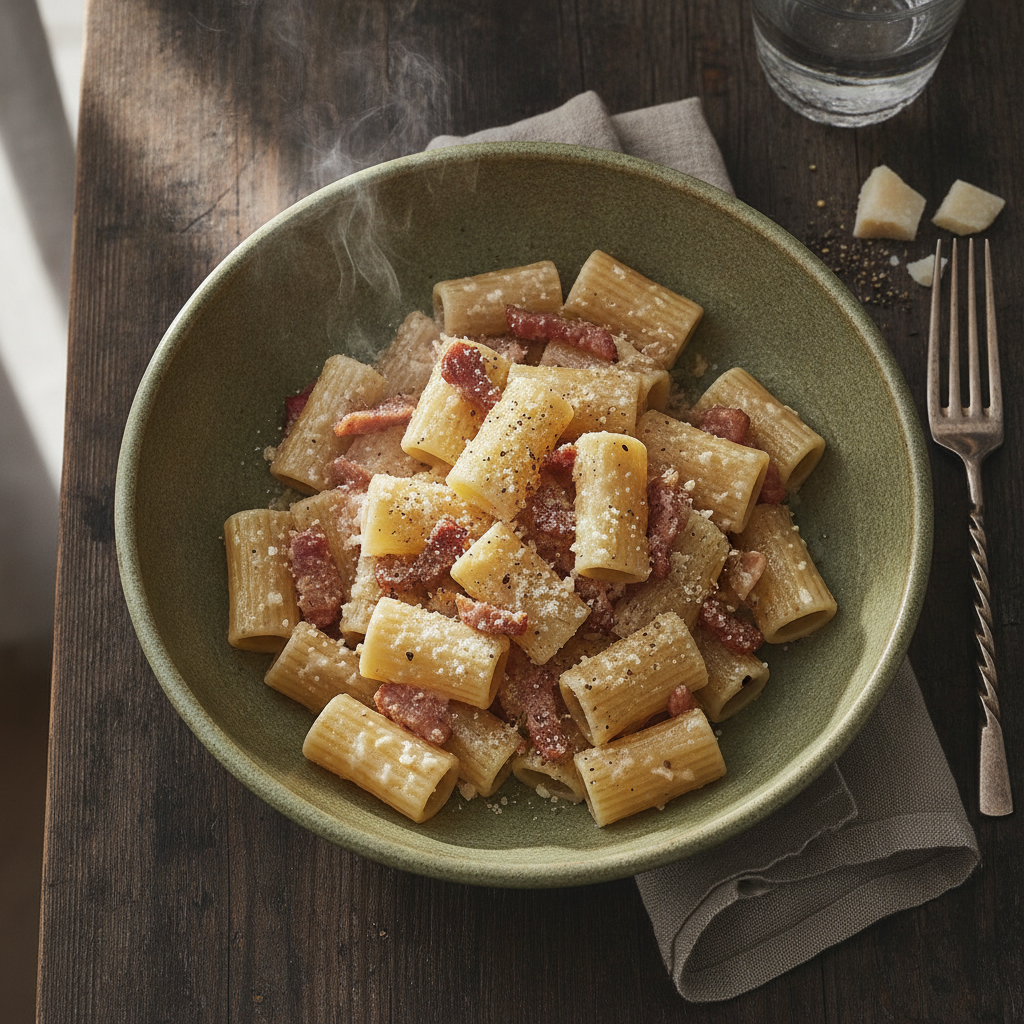
Cacio e Pepe Done Right — No Cream, No Clumps
Cacio e pepe is a technique problem wearing a three-ingredient disguise. The difference between a glossy, clinging sauce and a bowl of grainy clumped cheese is a matter of degrees — literally.
01 / Cuisines · Mediterranean
Pantry pasta to long-simmered ragù.
02 / Intro · The shape of it
Italian cooking is the art of doing less to good ingredients. The country runs on regional pantries — olive oil and tomato in the south, butter and rice in the north, lard and chestnut flour in the mountains — and almost every dish is a controlled argument between three or four ingredients held in tension by technique.
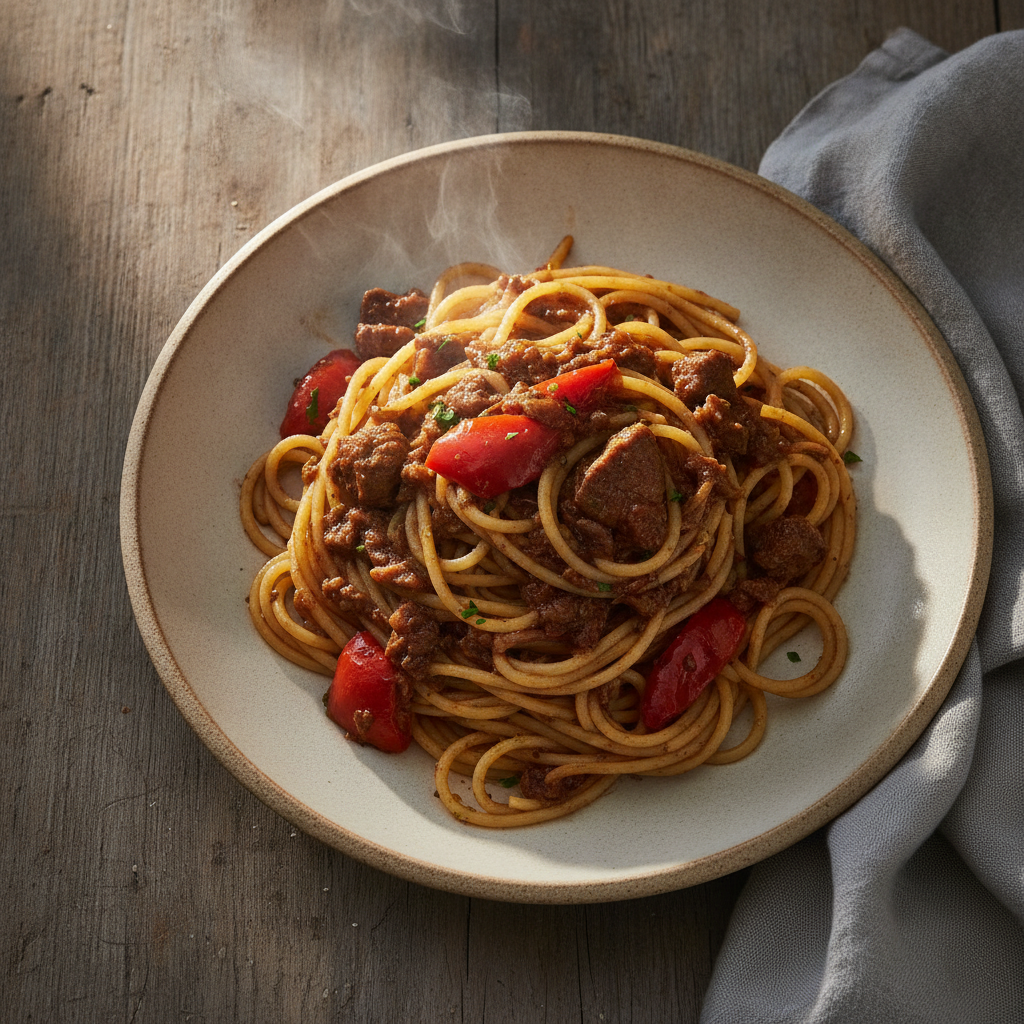
The defining move is restraint. A bowl of cacio e pepe is pasta, pecorino, black pepper, and a splash of cooking water — four ingredients tossed into a glossy emulsion that fails the moment you reach for a fifth. A pot of Bolognese is meat, soffritto, milk, wine, and time. Italian cooks treat the recipe as a hypothesis and the pan as the proof; you taste, adjust, and stop when it's right.
Souschef's Italian recipes are written in Marco's voice — Sicilian-born, Milan-trained, cooking in Berlin. He measures in grams, treats guanciale as non-negotiable, and won't put cream in a carbonara. Expect pantry pasta in 20 minutes, slow ragù on a rainy Sunday, and the occasional Sicilian pastry when the mood strikes.
03 / Techniques · The four that matter
The starch from your cooking water is the binder that turns oil and cheese into a sauce. Reserve at least half a cup before draining and add it a splash at a time off the heat.
Finely diced onion, carrot, and celery, sweated slowly in fat for 15–20 minutes until soft and translucent. The flavor base for ragù, risotto, and most braises.
Off-heat finishing of risotto or pasta with cold butter and grated cheese, beaten vigorously until the sauce turns glossy. The difference between competent and great.
Sliced (never minced) garlic toasted in olive oil at medium-low heat until pale gold. Minced burns in seconds; sliced gives you a five-minute window to pull it at peak flavor.
04 / Soundtrack · Italian kitchen on shuffle
05 / The library · 29 italian recipes

Cacio e pepe is a technique problem wearing a three-ingredient disguise. The difference between a glossy, clinging sauce and a bowl of grainy clumped cheese is a matter of degrees — literally.

Gricia is the common ancestor of amatriciana and carbonara — no tomatoes, no eggs, nothing added across the centuries. Four ingredients, one pan, and a technique you can nail on the first attempt.
Amatriciana is not a Roman sauce — it is from Amatrice, a mountain town 150 km northeast of Rome, and the formula is fixed: guanciale, San Marzano tomatoes, Pecorino Romano, dry white wine, peperoncino. No onion, no garlic, no cream. The recipe below follows the original closely.

Aglio e olio is Neapolitan, not Roman — the 'Roman' label stuck because English-language cookbooks needed a dateline and it sounds better than 'Campanian pantry pasta.' Whatever you call it, five ingredients and 20 minutes is the contract, and the technique is the whole job.


06 / FAQ · The cook's questions
Italian-American is a regional cuisine in its own right, born from southern Italian immigrants improvising with what was available in 1900s New York and New Jersey. Italian cooking in Italy is hyper-regional: a Bolognese in Bologna looks nothing like one in Naples. Both are valid; they're different cuisines that share a name.
No. Traditional carbonara is egg yolks, pecorino, guanciale, and black pepper — the sauce is an emulsion of egg, cheese, and rendered pork fat, off-heat. Cream is the shortcut for cooks who don't trust the emulsion.
Bronze-die extrusion gives the pasta a rough surface that holds sauce, and durum semolina cooks to a firm bite. Look for 'trafilata al bronzo' on the bag. De Cecco, Rummo, and La Molisana are reliable.
Yes. The water should taste like seawater — about a tablespoon of kosher salt per liter. Pasta absorbs salt while it cooks; underseason here and no amount of sauce-side salt will fix it.