Potato Pancakes with Smoked Salmon
Crispy potato pancakes topped with smoked salmon and crème fraîche. The trick is squeezing out every drop of moisture from the grated potatoes—that's what makes them shatter-crisp instead of soggy.
01 / Cuisines · Central European
Cold winters built this. Lean into it.
02 / Intro · The shape of it
German cooking is what happens when a continental climate, a strong pickling tradition, and 88 generations of peasant frugality all meet in the same kitchen. The cuisine is structured around the seasons: pickle in autumn, slaughter in winter, fresh herbs in summer, baking through Advent. Nothing wasted.
The cliché abroad is Beer Garden food — schnitzel, pretzel, sausage. The actual range is much wider: Saxon Schwarzbrot, Swabian Spätzle, Franconian Klöße, Bavarian Krautsalat, the Black Forest's smoked everything. Each region has its own bread, its own dumpling, its own way with pork.
Souschef's German recipes lean into the home-cooking canon Hans calls Hausmannskost — the food that fills the kitchen with smell for two hours before anyone eats. We'll do the careful Sauerbraten that takes four days and we'll do the 30-minute Käsespätzle for a Tuesday.

03 / Techniques · The four that matter
Color is flavor. Brown beef or pork in a screaming-hot dry pan or oven until the surface is dark mahogany before any liquid touches it. The fond becomes the base of every braise.
Cabbage, cucumber, beets, eggs — submerged in vinegar-brine in glass jars for 1–6 weeks. Plastic reacts and discolors. Glass is non-negotiable for proper Sauerkraut and Mixed Pickles.
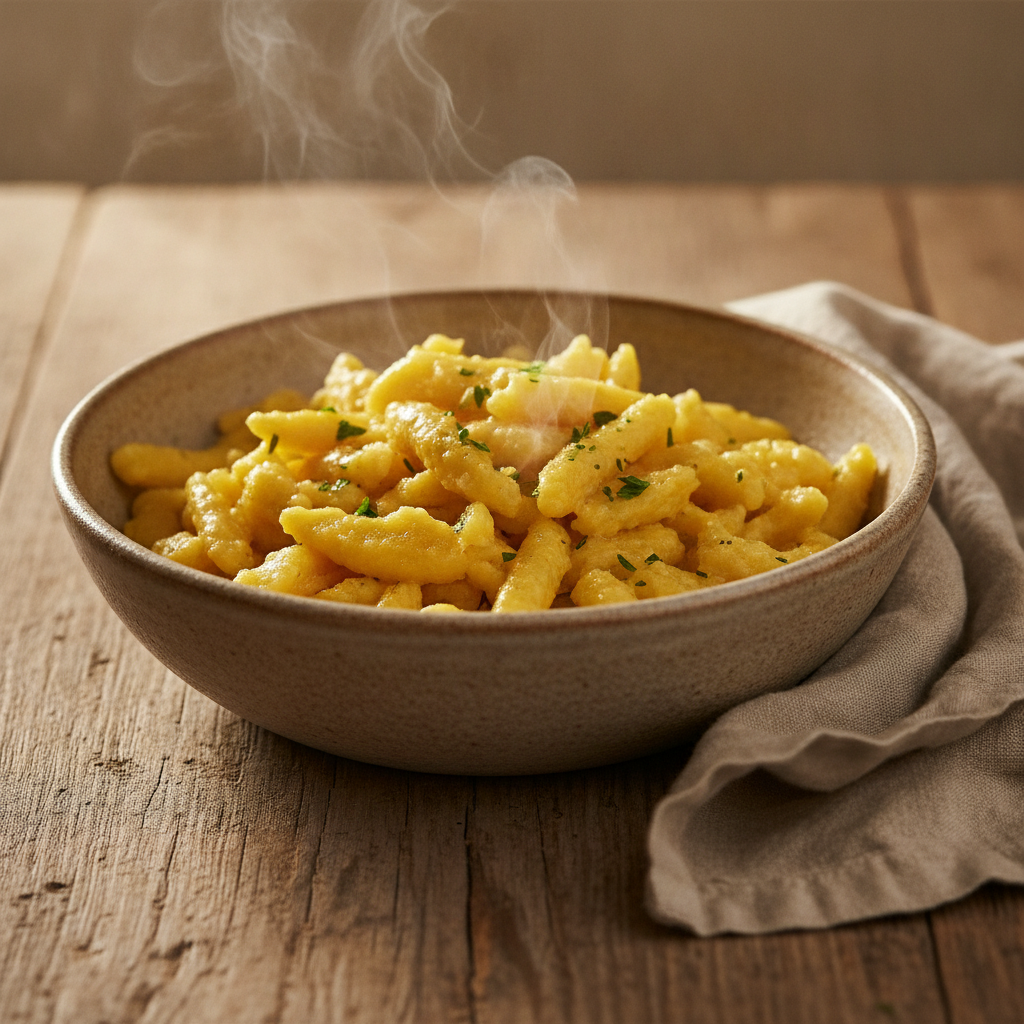
Egg-flour dough loose enough to drip slowly off a spoon, dropped through a Spätzlebrett or large-holed colander into salted boiling water. Don't aim for uniformity — irregular shapes catch more sauce.
Pork or veal between two sheets of parchment, pounded to even 4mm thickness with the flat of a mallet. Even thickness = even cooking. Beating it tears the meat; pound, don't beat.
04 / Soundtrack · Vintage Krautrock & Ambient
05 / The library · 48 german recipes

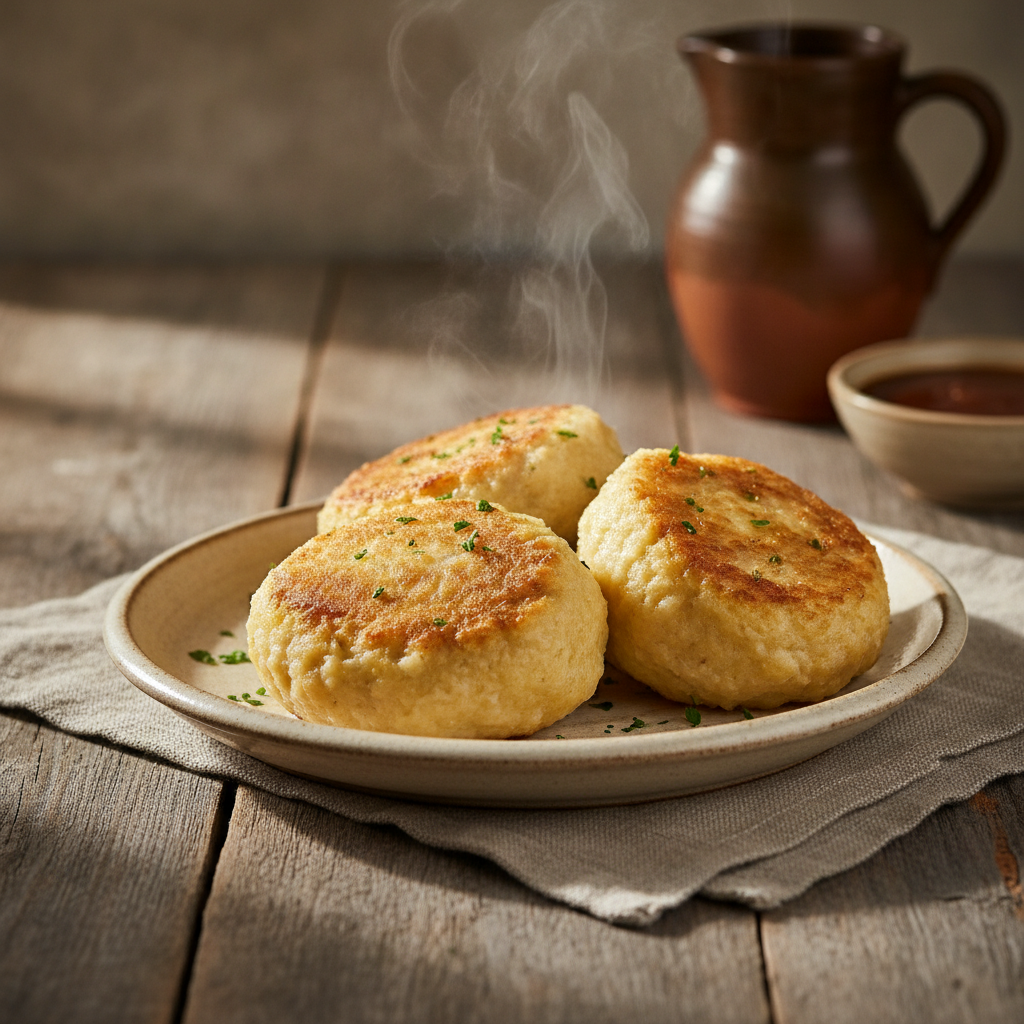
Crispy potato pancakes topped with smoked salmon and crème fraîche. The trick is squeezing out every drop of moisture from the grated potatoes—that's what makes them shatter-crisp instead of soggy.

This Swabian beef stew gets its body from tender braised chuck and its backbone from spätzle cooked right in the broth. It's a one-pot meal that Stuttgart has claimed as its own since the 19th century.

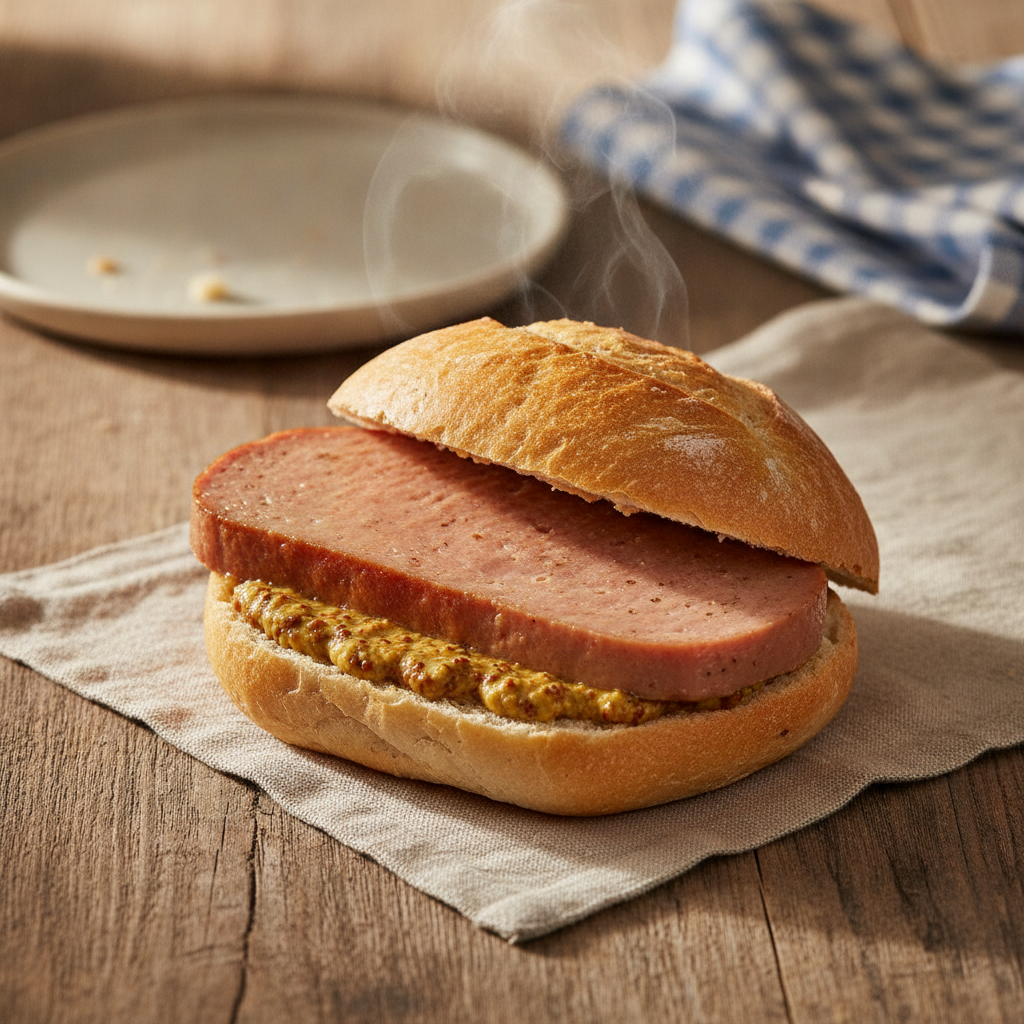
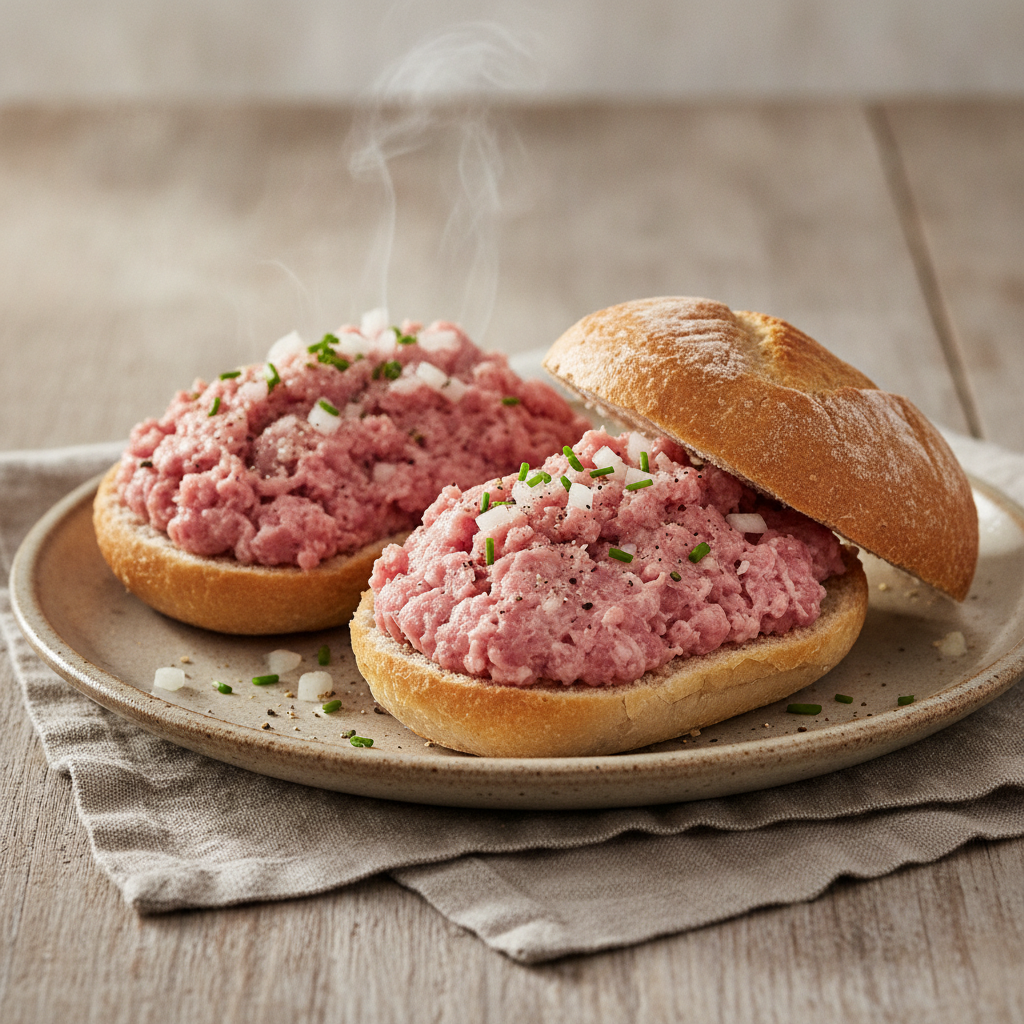
Leberkäse—a Bavarian emulsified meatloaf—gets crispy edges in the pan, then gets topped with a runny yolk. The warm potato salad drinks up the vinegar dressing while everything's still hot.

Breaded pork cutlet under a cream-and-mushroom sauce. The crispy schnitzel stays distinct from the sauce—plate it under or alongside, never soaking.


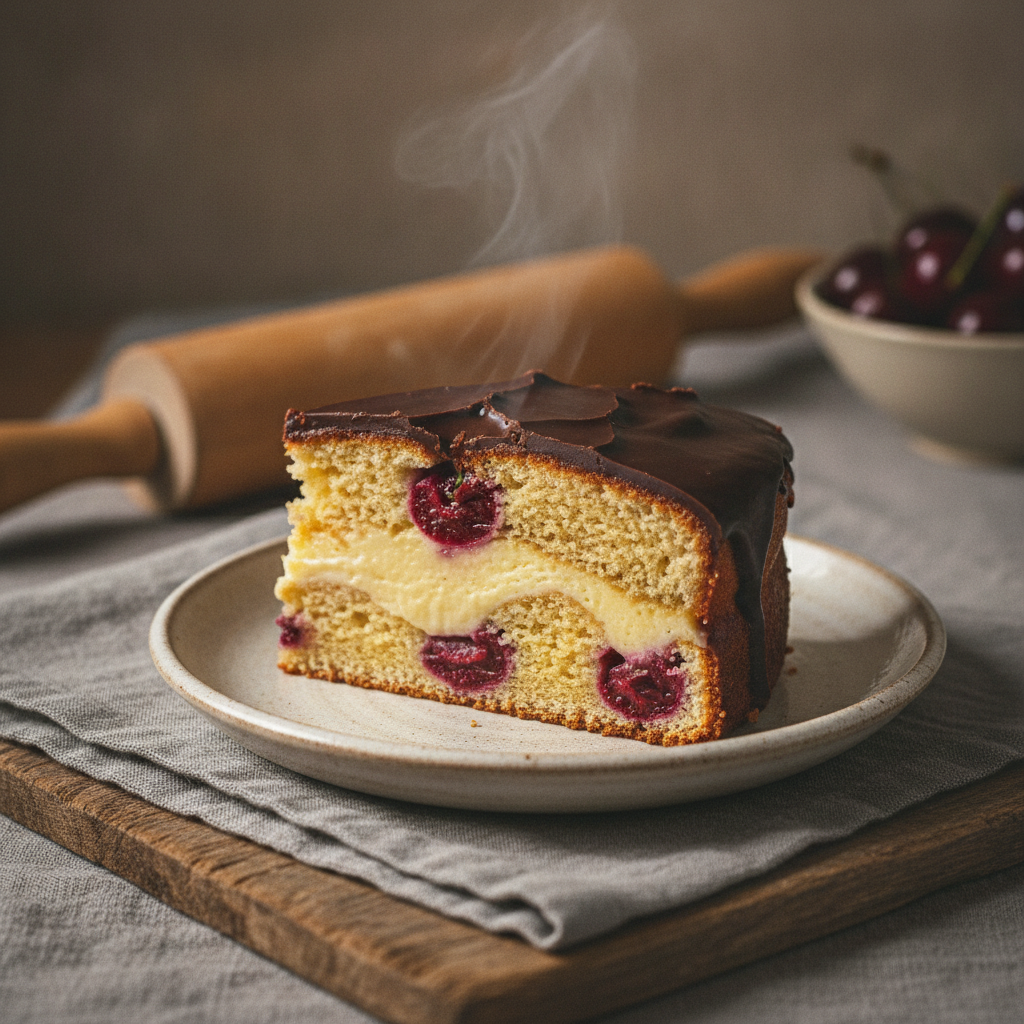
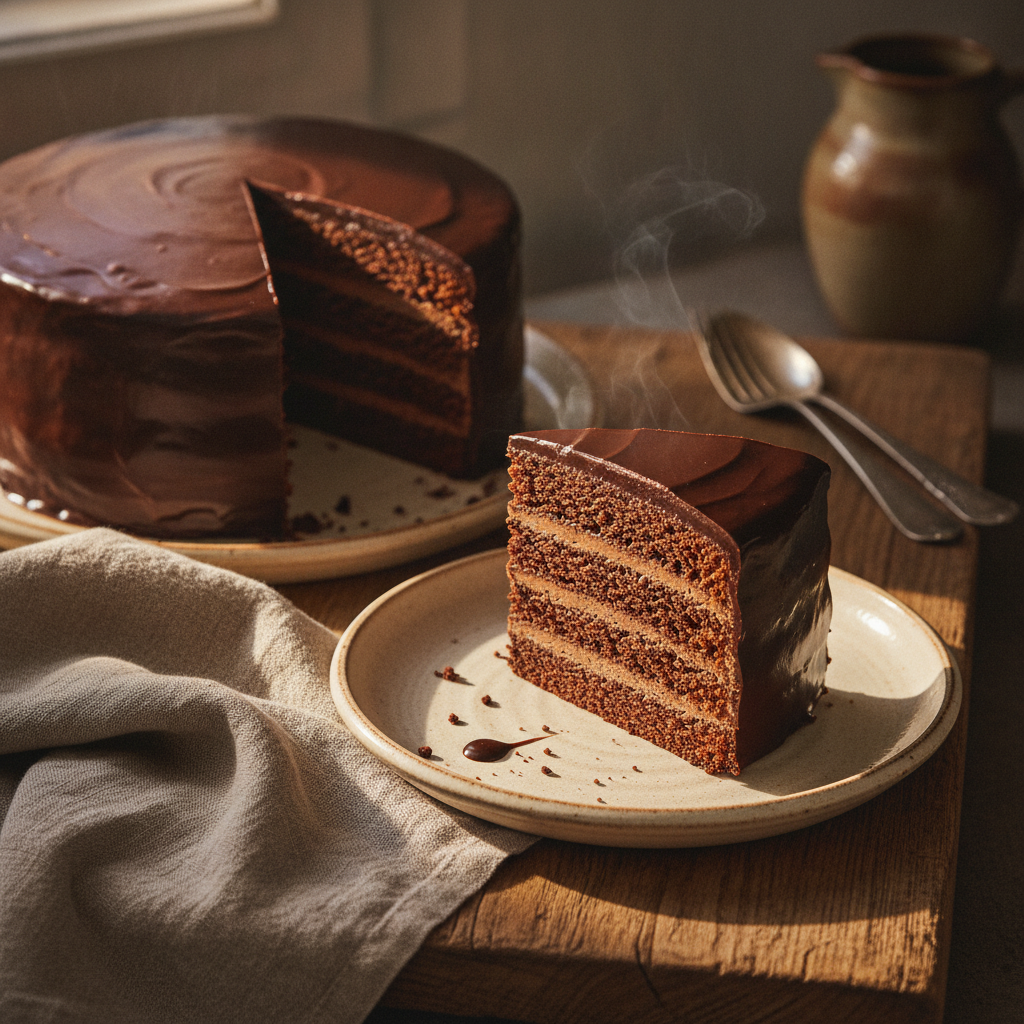
This scaled-down Black Forest cake delivers the essential contrast: boozy sour cherries, cocoa sponge, and whipped cream. The cherry brandy isn't optional—it cuts through the richness.


Northern German winter staple: kale braised low and slow with bacon fat, sausage, and mustard until it collapses into something tender and smoky. Pinkel is a Bremen groat sausage; if you can't find it, use any smoked sausage or kielbasa.

Hokkaido pumpkin gives you an edible skin and dense, sweet flesh that purées into silk. The ginger cuts through the richness without making this spicy—it's all warmth.

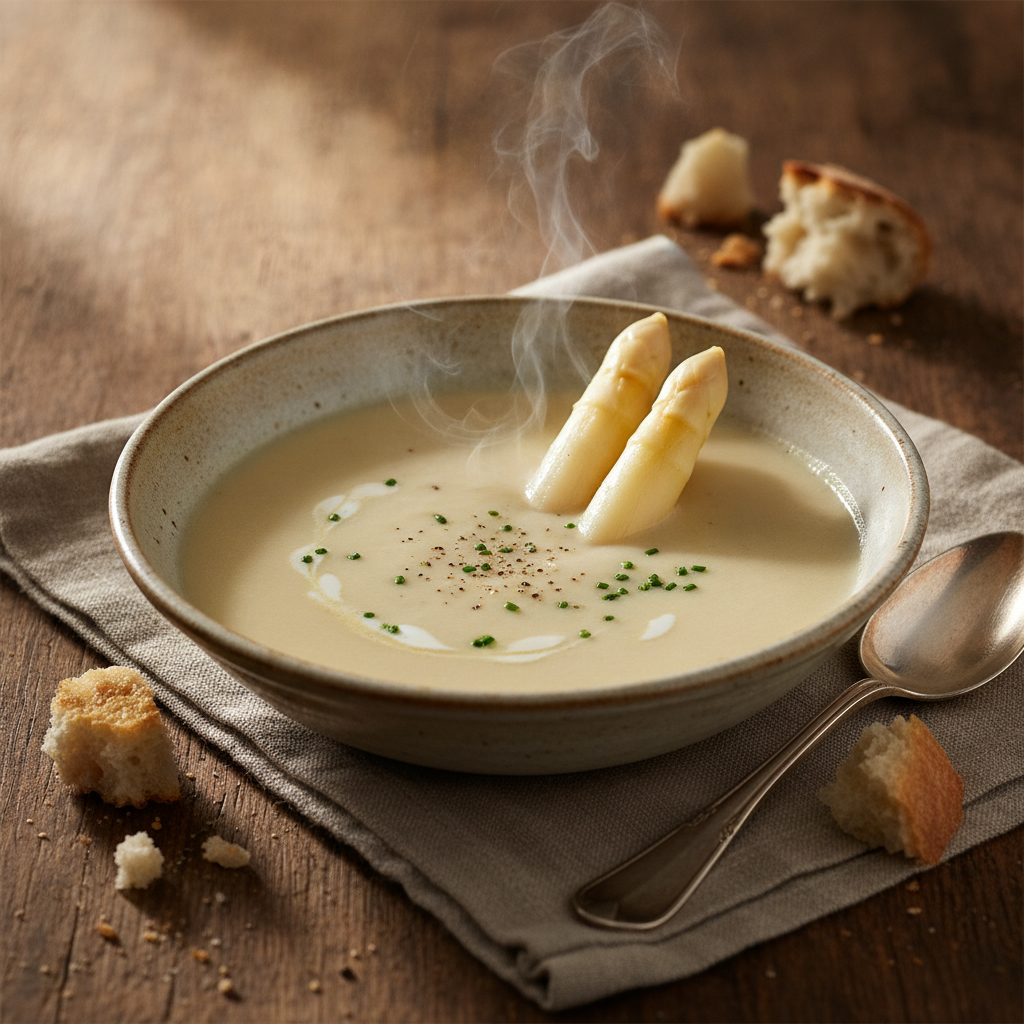
White asparagus season in Germany is serious business—thick spears peeled to ivory, simmered until tender, then drowned in butter-rich hollandaise. It's a spring ritual, not a side dish.


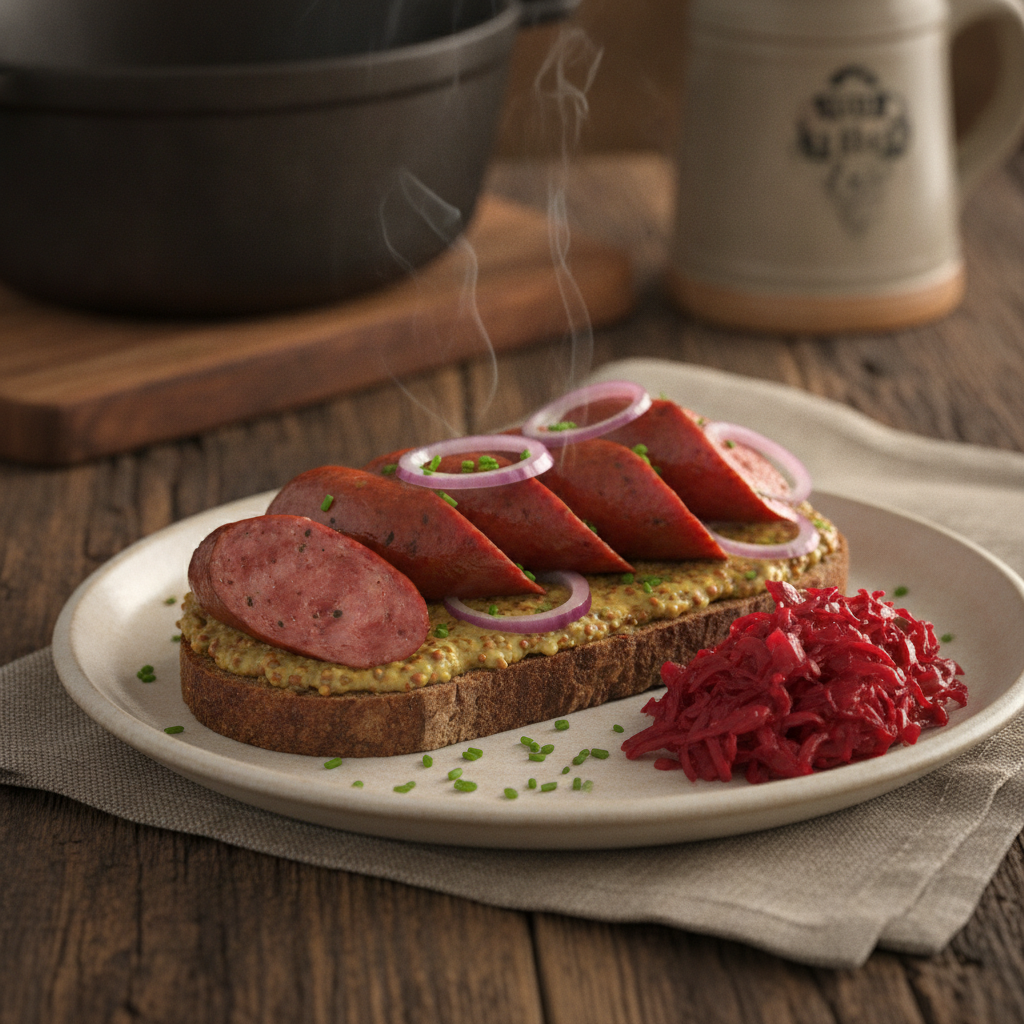
This Alsatian sausage salad is a no-cook lunch staple from the French-German borderlands. Strips of mild bologna-style sausage and nutty cheese get dressed in sharp vinegar and mustard, then chill until the raw onion mellows and the flavors marry.

Pan-fried trout with brown butter and lemon. The flour coating crisps the skin while protecting the delicate flesh from direct heat.


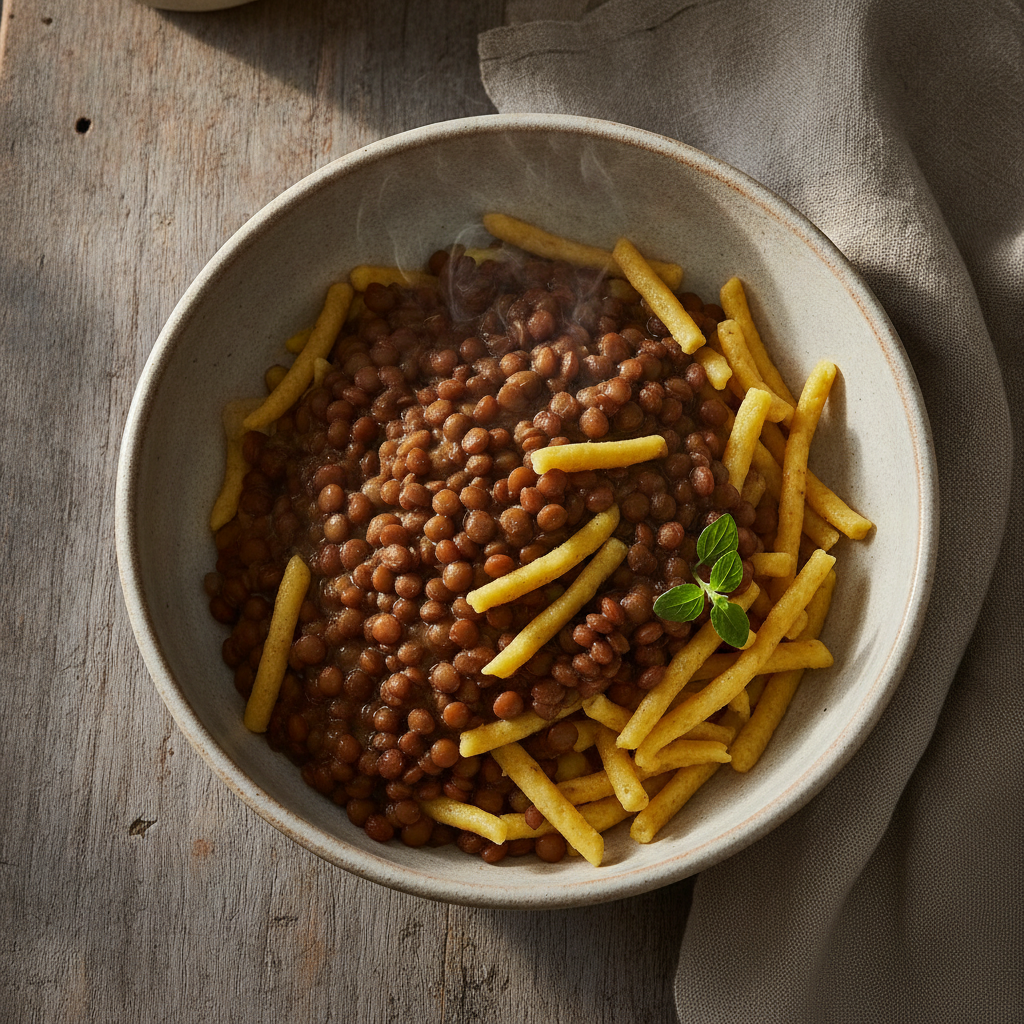
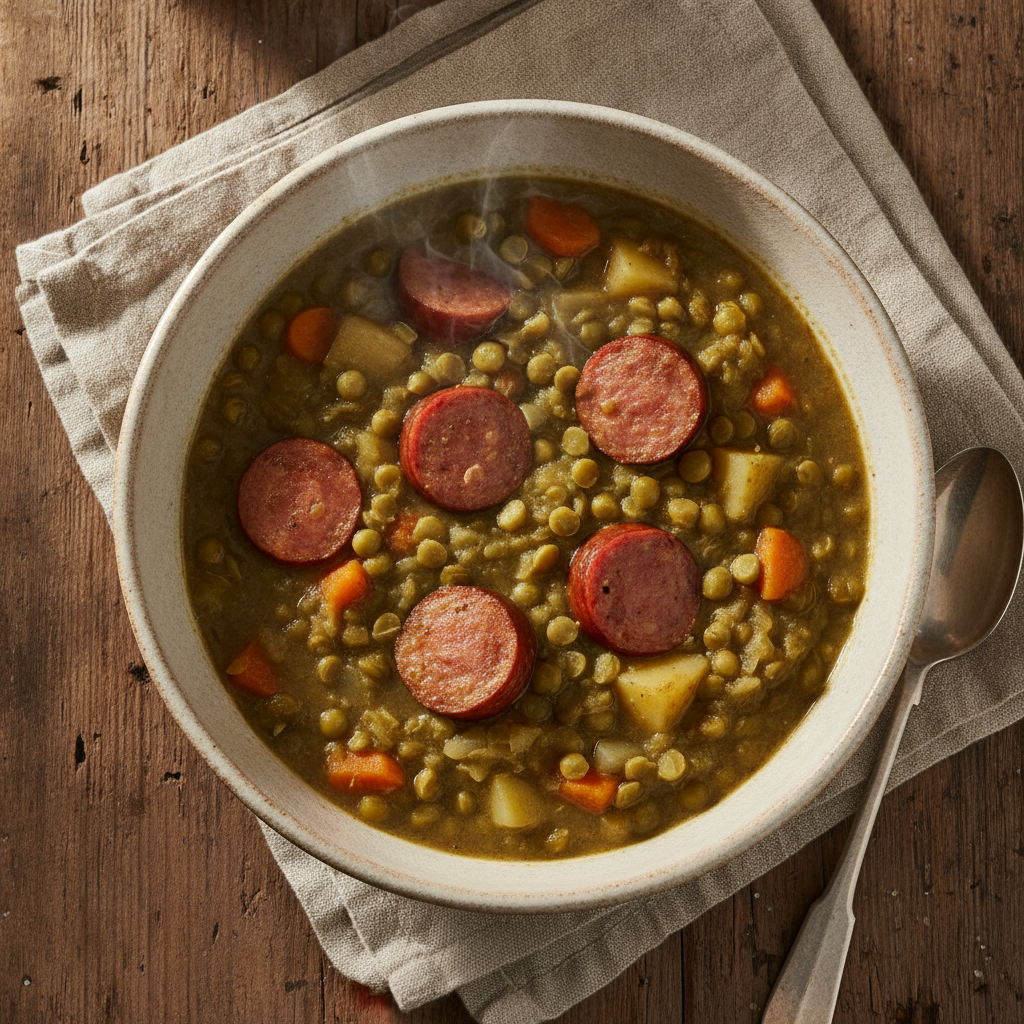
Brown lentils simmered with root vegetables and smoked bacon, finished with sausages and a splash of vinegar. The starch from the potatoes thickens the broth naturally while the bacon fat carries the sweetness of the vegetables.


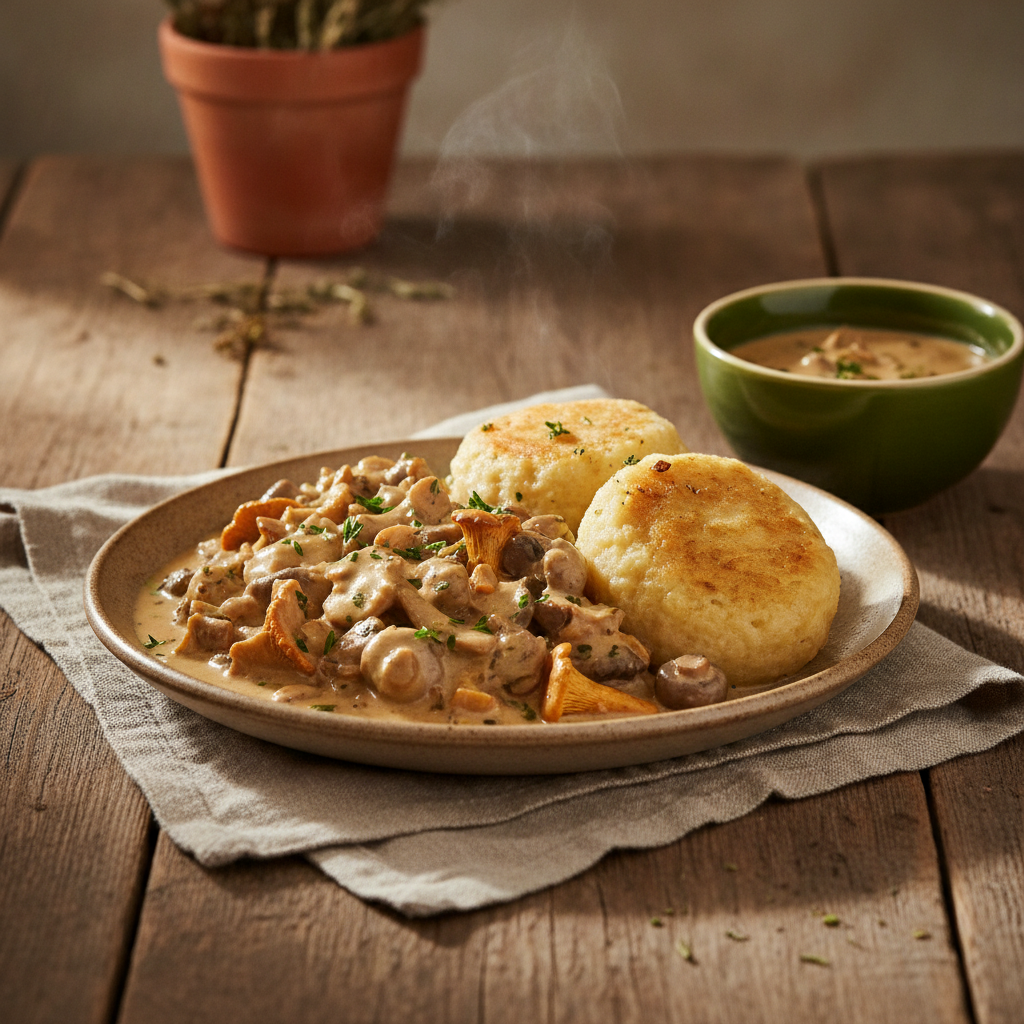
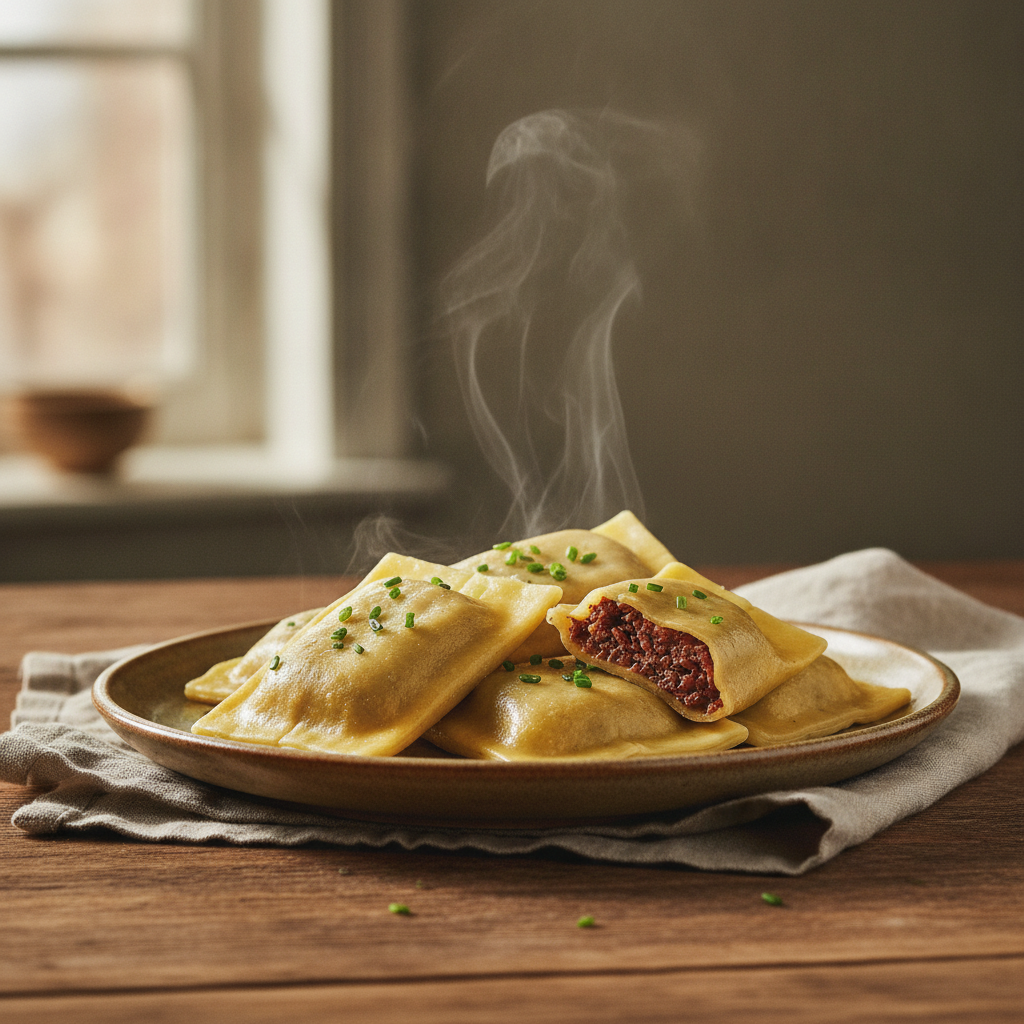
Bavarian bread dumplings—dense, springy, soaking up sauce—made from day-old rolls rehydrated with milk and egg. The mushroom cream sauce cuts through the starch with earthy fat.

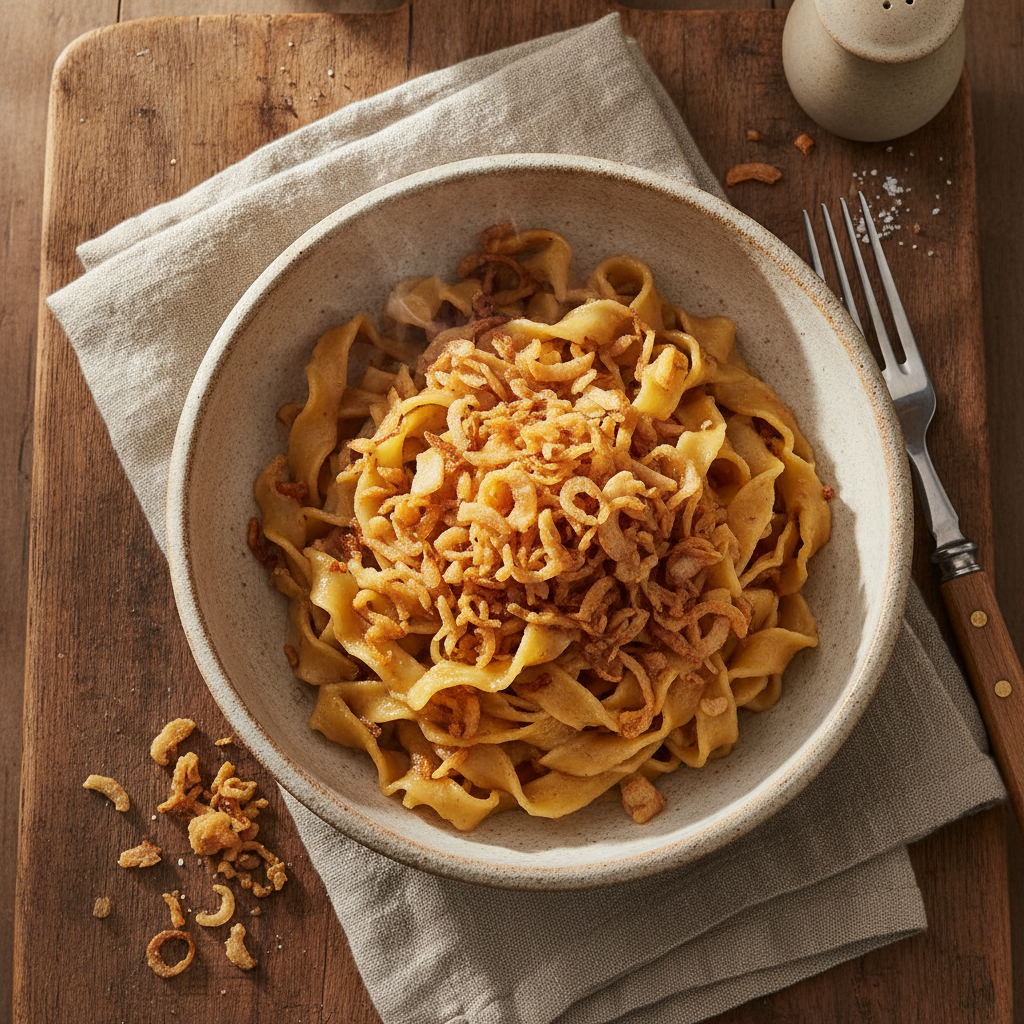
Spätzle (egg noodles) layered with melted cheese and caramelized onions. The dough gets worked just enough to develop gluten strands that hold their shape when pressed through holes into boiling water.


Braised beef rolled around bacon, pickle, and onion, then stuffed into a crusty roll with pan sauce. This is German comfort food that travels well.


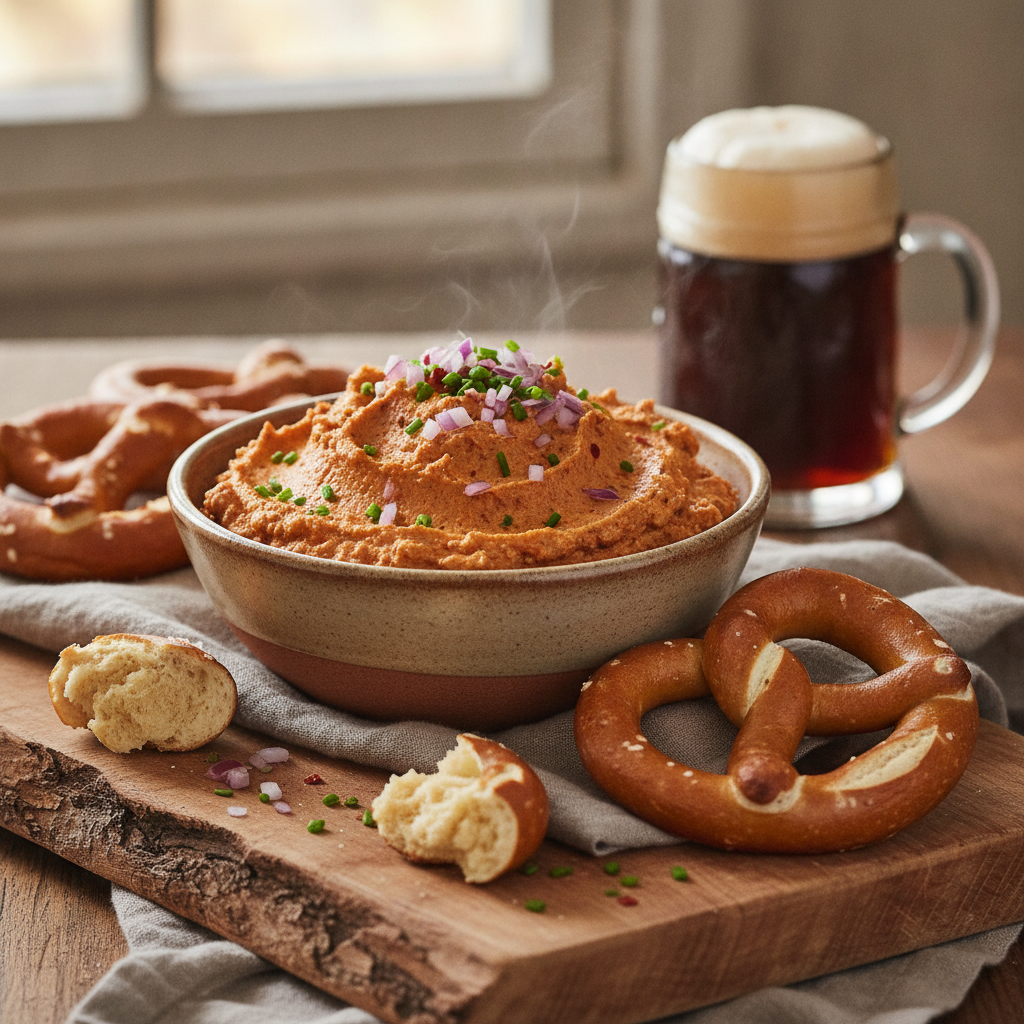
Store-bought pretzel sticks get a second life under a blanket of melted cheese spiked with paprika and chili. Quick, salty, and done in 20 minutes.


A North German harbor staple: pickled herring on a crusty roll with sharp onion, pickles, and creamy remoulade. The salt-cured fish needs nothing but good bread and bright toppings.

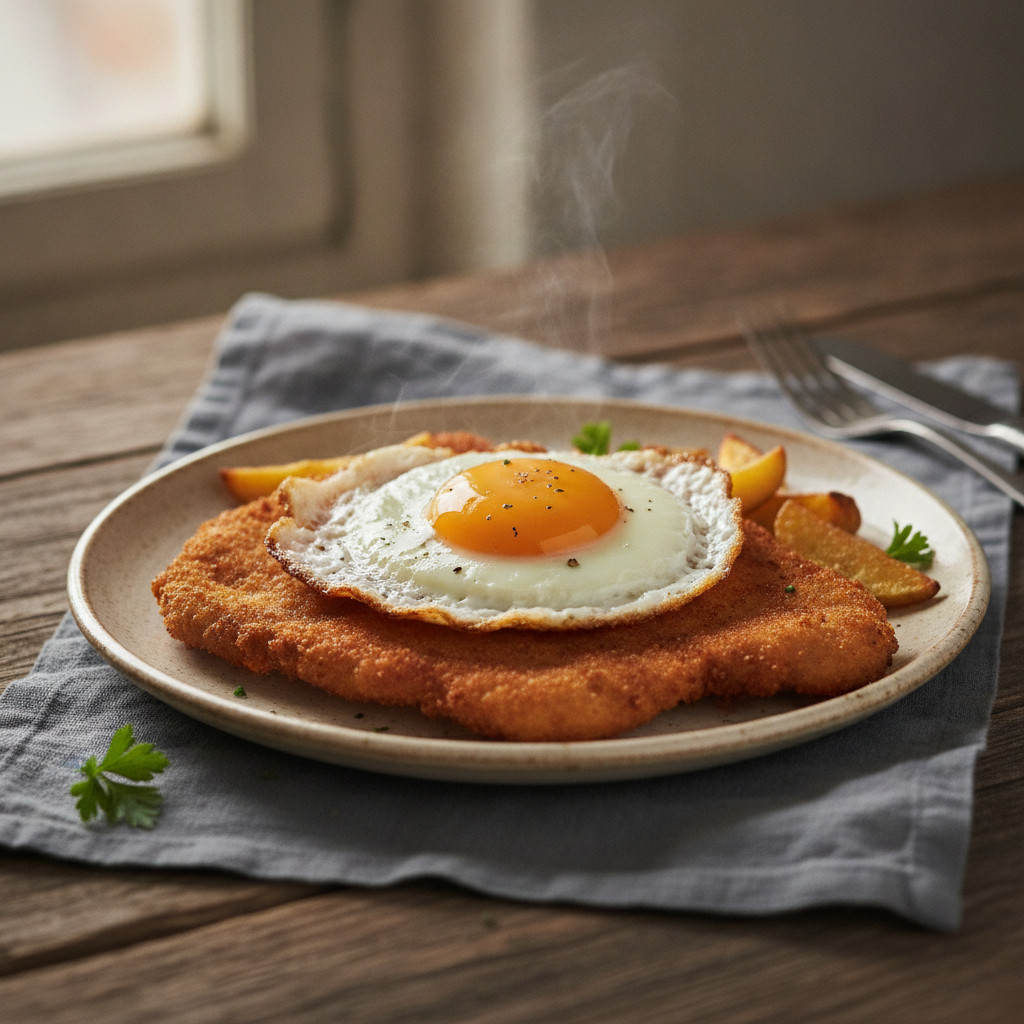
Leberkäse (a fine-ground Bavarian meatloaf, no liver involved) crisps up in the pan while eggs fry sunny-side up. Serve with sweet mustard and bread for a quick lunch that hits every register—crisp, creamy, tangy.

Handkäse is a firm, tangy German cheese made from sour milk, marinated in a sharp vinegar-onion dressing called 'Musik' (named for the digestive consequences of eating raw onion). Serve it cold with rye bread and cider.

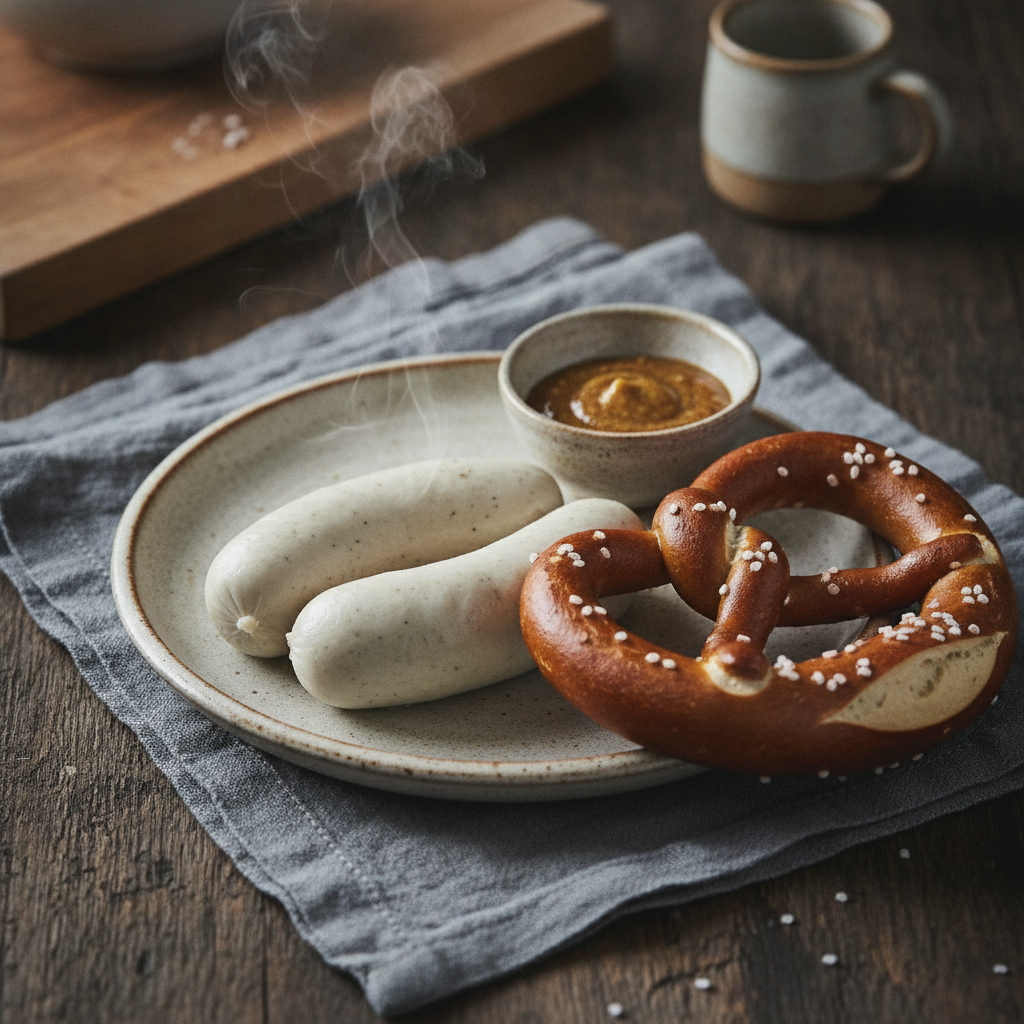
Bavarian white sausage served in hot water with sweet mustard and pretzels. Eat it before noon — that's tradition — and peel the casing before you eat.


These pan-fried meatballs get their tender texture from soaked bread and a 50/50 pork-beef blend. Serve them in a Kaiser roll with mustard for a proper German street-food experience.


German meatloaf bound with milk-soaked bread and egg, baked until the edges caramelize. The starchy bread acts like a sponge—it keeps the loaf moist and helps the proteins set into a tender, sliceable texture.

Soft egg noodles layered with melted cheese and topped with crispy onions. The trick is getting the batter consistency right — it should ribbon off the spoon slowly, not pour.

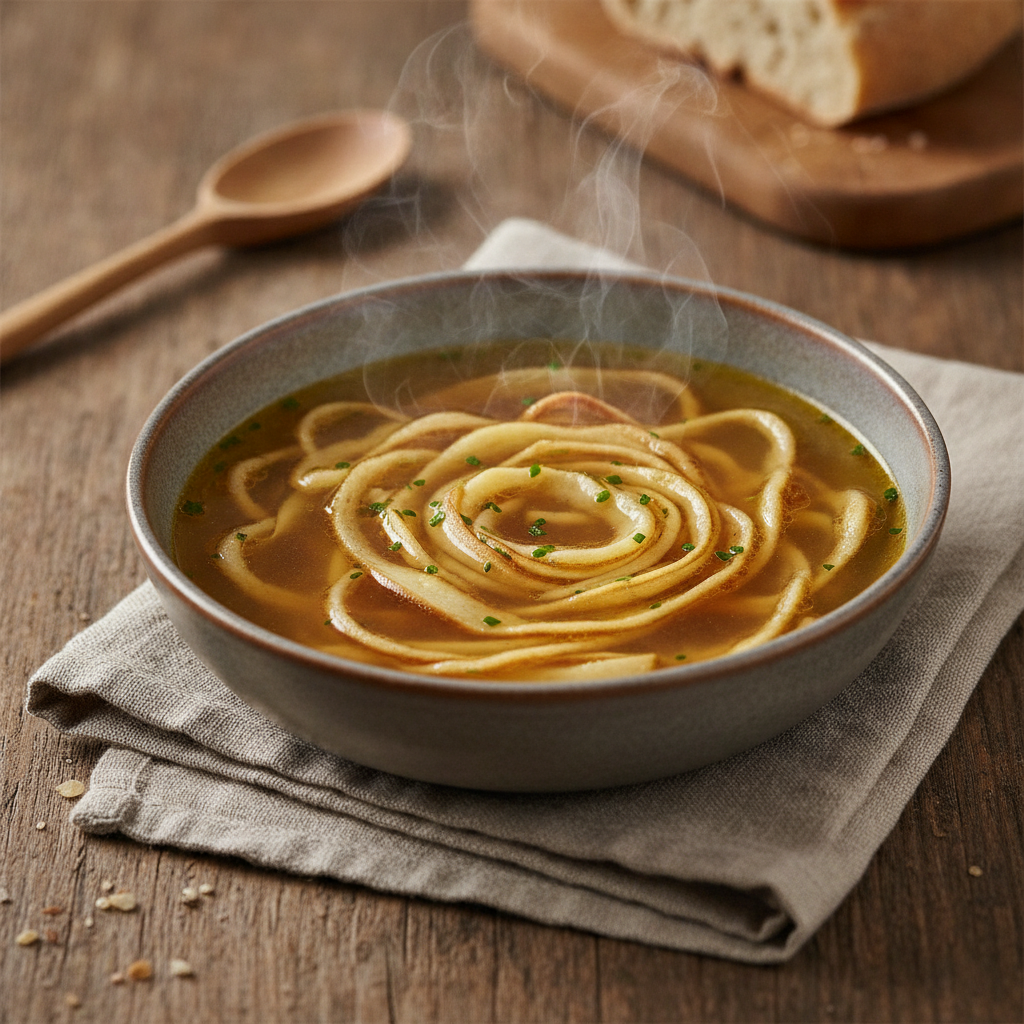
A classic Austrian-German soup built on tender semolina dumplings that float in clear broth. The dumplings set from starches absorbing fat and liquid during rest, then firm up completely when poached.


This Southern German potato salad gets dressed while hot so the potatoes soak up the vinegar-broth mixture instead of sitting in mayo. It's best made a few hours ahead—the flavors sharpen as it rests.


06 / FAQ · The cook's questions
The vinegar-and-wine marinade has to penetrate the muscle and break down connective tissue. Three days minimum; four is better. The result is tender, sour, and complex in a way that no shortcut produces.
Bratwurst is pork (sometimes beef), seasoned with caraway, marjoram, nutmeg, grilled or pan-fried. Weisswurst is veal-and-pork, parboiled (never grilled), with parsley and lemon. Eaten before noon, never with mustard that isn't sweet.
For dressings, yes. For roasting potatoes or browning meat, no — lard's smoke point and flavor are the dish. Use beef tallow or duck fat if you don't want pork.