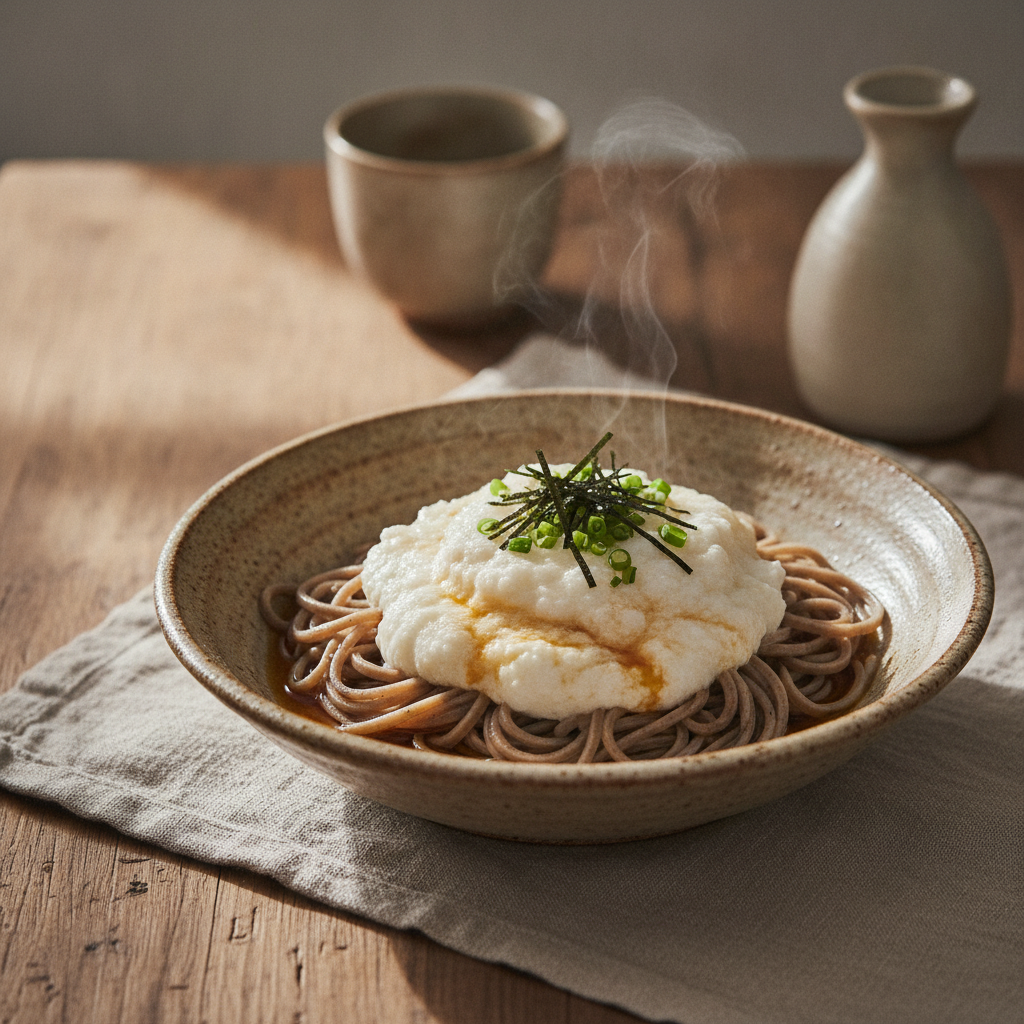
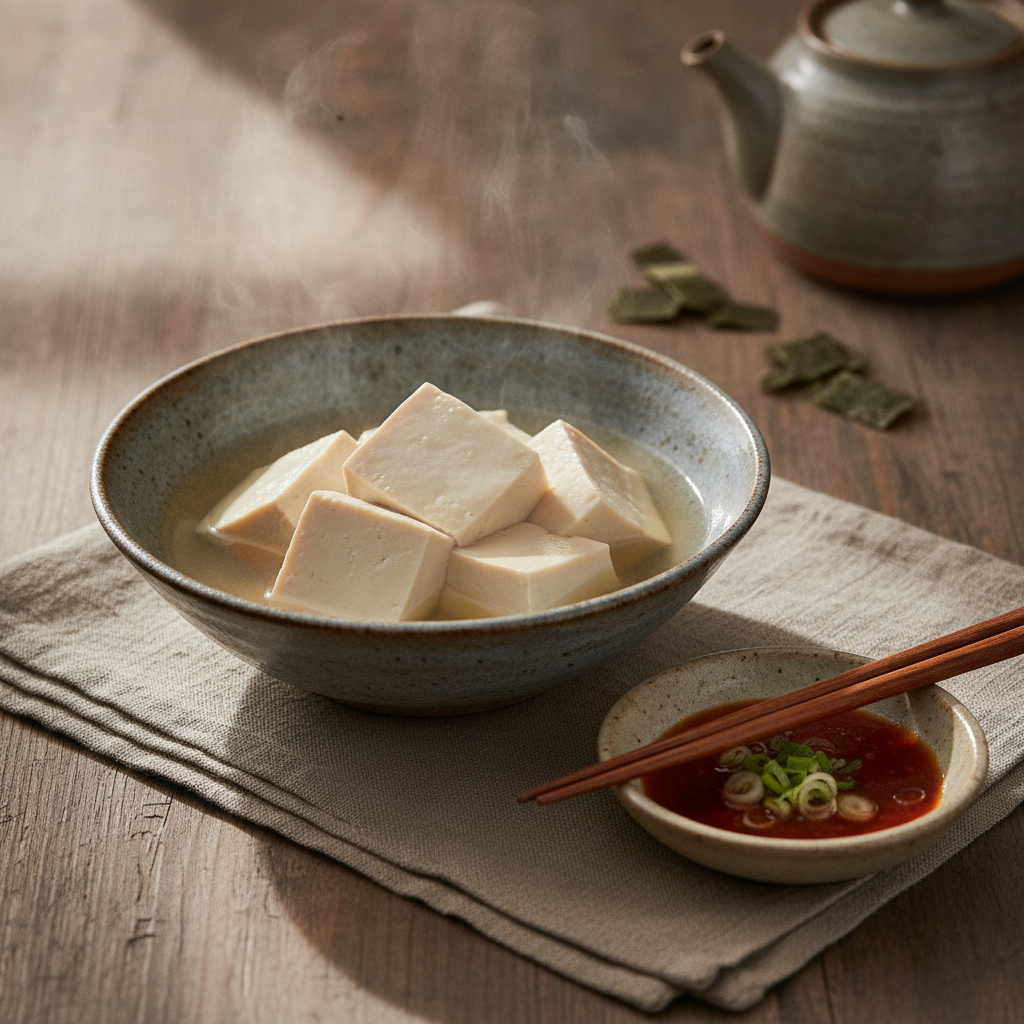
01 / Cuisines · East Asian
Japanese.
Quiet technique, loud umami.
02 / Intro · The shape of it
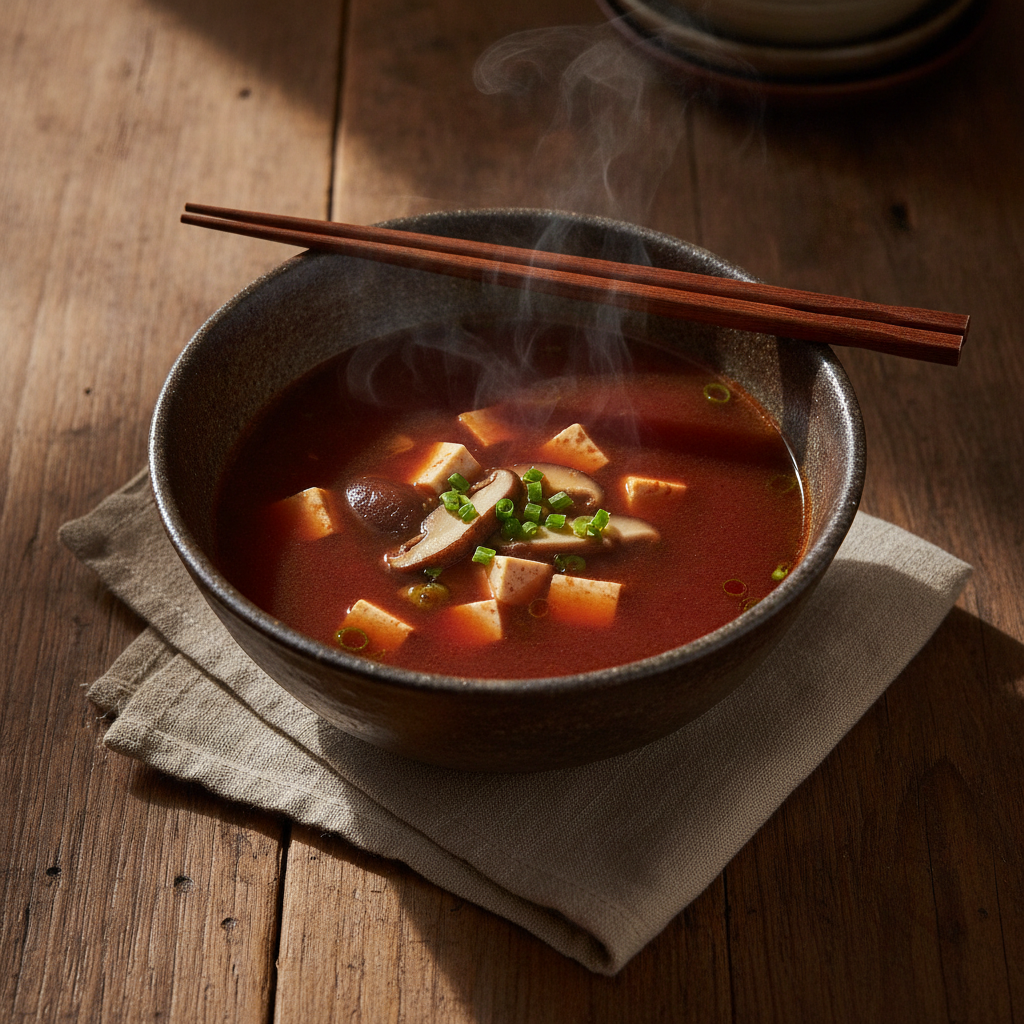
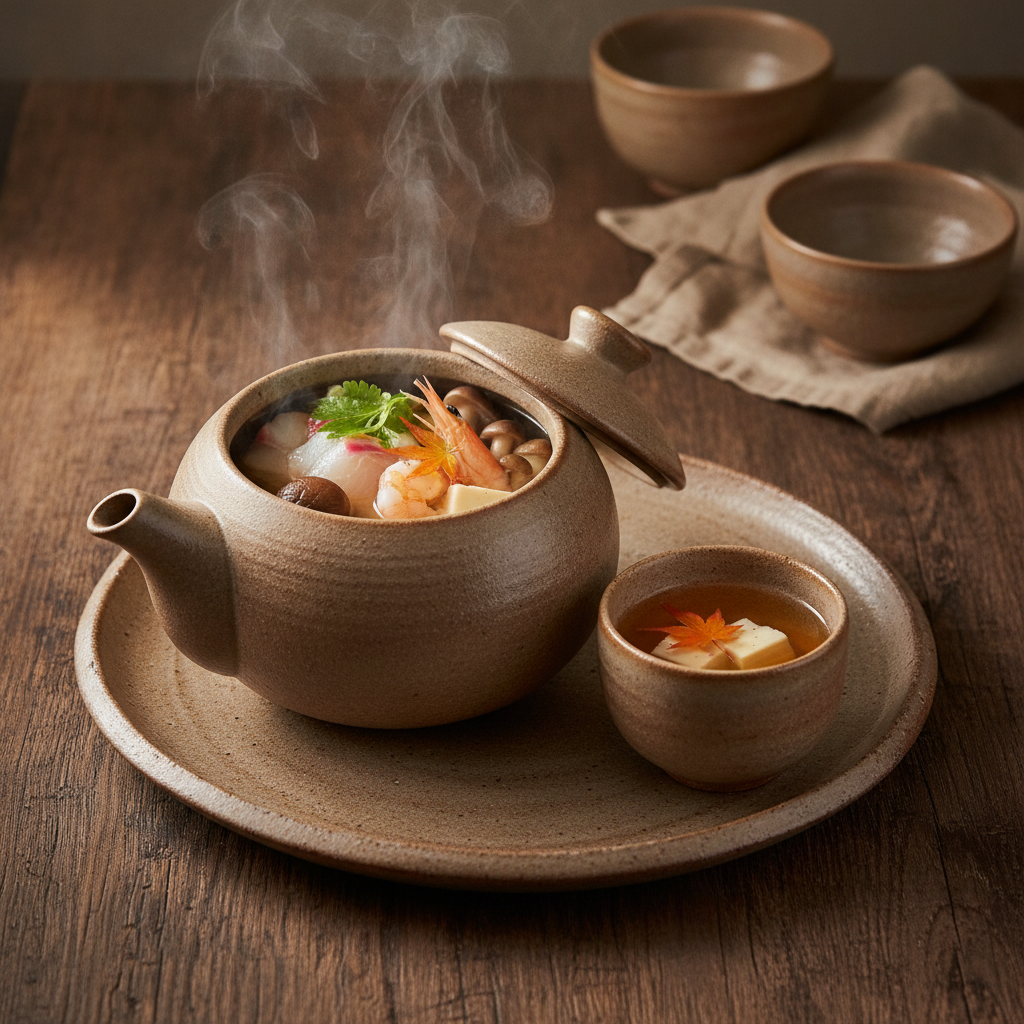
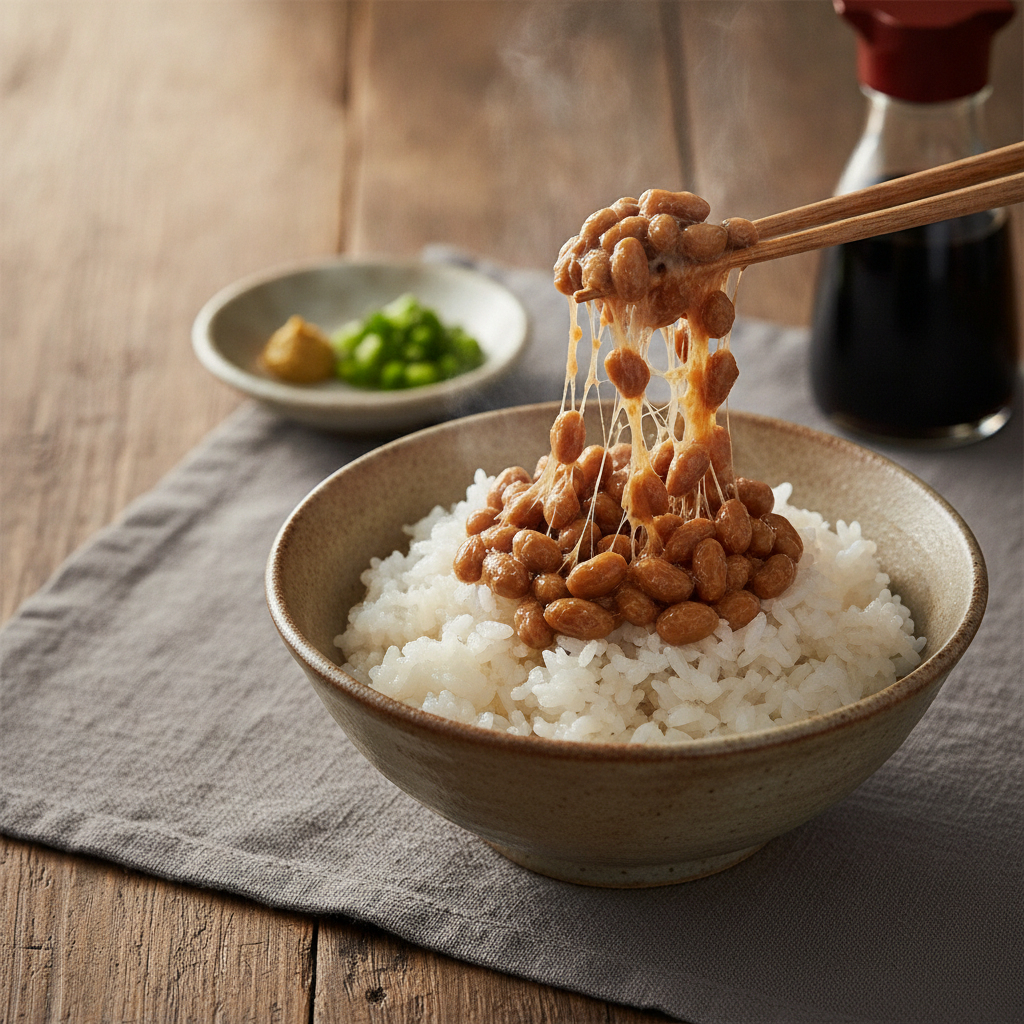
Japanese home cooking is what most of the world misunderstands about Japanese food. The sushi counters and ramen shops abroad are real, but the everyday is something quieter: a bowl of rice, a piece of grilled fish, a small dish of pickles, a clear soup with seaweed and tofu. The structure is called ichijū-sansai — one soup, three sides — and it's the framework most Japanese meals are built on.
The technique is restraint disguised as simplicity. Dashi, the foundational stock, is two ingredients (kombu and katsuobushi) steeped at near-simmer for a few minutes. It tastes deeper than that has any right to. Rice is washed, soaked, cooked, rested — four small steps that turn out something better than most professional kitchens manage with steam injection and induction.
Souschef's Japanese recipes lean into the pantry: short-grain rice, dashi, soy, mirin, miso, sake. With six ingredients and a sharp knife you can cover a week of dinners. The goal is to teach the system, not memorize the dishes.
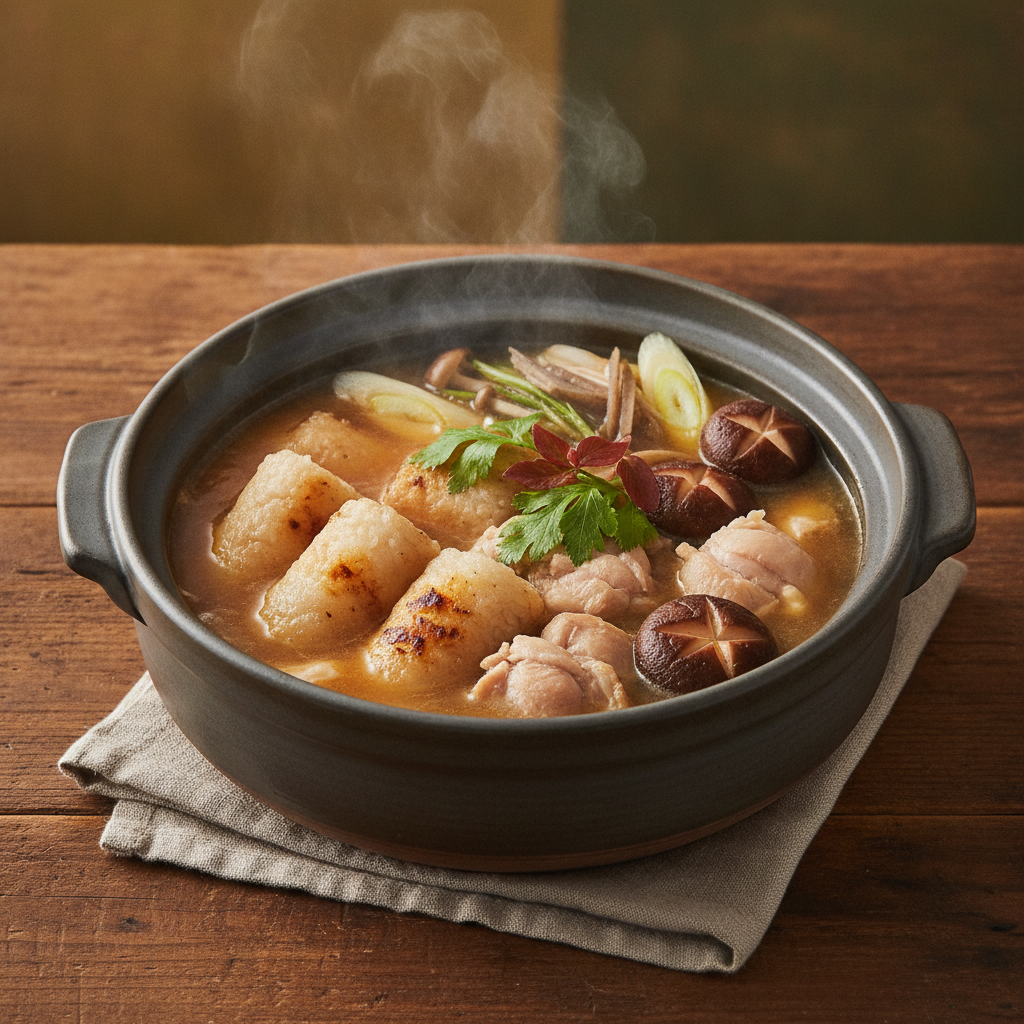
03 / Techniques · The four that matter
Master these first.
Dashi
Kombu in cold water for 30 minutes, brought to 60–80°C, then katsuobushi steeped for 30 seconds and strained. The stock that underpins miso soup, simmered vegetables, noodle broth, and savory custards.
Salt-rubbing (shio-momi)
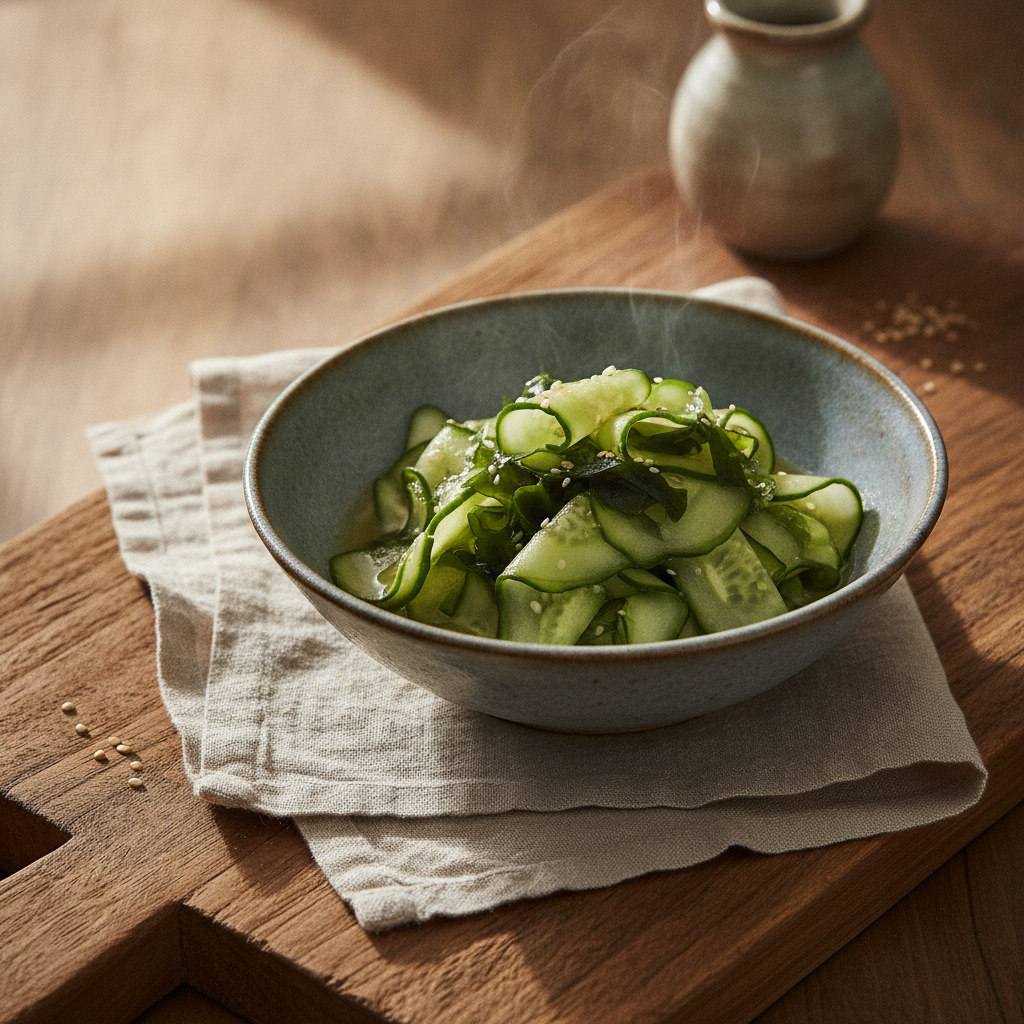
Grating salt into cucumber or daikon and waiting 10 minutes. The vegetable surrenders water and the seasoning concentrates. Used in quick pickles and salads.
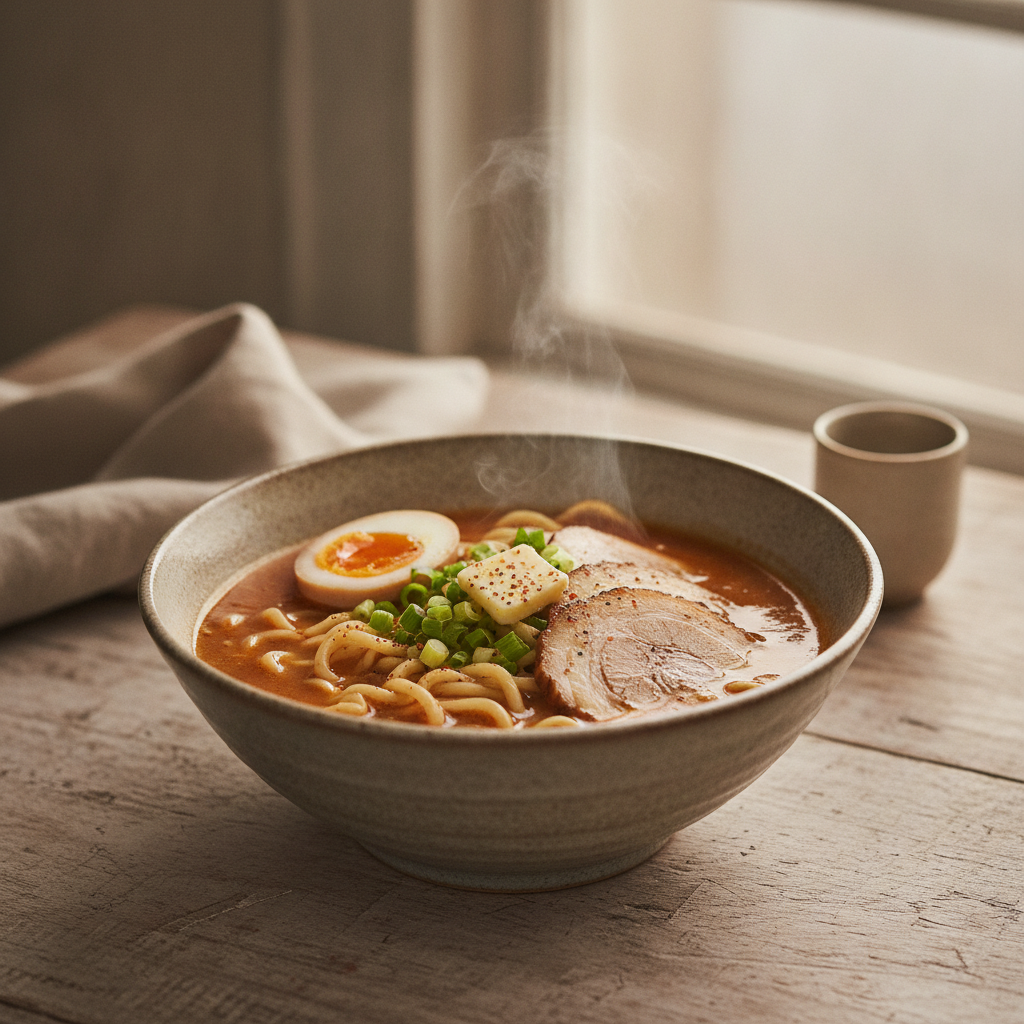
Donabe-style rice
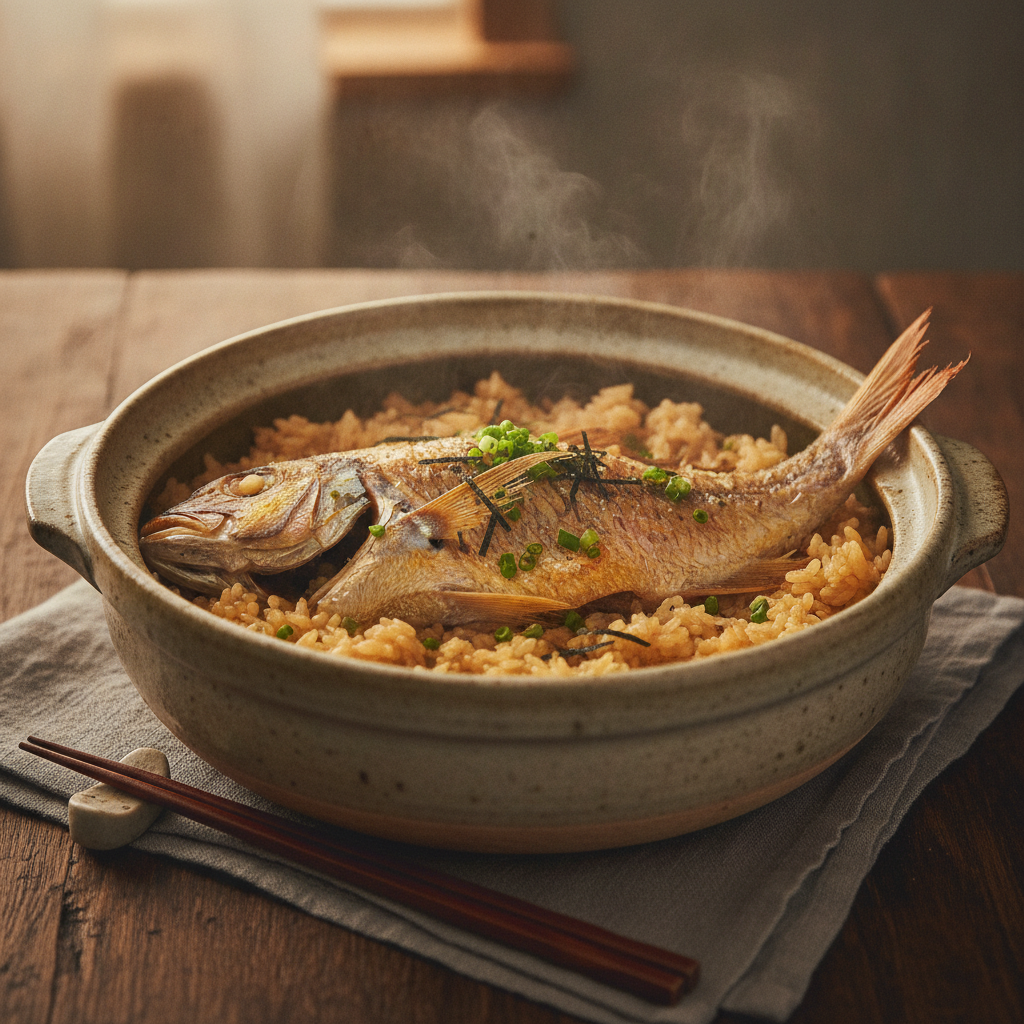
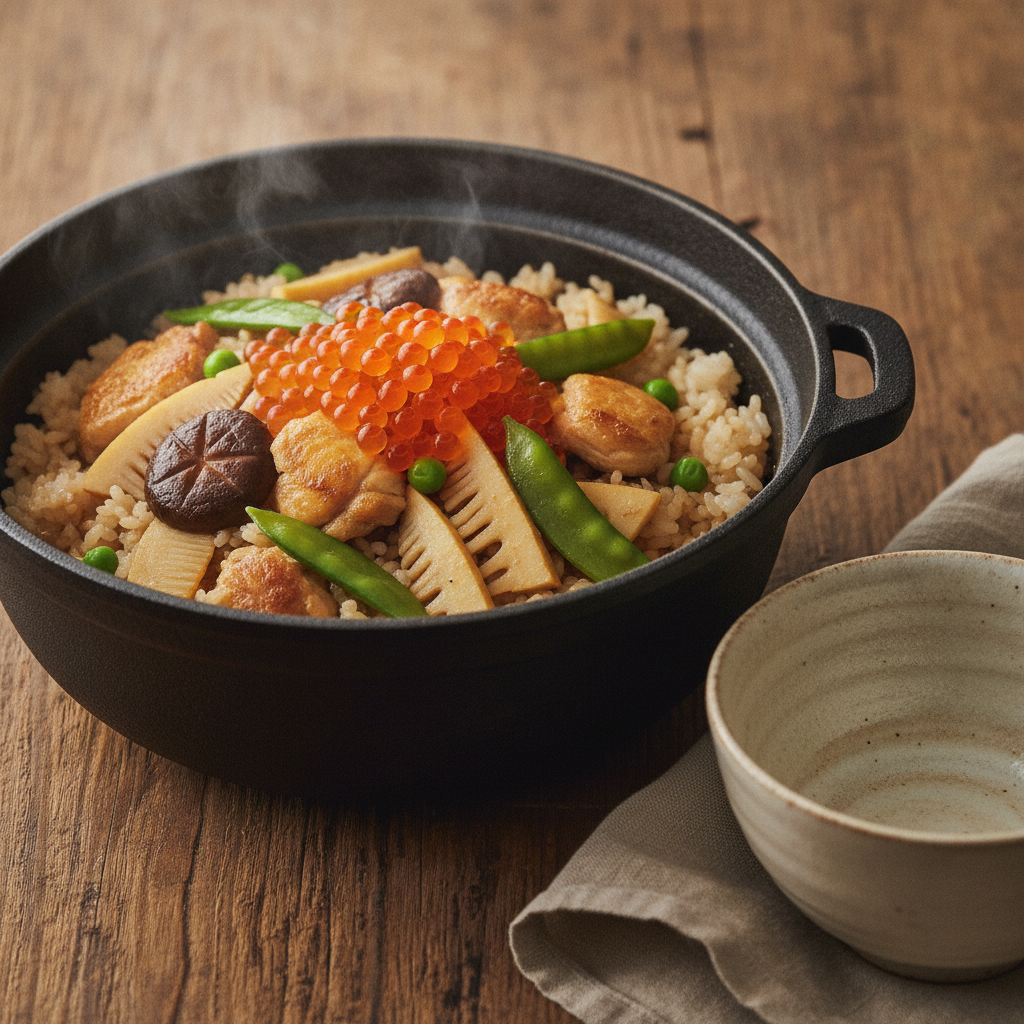
Rinse short-grain rice until the water runs clear, soak for 30 minutes, cook covered at high heat until steam appears, then 10 minutes on low, then 10 minutes rest off-heat without opening the lid.
Searing on shichirin or cast iron
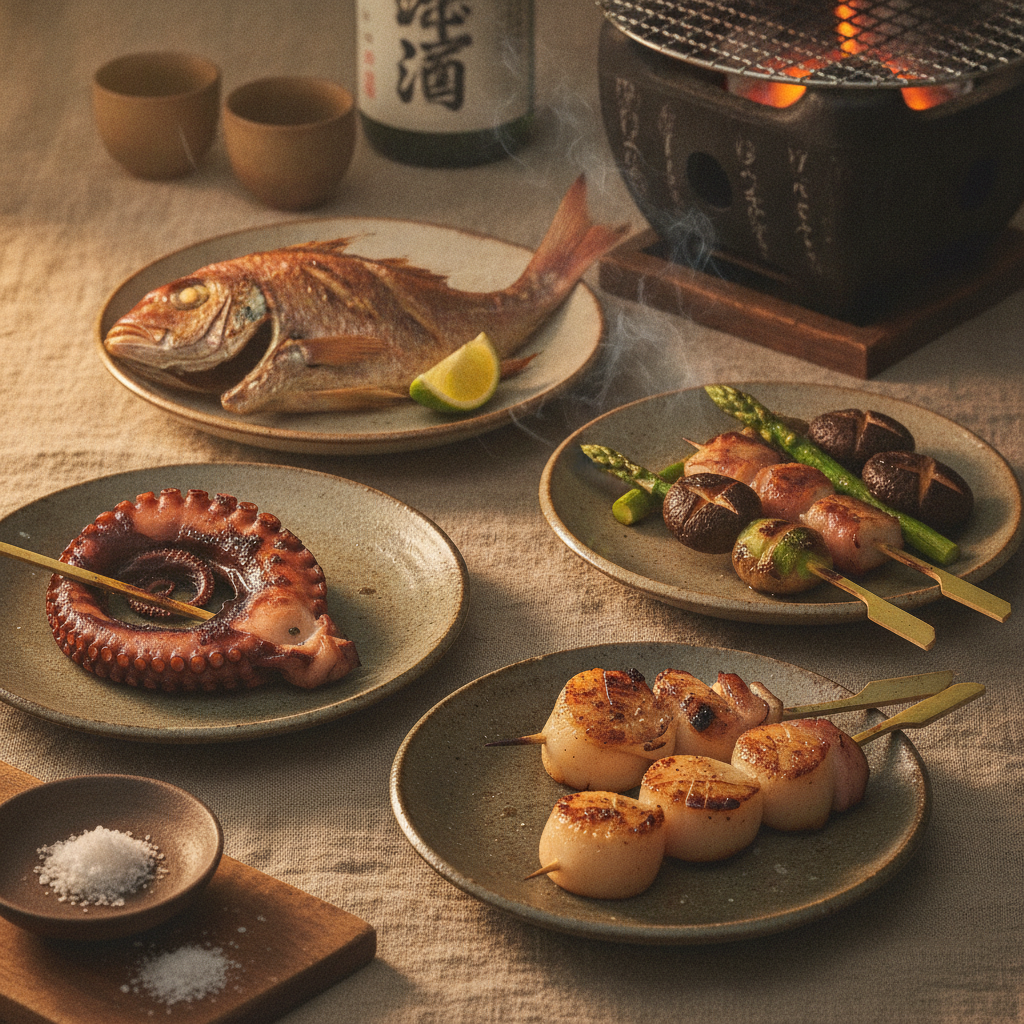
High dry heat for a short time. Fish skin crisps, vegetables char, and the inside stays raw to barely-done — the opposite of slow Western roasting.
04 / Soundtrack · Japanese Jazz Kissa
Cook to this.
05 / The library · 5 japanese recipes
Tonight's dinner.


Gyoza (Japanische Schweinefleisch-Teigtaschen)

Teriyaki Lachs (Japanischer Teriyaki Lachs)

Tonkotsu Ramen (Japanische Schweinefleisch-Ramen)

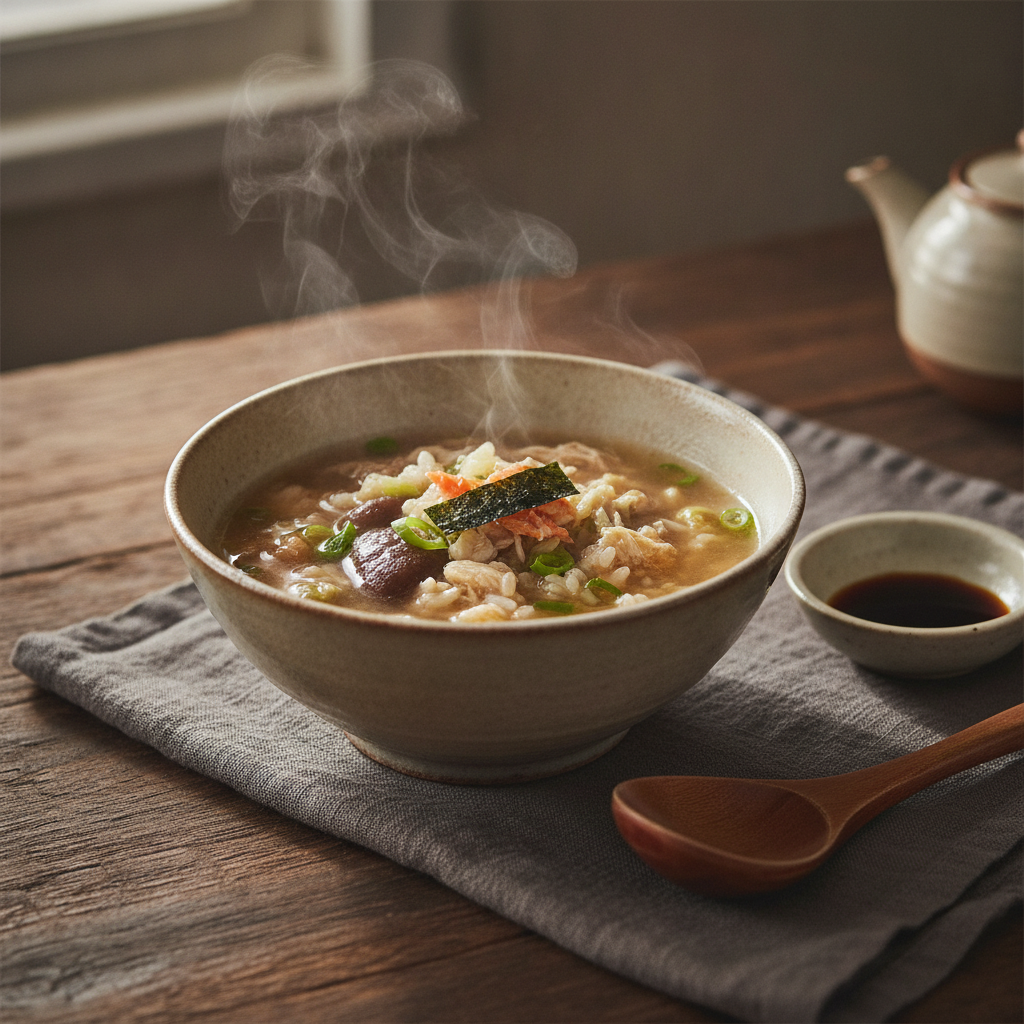
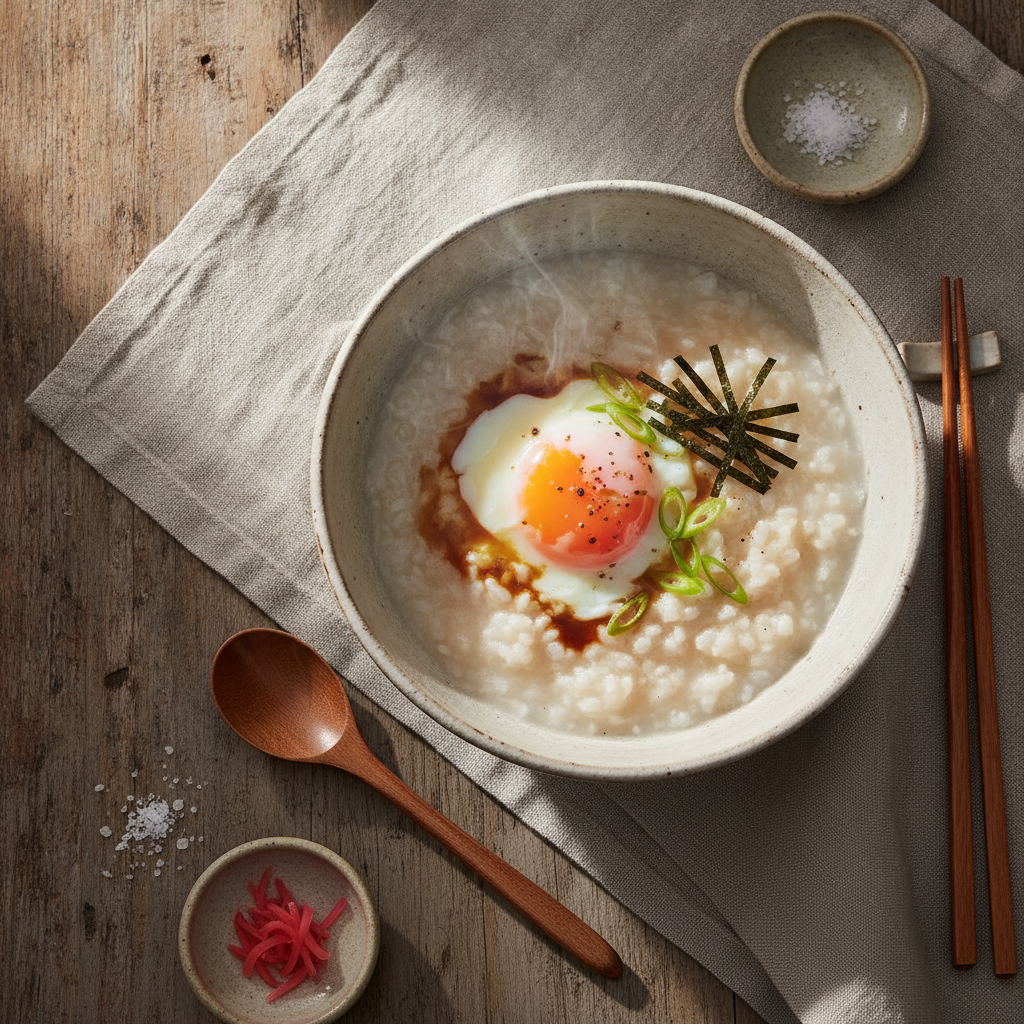
Herzhafter Reisbrei (Deutsche Congee-Interpretation)
06 / FAQ · The cook's questions
About japanese.
Do I need a rice cooker?
No. A heavy-bottomed pot with a tight lid works fine. The technique matters more than the gear. A donabe is nicer but not necessary.
What's the difference between shoyu and tamari?
Shoyu is fermented from soy and wheat, tamari from soy alone (or mostly). Tamari is darker, thicker, and gluten-free. Shoyu is the everyday default; tamari shines in dipping sauces and reductions.
Is dashi just stock?
It's stock taxonomically but not functionally. Dashi is built in five minutes, not five hours, and tastes deeper than any chicken stock will. Once you have dashi, miso soup is 90 seconds away.