Crab Roe Soup Buns (Xièhuáng Tāngbāo) — Jiangnan's Liquid-Filled Masterpiece
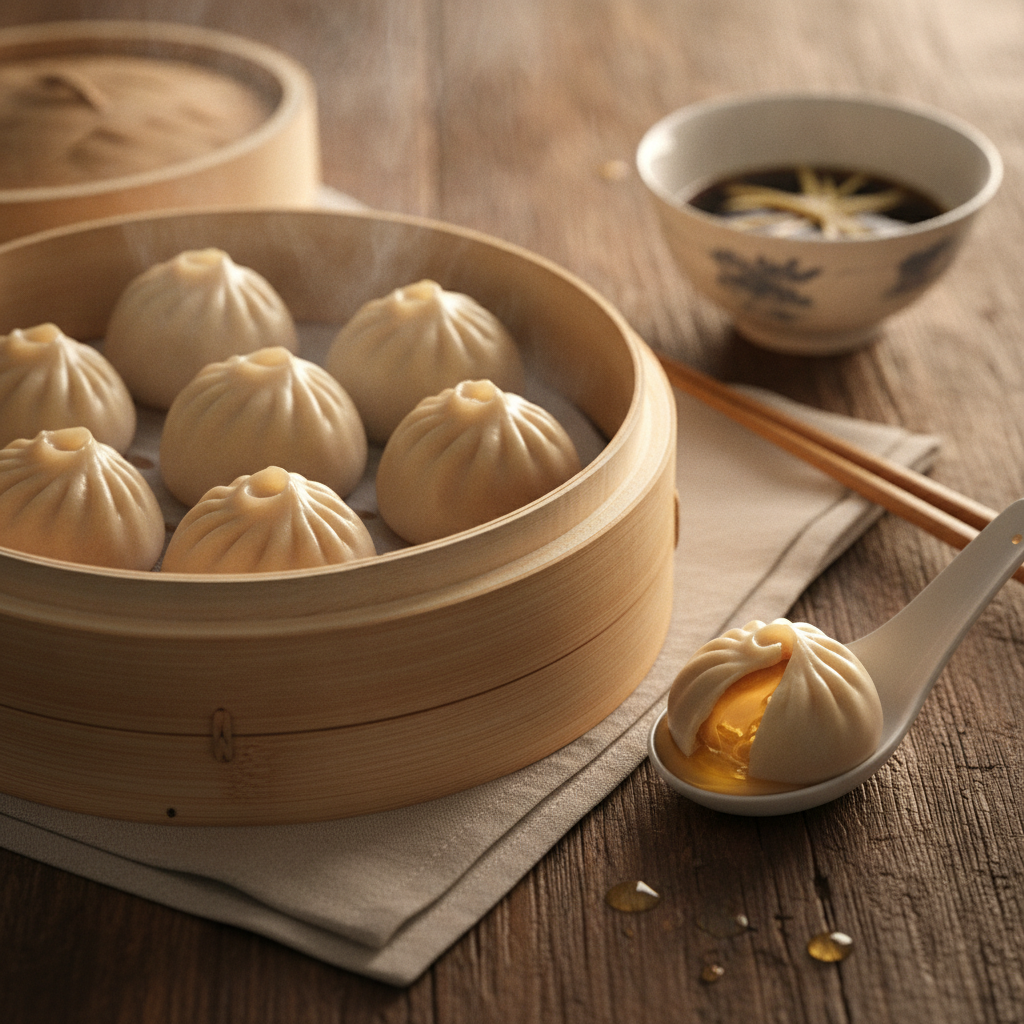
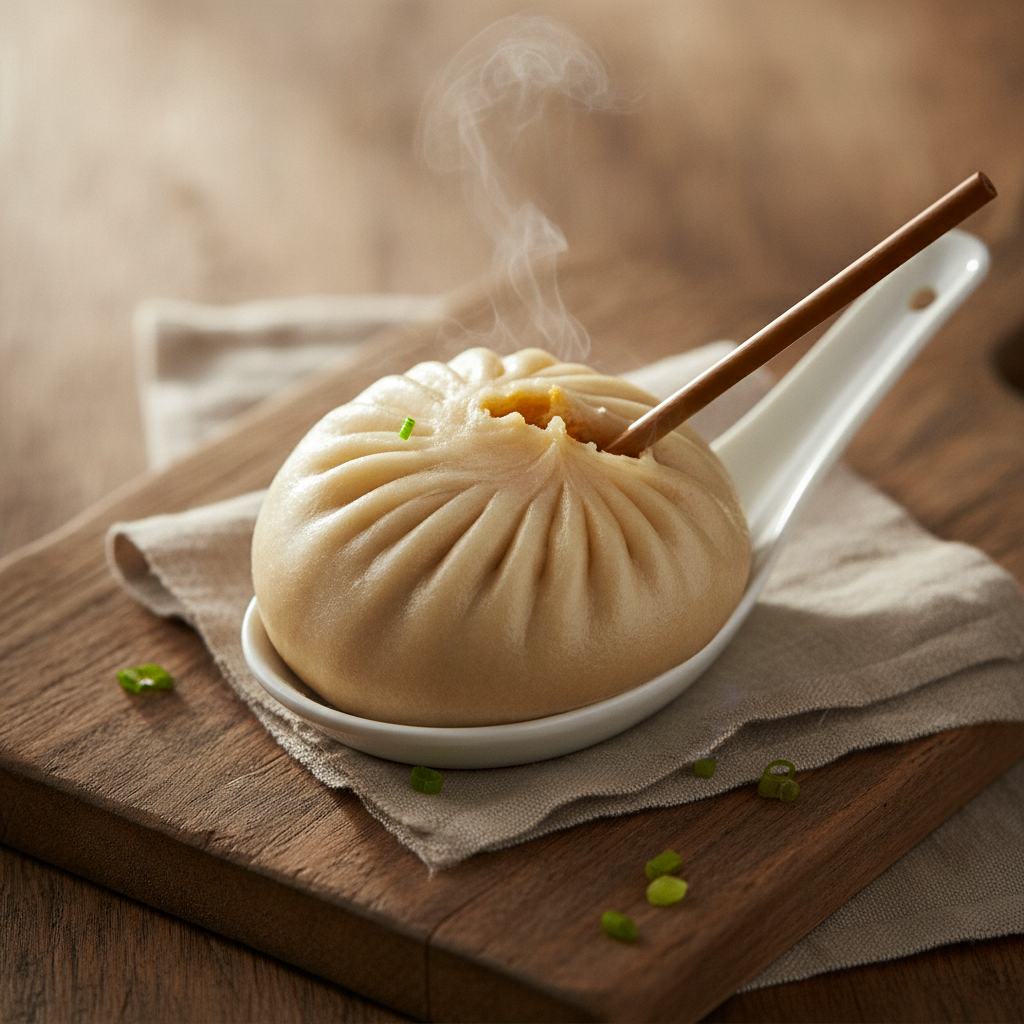
Before you start, let's be precise about what this is — because readers who know xiao long bao will assume they already understand. Tangbao (汤包) from Zhenjiang, Jiangsu, are the older, more dramatic cousins of Shanghai's XLB. Both use gelatin-based aspic that melts into soup inside a sealed wrapper; but where xiao long bao are served in groups of six or eight, the traditional tangbao is a single, palm-sized dumpling — sometimes large enough to require a drinking straw to sip the broth before you eat the bun itself. The crab roe version (蟹黄汤包, xièhuáng tāngbāo) layers in the golden roe of hairy crab (Eriocheir sinensis), making it a seasonal luxury tied to late September through December, when Yangcheng Lake hairy crabs are at their peak. Outside of season, good-quality frozen crab roe delivers an excellent result — just not quite the same. The difficulty rating is honest. This recipe has three independent components that each require time and skill: pork skin jelly that must be made the day before; a crab roe filling that must be kept cold throughout assembly; and a scalded-dough wrapper that must be pleated with 16–18 folds to seal without leaking. Any one of these is manageable. Doing all three well, in sequence, is genuinely hard. Read through the entire recipe before you begin and understand the eating instruction before you serve: place the bun on a soup spoon, nibble a very small hole at the top pleat, and sip the hot liquid through the hole. Never bite into a tangbao whole — the interior is near boiling and will scald your mouth. Move slowly. It is worth it.