Souschef AI

Global Kitchen

AI

Spanish · dinner

Sopa de Ajo: The Castilian Garlic Soup That Earns Its Name

#spanish#soup#castilian#vegetarian#easy

35m

Total time

4

Servings

320

kcal

easy

Difficulty

Jul 4, 2026

INGREDIENTS.

4
Grain
  • 200 g stale country bread
Produce
  • 8 piece garlic cloves
Spice
  • 2 tsp pimentón ahumado (smoked sweet paprika)
Pantry
  • 4 tbsp extra virgin olive oil
  • 1 tsp salt
Other
  • 1200 ml chicken stock or water
Dairy
  • 4 piece eggs

THE METHOD.

tap to check off

0/8 done

FAQ · Things people ask

About this recipe.

Can I use fresh bread?

Technically yes, but stale bread holds its shape and produces a nicer texture — it absorbs the broth into tender, sponge-like pieces rather than dissolving into a slimy paste. If you only have fresh bread, spread slices on a baking sheet and dry them in a 150°C (300°F) oven for 15 minutes before using.

What is Pimentón de la Vera and where do I find it?

Pimentón de la Vera is a DOP-certified smoked sweet paprika from the La Vera valley in Extremadura, Spain — smoke-dried over oak before grinding. It is the defining flavor of this dish and cannot be substituted with unsmoked paprika without producing a noticeably different soup. Look for it in Spanish delicatessens, specialty food shops, or order online; it keeps for a year in a sealed tin.

Is this the same as French onion soup?

Different dish entirely. No onions, no cheese, different base. The similarities are stale bread in broth, but French onion soup is built on caramelized onion and beef stock, gratiné under a cheese cap. Sopa de Ajo is built on garlic, smoked paprika, and olive oil with a poached egg. They share a philosophy of using humble ingredients brilliantly, but that is where they diverge.

Can I leave out the egg?

Yes. The soup is complete and satisfying without it, though you lose the textural contrast and the yolk-enriched finish. Some traditional versions, particularly the most austere Lenten preparations, skip the egg entirely.

Water or chicken stock?

Both are traditional and valid. Water produces the more austere, authentic Castilian version that tastes entirely of garlic and bread. Good chicken stock makes the broth richer and more rounded. Use good stock when you want something more substantial, water when you want the ingredient simplicity to speak for itself.

Related · You might also cook

Keep going.

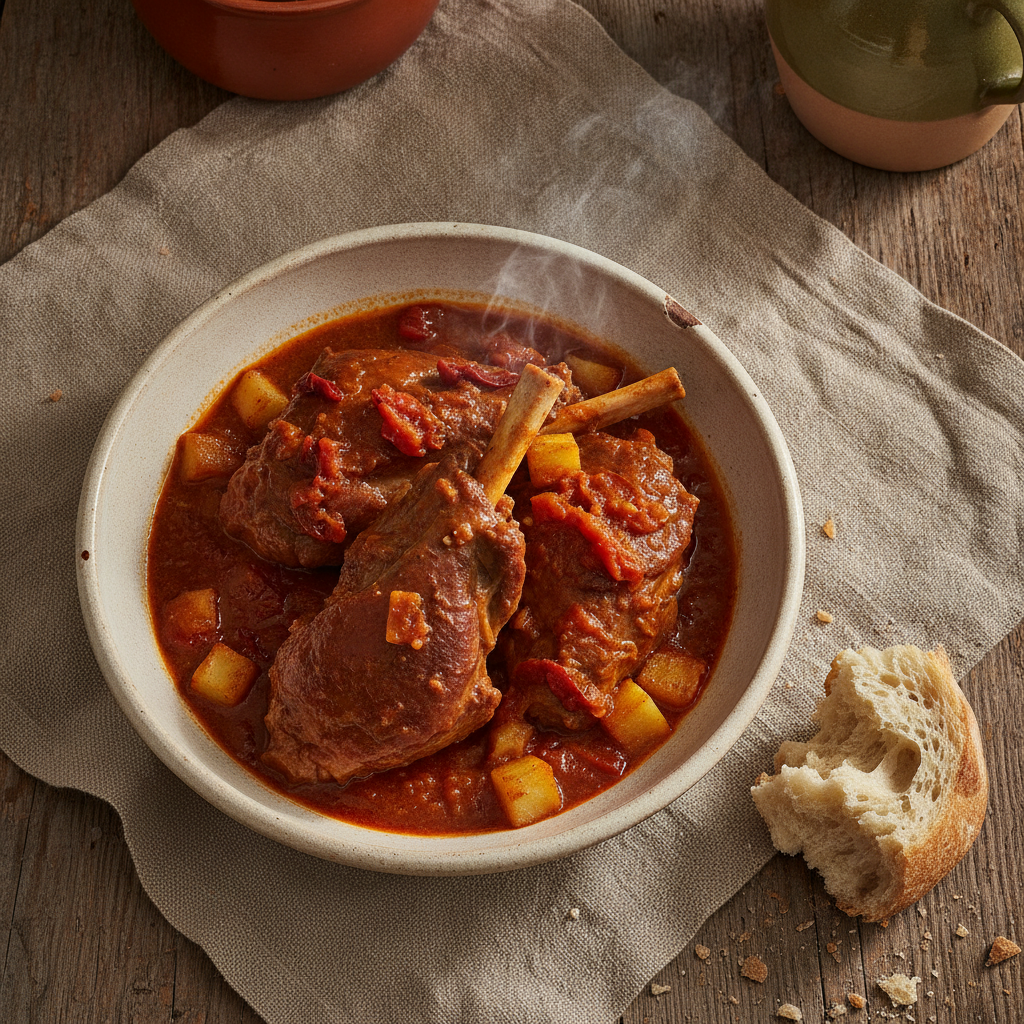
Cordero al Chilindrón — Aragonese Lamb Braised in Tomato and Pepper Sauce
spanishmedium

Cordero al Chilindrón — Aragonese Lamb Braised in Tomato and Pepper Sauce

Cordero al Chilindrón is the Sunday lamb of Aragon — a dish that couldn't exist before the 16th century, when peppers and tomatoes arrived from the Americas and transformed the mountain cooking of the Pyrenean foothills. Today it is Aragon's culinary calling card: bone-in lamb slow-braised in a sauce of choricero peppers, fresh red bell peppers, late-summer tomatoes, and sweet pimentón until the meat falls from the bone and the sauce coats everything like lacquer. Aragonese people feel about chilindrón the way Bolognese feel about their ragù: it belongs to them, it has regional rules, and shortcuts are noticed. The word 'chilindrón' may derive from 'chillón' (noisy) or from the pepper itself — the etymology is genuinely contested. What is certain is that the sauce defines a culinary triangle: Aragon, Navarra, and La Rioja all claim versions, though the Aragonese interpretation (with tomato) is the richest and most widely known. Navarrans make a 'fritada' without tomato — lighter and fresher. Both are legitimate expressions. What unites them is the choricero pepper, a large, mild, sweet dried pepper from the Ebro valley. Note: choricero peppers are not ñora peppers (those are smaller and smokier from Murcia); the distinction matters, and many readers will conflate the two. The dish originated as spring lamb cooking tied to seasonal celebrations in Pyrenean mountain villages — peasant-Sunday food at its most honest: few ingredients, long time, serious result. The traditional accompaniment is fried diced potatoes (patatas parmentier), not rice. Bread on the table is not optional; it exists to recover every last drop of sauce from the plate.

205 min 4
Read
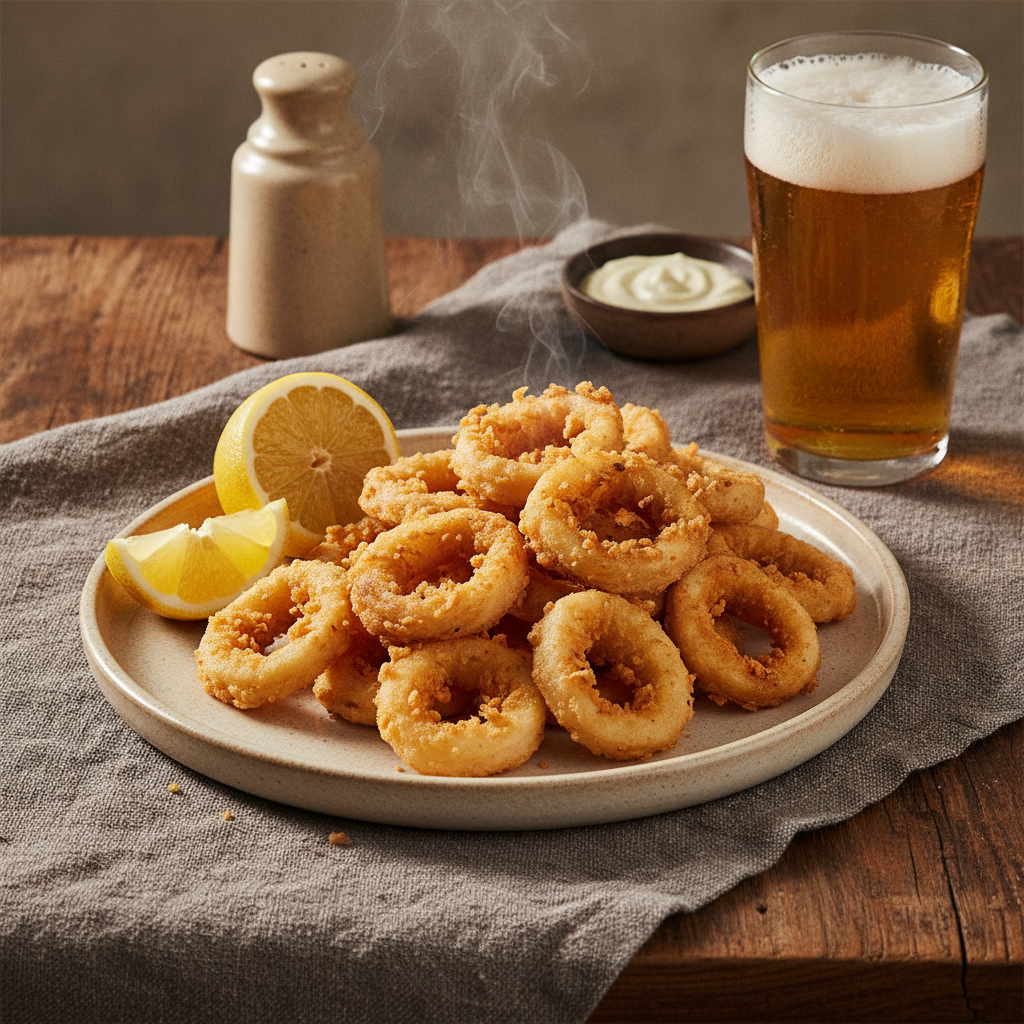
Calamares a la Romana: Madrid's Beloved Tapa, Done Right
spanisheasy

Calamares a la Romana: Madrid's Beloved Tapa, Done Right

Calamares a la romana is Spain's most iconic tapa — golden rings of squid in a shatteringly crisp batter, squeezed with lemon and eaten standing at a marble-topped bar with a cold beer. In Madrid, they pile the rings into a bocadillo bread roll and sell them as street food near the Plaza Mayor. You can replicate it at home with three rules: dry the squid obsessively, keep the batter cold, and keep the oil hot. The name may derive from a frying technique brought to Spain by Italian cooks in the 18th or 19th century, but the dish is thoroughly claimed by Spanish bar culture today — a table of calamares, beer, and lemon wedges is the platonic ideal of a tapas bar afternoon.

30 min 4
Read
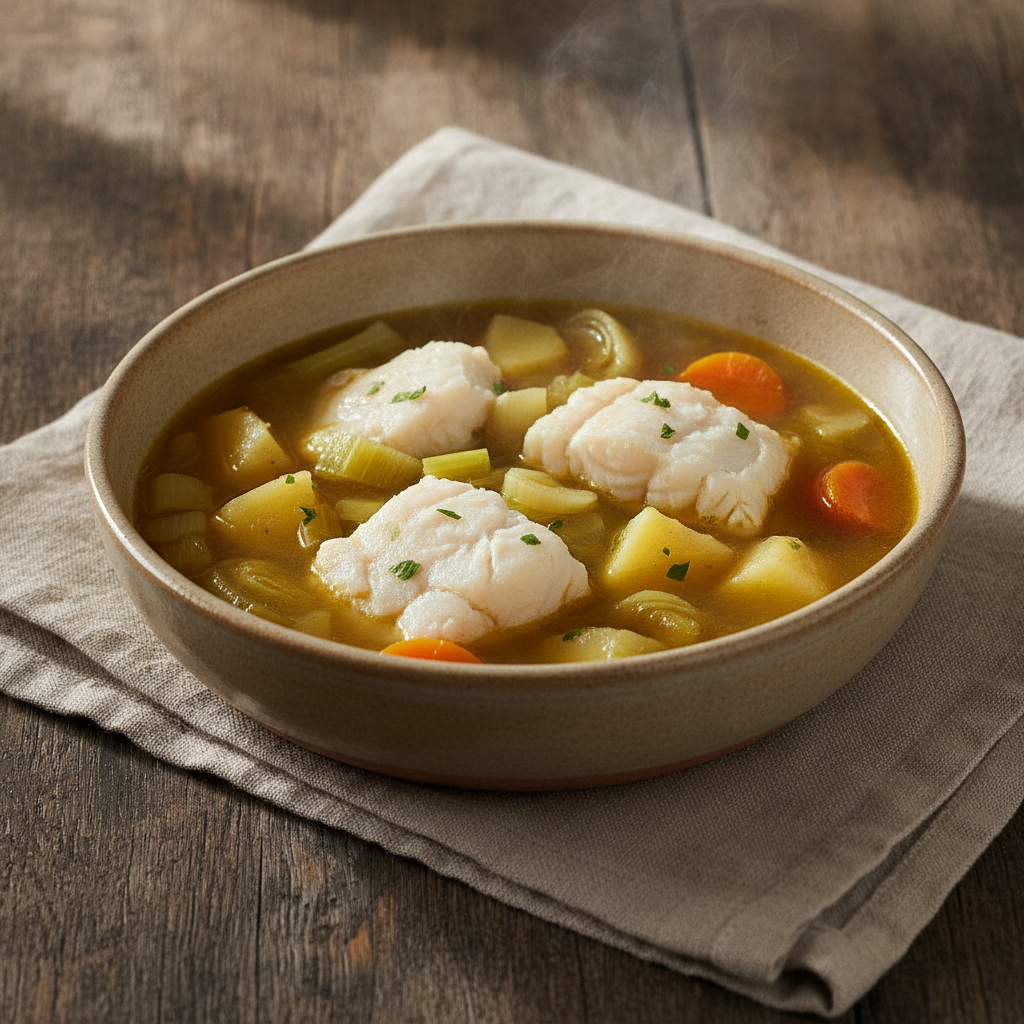
Porrusalda con Bacalao: Basque Lenten Leek Soup With Salt Cod
spanisheasy

Porrusalda con Bacalao: Basque Lenten Leek Soup With Salt Cod

Porrusalda is one of the Basque Country's most honest winter dishes: leeks and potatoes coaxed slowly into a nourishing, clean-tasting broth. The name says exactly what it is — 'porru' (leek) plus 'salda' (broth) in Euskera, the Basque language. Two canonical builds exist side by side. The plain version, with just leeks, potatoes, and carrots, is the everyday preparation and happens to be fully vegan. The bacalao version, with thick loin pieces of desalted salt cod laid in at the end, is the Lenten preparation — the dish Basque families made on Fridays throughout Cuaresma when meat was forbidden. Both share the same unhurried method: leeks sweated low and slow until genuinely sweet, potatoes broken rather than cut to release their starch into the broth, and a base liquid simple enough that neither ingredient has anywhere to hide. The cod version adds one more thing: bacalao's natural gelatin, which enriches the broth in a way fresh fish simply cannot replicate. There is no cream, no blending, no thickener. The dish tastes like what it is.

70 min 4
Read
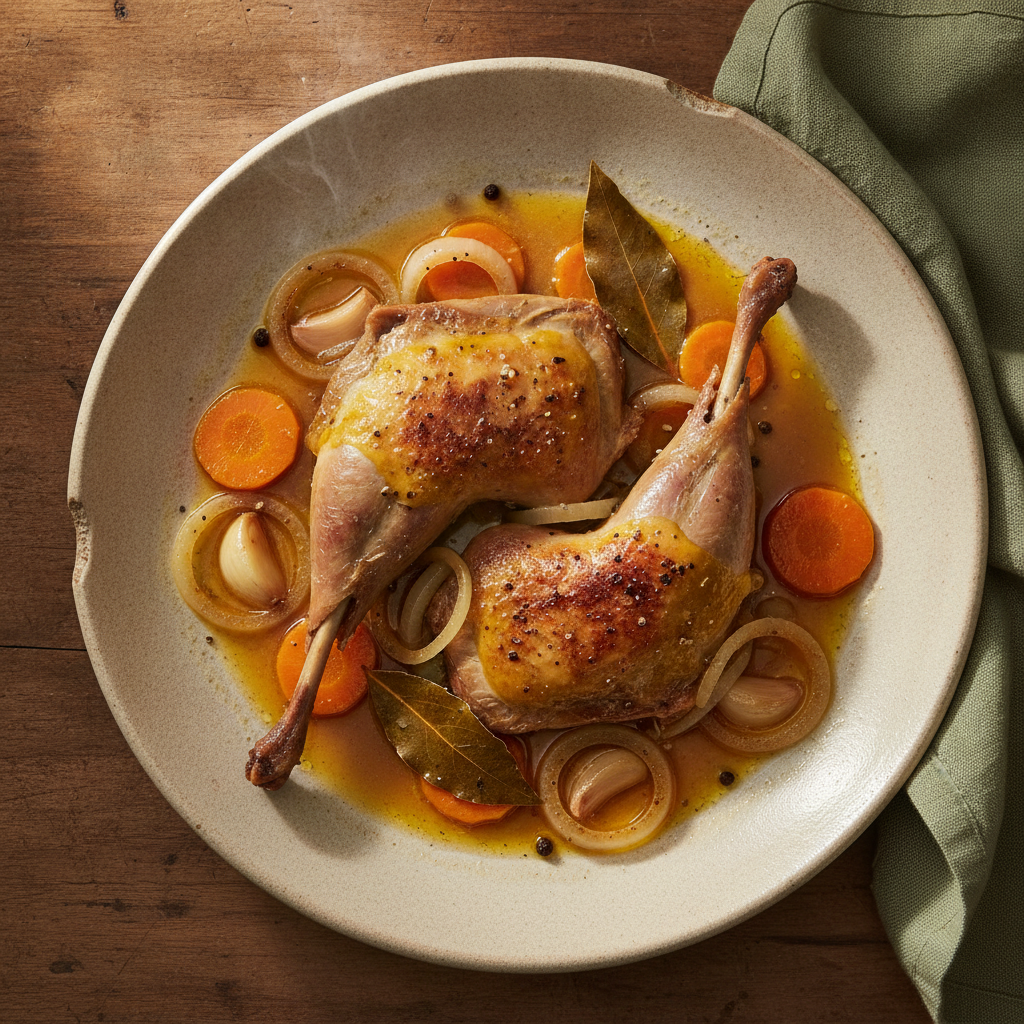
Perdiz en Escabeche: Castilian Pickled Partridge with Wine Vinegar
spanishmedium

Perdiz en Escabeche: Castilian Pickled Partridge with Wine Vinegar

Before refrigeration, hunters across the meseta of Castile-La Mancha faced a practical problem: what do you do with two or three birds shot on a cold autumn morning when you won't be home until evening, and the guests don't arrive until tomorrow? The answer, honed over centuries, was escabeche — a hot vinegar-and-oil bath that cooked the game birds, preserved them, and made them taste better with every hour that passed. Perdiz en escabeche is one of the oldest continuously cooked dishes in the Spanish kitchen. Its lineage traces to Arab al-sikbaj, the sweet-sour meat preparations that crossed into the Iberian Peninsula during the Moorish era, and Spanish cookbooks of the 16th century already describe the technique in terms that would be recognizable today. What the hunters of La Mancha understood — and what a refrigerator has made us forget — is that vinegar, olive oil, and time are a preservation system as elegant as cold, and considerably more delicious. The partridges are browned in oil, then braised slowly in equal parts white wine and vinegar, with onion, carrot, garlic, bay, and peppercorns. After a long, gentle simmer they are left to cool in their liquid, refrigerated overnight, and served cold or at room temperature the next day. The pickling liquid softens and mellows as it chills; the oil emulsifies into something close to a dressing; the onion rings become edible and rich and worth fighting over. This is a dish that requires no last-minute cooking, improves dramatically with time, and announces itself at the table with the clean, wine-bright smell of a place where game has always been serious business. If partridge is unavailable — and outside of autumn at a specialty butcher, it often is — bone-in, skin-on chicken thighs make an excellent substitute. The technique is identical; reduce braising time to 45 to 55 minutes.
120 min 4
Read