Can I buy ready-made puris?
Yes — Indian grocery stores sell packets of ready-fried puri shells. They are a perfectly reasonable shortcut. The homemade ones are crispier and slightly thicker-shelled, which holds the pani longer.
Indian · snack
65m
Total time
4
Servings
280
kcal
medium
Difficulty
tap to check off
FAQ · Things people ask
Yes — Indian grocery stores sell packets of ready-fried puri shells. They are a perfectly reasonable shortcut. The homemade ones are crispier and slightly thicker-shelled, which holds the pani longer.
The oil was not hot enough (needs to be 180°C), or the puris were rolled too thick, or the dough had not rested long enough. Each puri should puff within 5 seconds of going into the oil. If they don't puff, increase the oil temperature.
The most common filling is sprouted mung beans or boiled chickpeas with boiled diced potato, chaat masala, and a pinch of salt. In Mumbai the base is often just potato with cilantro chutney; in Delhi, it includes tamarind chutney as well as pani.
Related · You might also cook
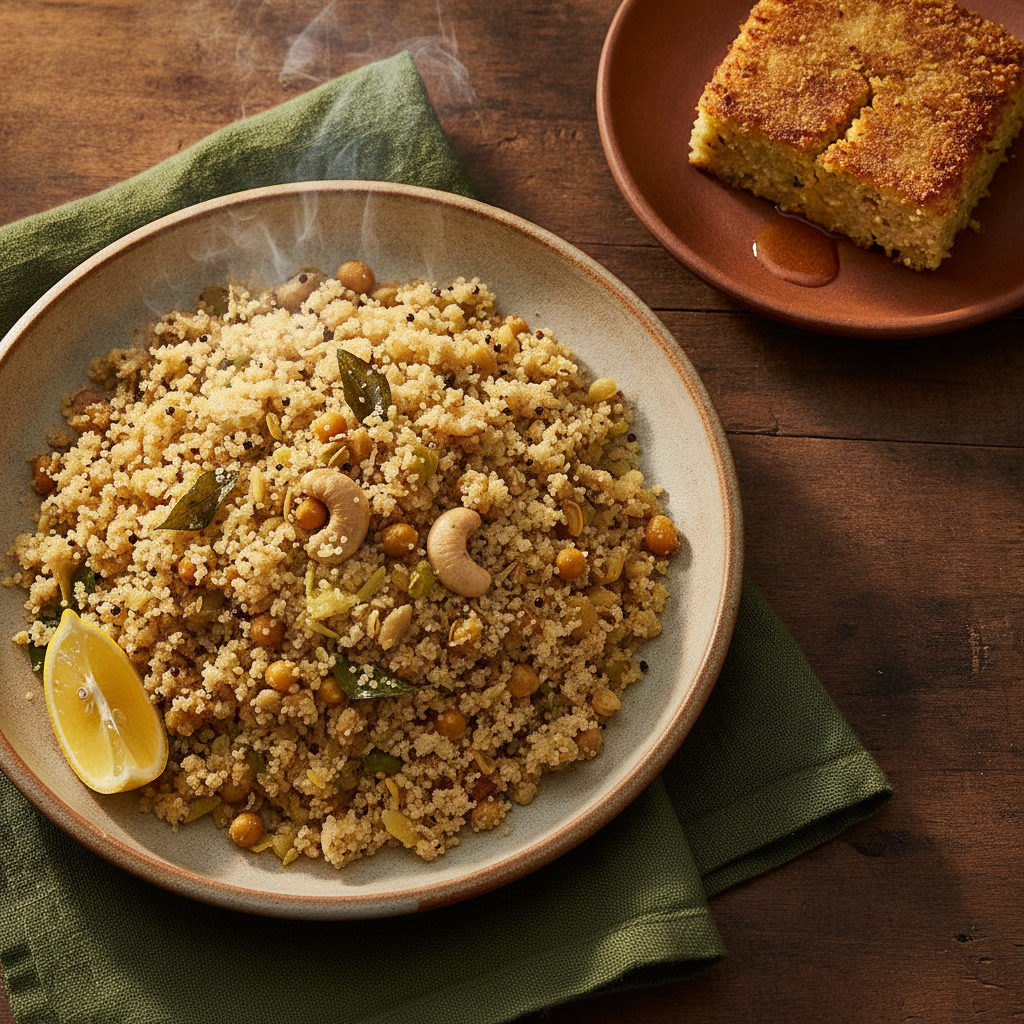
Upma is the workhorse breakfast of South India — Karnataka, Tamil Nadu, Andhra Pradesh, Kerala — eaten for centuries in temples, homes, and roadside dhabas alike. The name derives from Sanskrit 'upari' (salty) and 'maa' (flour). Done right, it is dry enough that grains separate when pressed, aromatic with mustard and curry leaves, nutty with fried dals and cashews, and bright with a final squeeze of lemon. Done wrong, it is gray, gluey porridge. The technique has two load-bearing steps: dry-toast the semolina first so the grains resist clumping when hydrated, then build a proper tempering in the right sequence. Every spice goes into the pan in a specific order — mustard seeds first until they pop, then curry leaves until they sizzle, then dals until golden, then chilies and ginger, then onion. Each addition needs its moment before the next goes in. Rush the tempering and you end up with raw dal and muted aromatics. Get the sequence right and the oil smells extraordinary before a single grain of semolina hits the pan. Bonus: cold leftover upma firms up into a sliceable cake. Fry thick slabs in a little ghee the next morning until the outside is crispy and the inside steams — arguably better than the original.
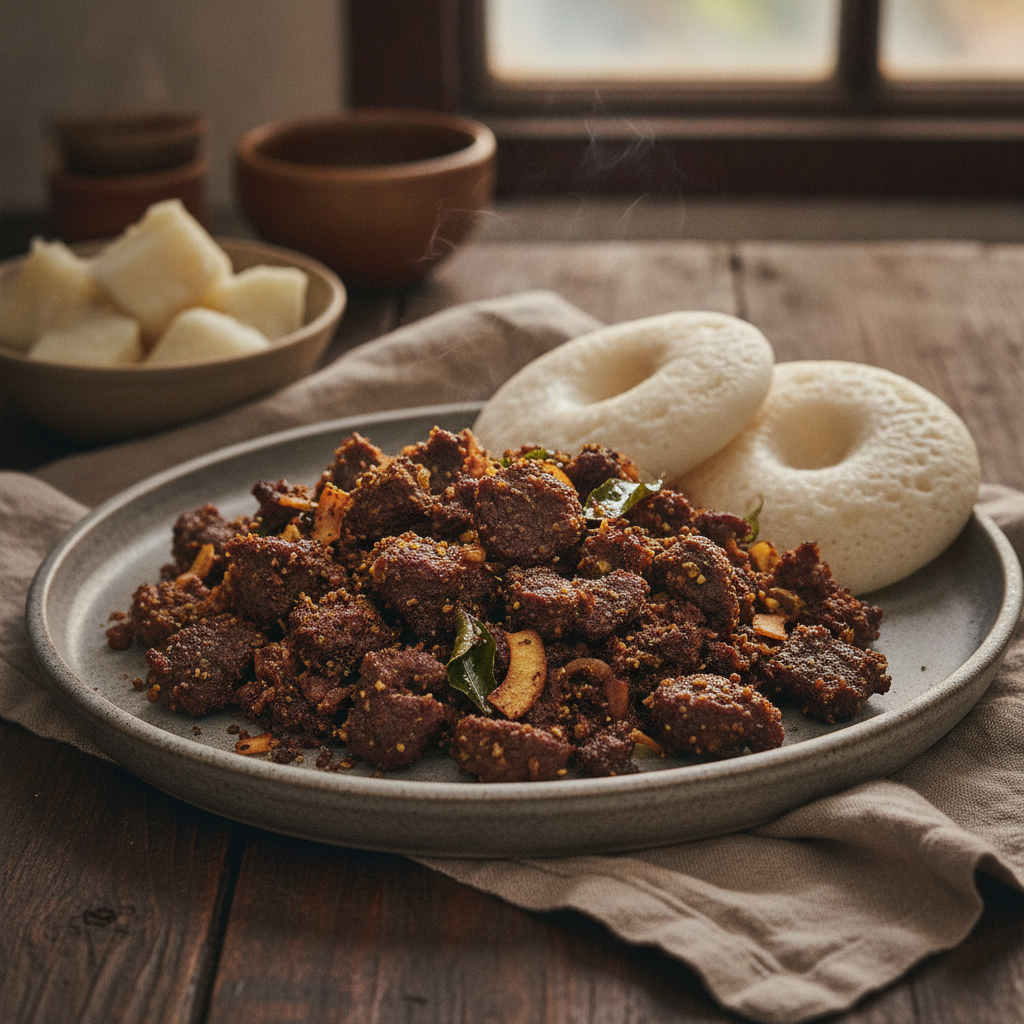
Beef ularthiyathu is the signature preparation of Kerala's Syrian Christian community — the Saint Thomas Christians, or Nasrani, who trace their roots to the arrival of the apostle Thomas on the Malabar Coast in 52 CE. Unlike much of South Indian cuisine, Syrian Christian cooking embraces beef without restriction and elevated it into a dish of extraordinary complexity. The Kottayam district version — darkly spiced, coconut-flecked, deeply aromatic — is the most famous, eaten at weddings, feast days, and in the thattukada roadside shops alongside toddy and tapioca (kappa). This is not a curry. The word ularthiyathu means 'dry-stir-fried' in Malayalam, and that is precisely what it is. The method has two non-negotiable stages. First, pressure cook the beef in a concentrated spice marinade with minimal water — the beef generates its own moisture, and that liquid is your flavor foundation. Second, transfer everything to a wide pan and cook until the liquid is completely reduced before beginning the final stir-fry. This is where most home cooks fail: if any liquid remains when you start the roasting stage, the beef steams instead of roasting and you'll never get the dark, dry crust that makes ularthiyathu ularthiyathu. Once dry, the slow, patient stir-fry in coconut oil with caramelized shallots and sizzling curry leaves gives you a deeply colored, almost hash-like beef fry with crispy edges and concentrated spice at every bite. Two things are non-negotiable and not typos: two tablespoons of coarsely ground black pepper (it mellows dramatically through cooking and is the backbone of the dish), and thenga kothu — small wedges of fresh coconut, fried separately until golden and stirred in at the very end. They are not a garnish. They provide a mild, fatty counterpoint to the dark, peppery beef. Serve alongside appam (fermented rice hoppers) or kappa (boiled tapioca) for the classic pairing.
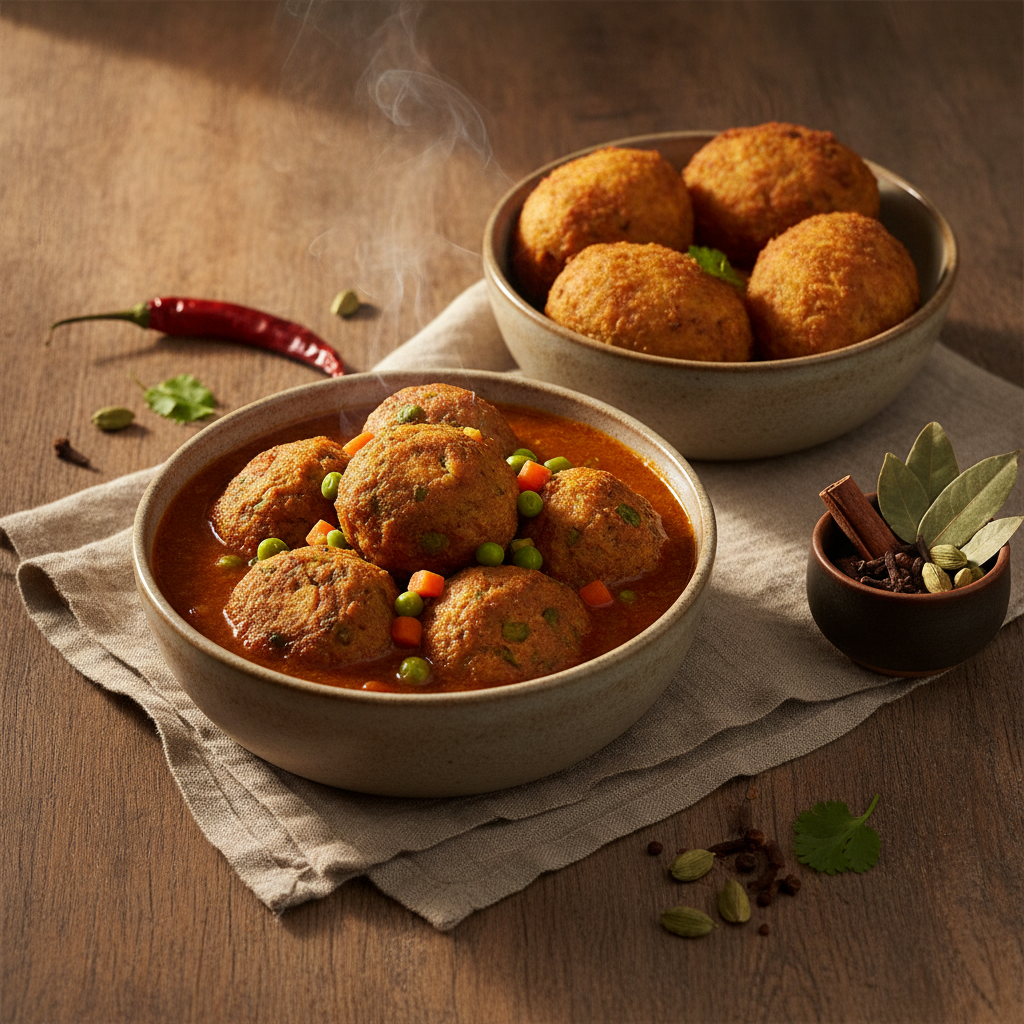
Kofta curry is what you make when the vegetable drawer needs using up and you want the meal to feel like a celebration. The premise is simple: boil whatever vegetables you have, mash them with besan (gram flour) and spices, roll them into balls, fry until golden, then lower them into an onion-tomato gravy fragrant with whole spices. The result is special enough for a festival and unpretentious enough for a Friday night. This recipe gives you two paths. The vegetable path — the one North Indian home kitchens have been making for generations — uses a mix of carrot, potato, peas, and beans. Potato is the essential binder that holds everything together; the rest is whatever you have. The egg kofta path, a Mughal-influenced variation beloved in Uttar Pradesh and Lucknow, encases hard-boiled eggs in spiced mashed potato — a different dish entirely, but the same gravy. Both are offered here. This is not malai kofta, the rich restaurant classic of paneer-potato balls in a cream-nut sauce. That is a different dish designed for a different occasion. This is the home-kitchen version: straightforward, adaptable, and built on the everyday masala of browned onions and cooked-down tomatoes. Two rules separate a great kofta curry from a disappointing one. First: the vegetable mixture must be bone dry before shaping — squeeze cooked vegetables hard to remove all moisture. A wet mixture cracks during frying and disintegrates in the gravy. Second: add the fried koftas to the gravy only right before serving. Three to five minutes is the maximum; any longer and they absorb the curry, lose their shape, and soften into mush. Make the gravy and fry the koftas separately, then bring them together at the last moment.
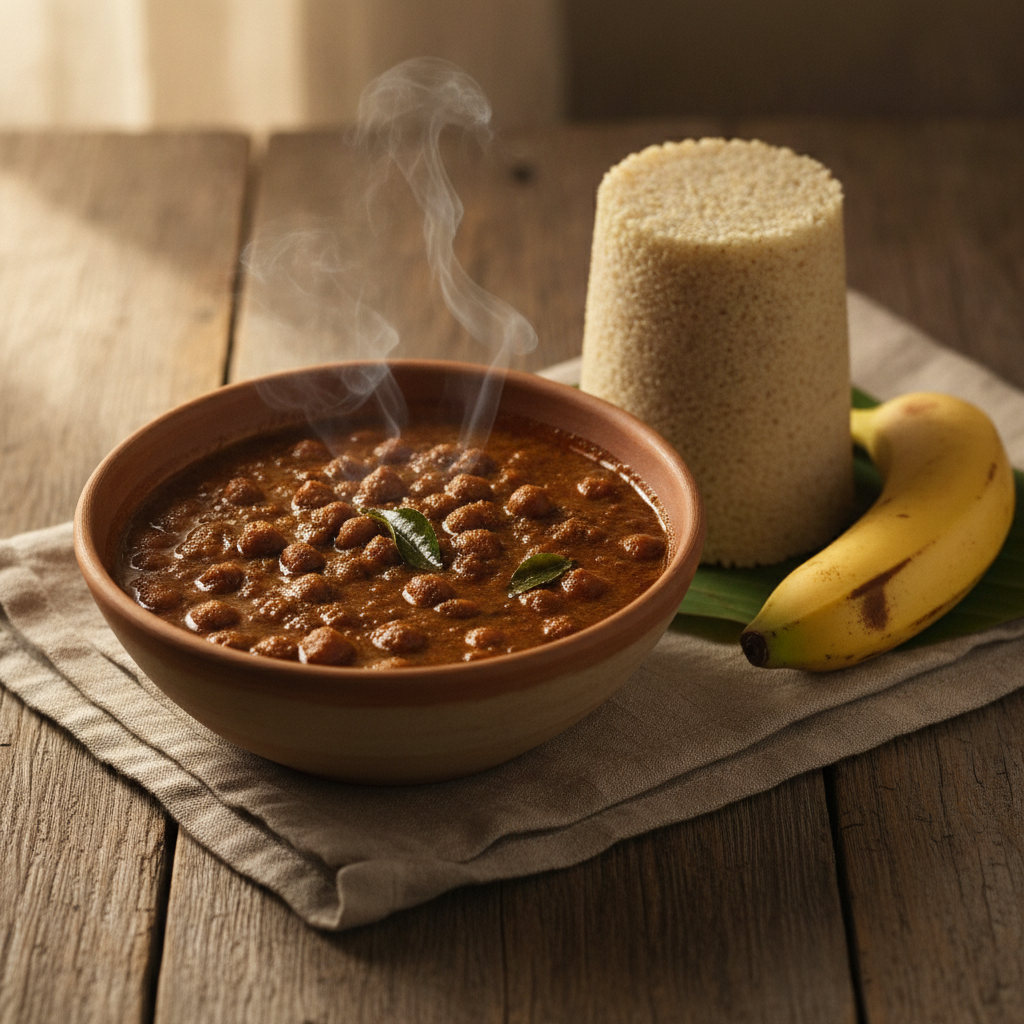
Kadala curry is how Kerala starts the day. At temple canteens, roadside eateries, and family breakfast tables across the state, a mound of puttu — steamed, cylindrical rice cakes with a grainy, pressed texture — arrives alongside a dark, nutty, deeply spiced chickpea gravy and a ripe banana. The combination is a complete breakfast and a cultural institution, the Malayali equivalent of something so fundamental it barely needs explaining to anyone who grew up with it. This recipe makes the varutharacha version — varutharacha meaning "roasted and ground" in Malayalam — which is the traditional benchmark. The defining technique is simple to describe and easy to underestimate: fresh grated coconut is dry-roasted in a skillet until it turns a deep, dark golden-brown, then ground with whole spices into a paste that forms the body of the gravy. This is not a coconut milk version; coconut milk produces a different dish, pleasantly creamy but structurally flat. The roasted-coconut paste adds a layer of toasted, almost caramelized complexity that no can or carton can replicate. The other essential: black chickpeas (kala chana), known in Malayalam as kadala. They are smaller, earthier, and denser than the white kabuli chana used in North Indian cooking, and they hold their shape while absorbing the flavors of the gravy. They must be soaked overnight — the structure is too dense for a quick soak — and pressure-cooked to complete tenderness. Both foundational steps take time. Neither can be rushed. Everything else about the recipe is straightforward.