spanishmedium
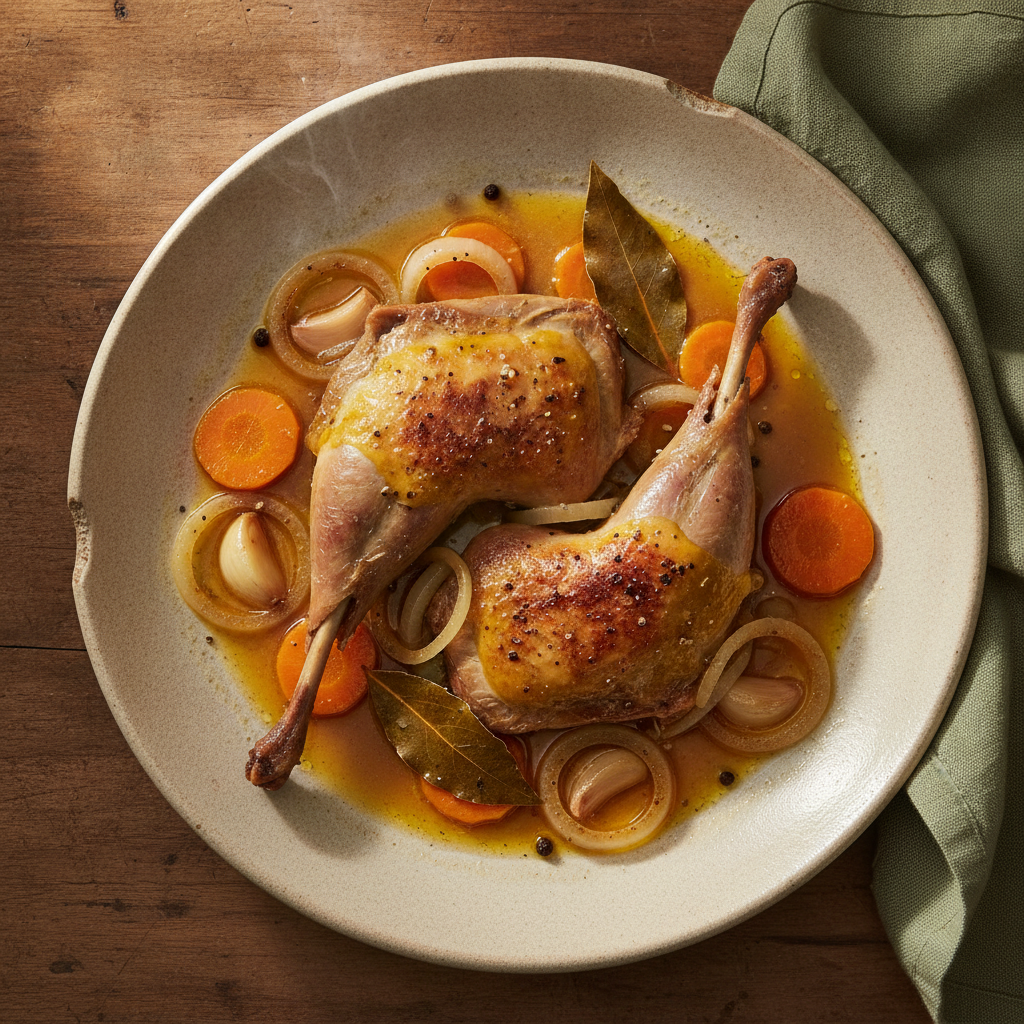
Perdiz en Escabeche: Castilian Pickled Partridge with Wine Vinegar
Before refrigeration, hunters across the meseta of Castile-La Mancha faced a practical problem: what do you do with two or three birds shot on a cold autumn morning when you won't be home until evening, and the guests don't arrive until tomorrow? The answer, honed over centuries, was escabeche — a hot vinegar-and-oil bath that cooked the game birds, preserved them, and made them taste better with every hour that passed.
Perdiz en escabeche is one of the oldest continuously cooked dishes in the Spanish kitchen. Its lineage traces to Arab al-sikbaj, the sweet-sour meat preparations that crossed into the Iberian Peninsula during the Moorish era, and Spanish cookbooks of the 16th century already describe the technique in terms that would be recognizable today. What the hunters of La Mancha understood — and what a refrigerator has made us forget — is that vinegar, olive oil, and time are a preservation system as elegant as cold, and considerably more delicious.
The partridges are browned in oil, then braised slowly in equal parts white wine and vinegar, with onion, carrot, garlic, bay, and peppercorns. After a long, gentle simmer they are left to cool in their liquid, refrigerated overnight, and served cold or at room temperature the next day. The pickling liquid softens and mellows as it chills; the oil emulsifies into something close to a dressing; the onion rings become edible and rich and worth fighting over. This is a dish that requires no last-minute cooking, improves dramatically with time, and announces itself at the table with the clean, wine-bright smell of a place where game has always been serious business.
If partridge is unavailable — and outside of autumn at a specialty butcher, it often is — bone-in, skin-on chicken thighs make an excellent substitute. The technique is identical; reduce braising time to 45 to 55 minutes.