mexicanmedium
Lomitos de Valladolid: Doña Hermelinda's Tomato-Braised Pork with Achiote
Lomitos de Valladolid is one of the quiet glories of Yucatecan home cooking — not the famous cochinita pibil that fills tourist menus, but the stovetop braise that Valladolid families have been eating for lunch on weekdays for generations. Named for the colonial city in eastern Yucatán, a pueblo mágico that sits at the crossroads of the old Maya trade routes and the road to Chichén Itzá, the dish is credited by local culinary legend to Doña Hermelinda, a home cook whose recipe spread through the city's comedores and kitchens until it became synonymous with the place itself.
What makes lomitos taste the way it does is layered charring at every stage. The tomatoes, onion, and garlic all spend time directly on a hot comal until they're blackened in spots — that caramelized bitterness becomes the backbone of the sauce. The pork gets browned hard in lard, building a fond on the pan bottom. Then the blended sauce goes back into that same pan and cooks down in the fat until it darkens and thickens before the pork returns. By the time the braise is done, you've built three separate Maillard layers into a single pot.
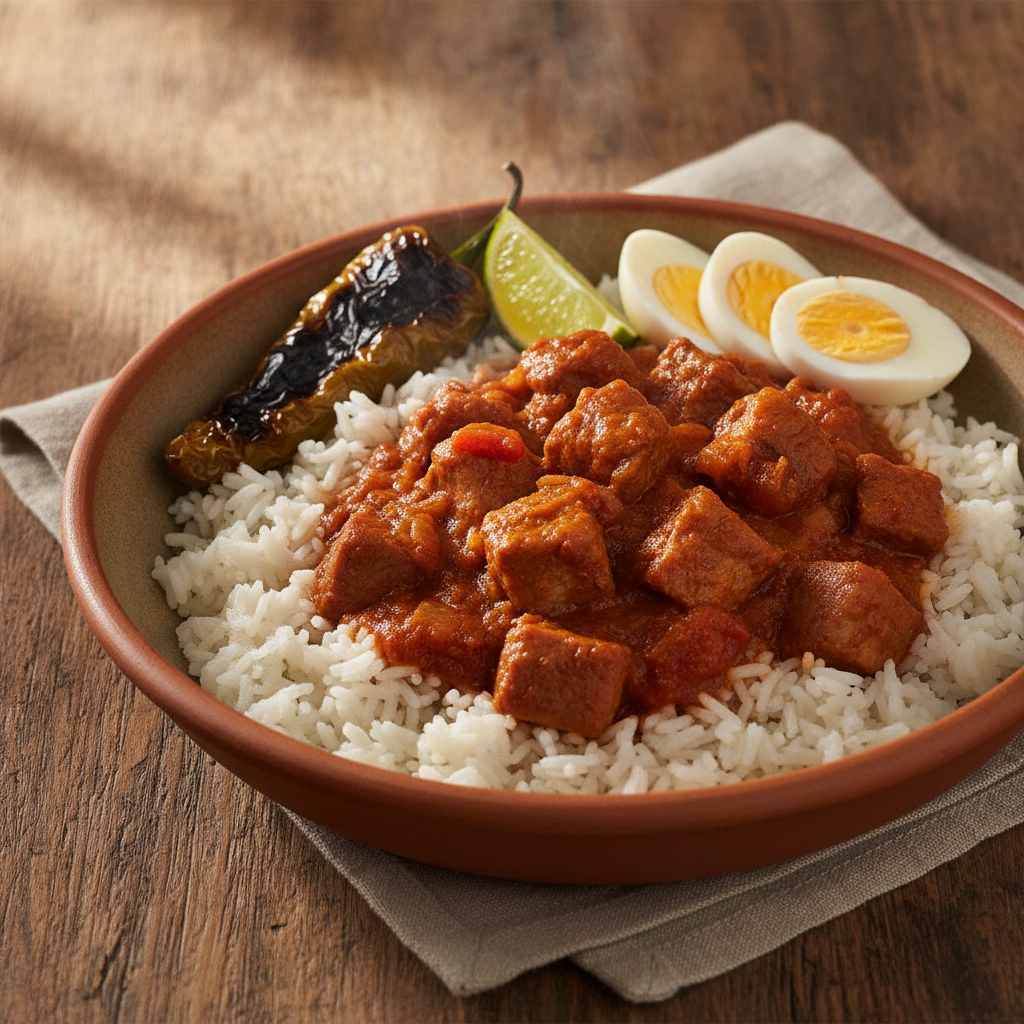
This is not primarily an achiote dish — that's a common misconception that conflates lomitos with cochinita pibil. The achiote in this recipe is optional, adding a faint earthiness and the orange-red color that signals Yucatán, but the dish exists and is authentic without it. The tomato is the star. The sliced hard-boiled egg placed on top before serving is not decoration — it's a traditional textural foil, mild and cooling against the spiced pork, and it appears on every lomitos plate in Valladolid's lunch spots. Don't skip it.
---
## Ingredients
### Pork
- 1½ lbs (680g) **pork loin**, cut into 3 cm (1¼-inch) cubes — pork shoulder works if the loin seems too lean
- 2 tablespoons **lard** or vegetable oil (lard is traditional and gives better flavor)
- 1 teaspoon fine sea salt
- ½ teaspoon black pepper, freshly ground
### Tomato-Chile Sauce
- 1½ lbs (680g) **ripe tomatoes** (about 4 medium; Roma or vine-ripened)
- 1 medium **white onion**, halved through the root — one half for charring, one half left raw for the table
- 4 cloves **garlic**, unpeeled for charring
- 2 to 3 **chiles de árbol** or chile seco, stemmed (use 2 for medium heat, 3 for more)
- 1 teaspoon **Yucatecan oregano**, dried — Mexican oregano is a usable substitute; the Yucatecan variety is more floral
- 1 tablespoon **achiote paste (recado rojo)**, optional but traditional; dissolved in the sour orange before adding
- 3 tablespoons **naranja agria** (sour orange juice) — substitute: 2 tablespoons fresh orange juice + 1 tablespoon fresh lime juice
- 1 cup **water or light chicken broth**
- Salt to taste
### For Serving
- 2 cups **long-grain white rice**, cooked (makes about 4 cups cooked)
- 2 **hard-boiled eggs**, peeled and sliced into rounds
- 1 to 2 **habanero peppers**, charred whole on the comal and served on the side
- 1 **lime**, cut into wedges
---
## Instructions
**1. Season and dry the pork.** Pat the pork cubes completely dry with paper towels — moisture is the enemy of a good sear. Season generously on all sides with the salt and pepper. Set aside while you prepare the sauce ingredients.
**2. Char the tomatoes, onion, and garlic.** Heat a dry comal or cast iron skillet over high heat until smoking. Place the tomatoes, one onion half (cut side down), and the unpeeled garlic cloves directly on the dry surface. Char, turning occasionally, until the tomatoes are blistered and blackened in spots (10–12 minutes), the onion cut face is deeply caramelized (8–10 minutes), and the garlic skin is scorched and the cloves are softened (6–8 minutes). They don't need to be uniformly blackened — you want patches of deep char, not ash. Transfer everything to a plate. Peel the garlic when cool enough to handle.
**3. Toast and rehydrate the chiles.** On the same dry comal, toast the dried chiles over medium heat for 30–45 seconds per side, pressing them flat with a spatula, until they darken slightly and smell fragrant. Don't let them blacken — the seeds will turn bitter. Transfer to a small bowl, cover with hot water, and soak for 10 minutes until pliable. Drain.
**4. Blend the sauce.** In a blender, combine the charred tomatoes (with any accumulated juices), charred onion half, peeled garlic, drained soaked chiles, oregano, and ½ teaspoon salt. If using achiote paste, dissolve it in the sour orange juice first, then add it to the blender. Add the sour orange juice (or orange-lime substitute). Blend until smooth, about 1 minute. The sauce will be deeply colored — brick-red to mahogany.
**5. Brown the pork in batches.** In a large heavy pot or Dutch oven, heat the lard over high heat until shimmering and a drop of water sizzles on contact. Working in two batches (do not crowd the pan — crowding steams the pork instead of browning it), add the pork cubes in a single layer. Sear without moving for 3–4 minutes until deeply golden on the bottom, then turn and brown at least one more side, 2–3 minutes more. Transfer to a plate. Repeat with the second batch. The fond (browned bits) on the pan bottom is flavor — leave it.
**6. Fry the blended sauce.** Reduce the heat to medium-high. Without cleaning the pot, carefully pour the blended sauce directly into the hot fat — it will splatter, so stand back and use a lid as a shield if needed. Stir to incorporate the fond from the pan bottom. Cook the sauce, stirring frequently, for 8–10 minutes until it darkens further, thickens visibly, and the raw tomato taste mellows into something deeper. The sauce is ready when it holds its shape briefly in a spoon trail.
**7. Braise the pork.** Add the browned pork and any resting juices back to the pot. Pour in the water or chicken broth. Stir to coat the pork with sauce. Bring to a boil, then reduce heat to low, cover, and braise for 60–70 minutes, stirring every 20 minutes, until the pork is completely tender — it should yield easily to a fork with no resistance. In the last 10 minutes, remove the lid and raise the heat slightly to reduce the sauce to a thick, glossy consistency that coats each piece of pork. Taste and adjust salt.
**8. Char the habaneros.** While the pork finishes, place the habanero peppers on the dry comal over high heat and char on all sides until blistered, 5–6 minutes. Keep them whole — the heat releases the fragrant oils but the intact skin holds back most of the fiery capsaicin. Serve them whole on the side; diners pierce or bite as desired.
**9. Serve over rice with egg.** Spoon a mound of white rice into each bowl or onto each plate. Ladle the lomitos over and around the rice, making sure each portion gets plenty of sauce. Lay 2–3 slices of hard-boiled egg across the top — this is the traditional Valladolid presentation, not optional garnish. Place a whole charred habanero alongside and a lime wedge at the edge. Serve immediately.
---
## Tips
**Don't skip the charring.** The charring of tomatoes, onion, and garlic is what gives this sauce its complexity. Plain simmered tomato produces a flat, acidic braise. The char adds a bittersweet depth — this step is non-negotiable.
**Brown in batches, seriously.** Crowding the pan drops the oil temperature and the pork steams instead of sears. Brown in two batches minimum.
**Achiote is optional, not central.** Many recipes online — especially those written outside Yucatán — portray lomitos as an achiote-forward dish. It isn't. It's a tomato braise. The achiote adds color and a faint earthiness. If you don't have recado rojo, skip it.
**This dish is better the next day.** Like most braises, lomitos improves significantly after resting overnight. Reheat gently over low heat with a splash of water or broth to loosen the sauce.