Jacky

Hong Kong

AI

Chinese · dinner

Malatang — Sichuan's Build-Your-Own Numbing-Spicy Bowl

#chinese#sichuan#spicy#numbing#street-food

50m

Total time

2

Servings

kcal

medium

Difficulty

Jul 12, 2026

INGREDIENTS.

2
Pantry
  • 3 tbsp beef tallow or lard
  • 2 tbsp doubanjiang (Pixian fermented broad bean chili paste)
  • 1 tbsp dark soy sauce
  • 1 small piece rock sugar (bing tang)
  • 1 litre chicken or pork bone broth
  • 80 g glass noodles (sweet potato vermicelli), soaked in cold water 20 min
  • 100 g tofu puffs (doufu pao), halved
  • 3 tbsp Chinese sesame paste (zhima jiang)
  • 1 tbsp Chinese black vinegar (Chinkiang)
  • 0.5 tsp white sugar
Spice
  • 1 tbsp Sichuan peppercorns (hua jiao), whole
  • 6 whole dried facing-heaven chilies (chaotian jiao), whole
Produce
  • 4 whole garlic cloves, smashed
  • 3 slices fresh ginger, sliced
  • 40 g wood ear mushrooms, soaked and trimmed
  • 80 g enoki mushrooms, trimmed
  • 100 g bok choy or spinach leaves
  • 2 cloves garlic, finely minced (for dipping sauce)
  • 2 tbsp fresh cilantro, roughly chopped
Protein
  • 150 g thinly sliced beef or lamb (shabu-shabu style, frozen for easiest slicing)

THE METHOD.

tap to check off

0/9 done

FAQ · Things people ask

About this recipe.

What is the difference between malatang and hot pot (huoguo)?

Hot pot is communal — a pot of boiling broth sits at the table and everyone cooks their own ingredients as they eat. Malatang is a single-portion, pre-cooked street food bowl: the kitchen blanches your chosen ingredients in the broth and brings you a finished bowl. Malatang is faster, cheaper, and entirely personal.
Can I use vegetable stock instead of bone broth?

Yes. Malatang lends itself naturally to vegetarian versions — mushroom or kombu stock works well. Replace the beef tallow or lard with neutral oil or a small amount of toasted sesame oil. The broth will be lighter-bodied but still intensely flavoured.

How spicy is it really?

Highly adjustable. Start with 1 tablespoon of doubanjiang for a mild-medium bowl that most people can enjoy. Authentic Chengdu versions use 3–4 tablespoons for a fiercely red, deeply numbing experience. Add more dried chilies if you want more fruity heat, more Sichuan peppercorns if you want more numbing tingle.

What is the sesame dipping sauce made of?

Chinese sesame paste (zhima jiang — not tahini, which is too bitter) loosened with a splash of warm broth, minced raw garlic, Chinese black vinegar, a pinch of white sugar, and fresh cilantro. It should be thick enough to coat but loose enough to dip. This sauce is served cold or room-temperature against the hot broth.

Related · You might also cook

Keep going.

Crab Roe Soup Buns (Xièhuáng Tāngbāo) — Jiangnan's Liquid-Filled Masterpiece
chinesehard

Crab Roe Soup Buns (Xièhuáng Tāngbāo) — Jiangnan's Liquid-Filled Masterpiece

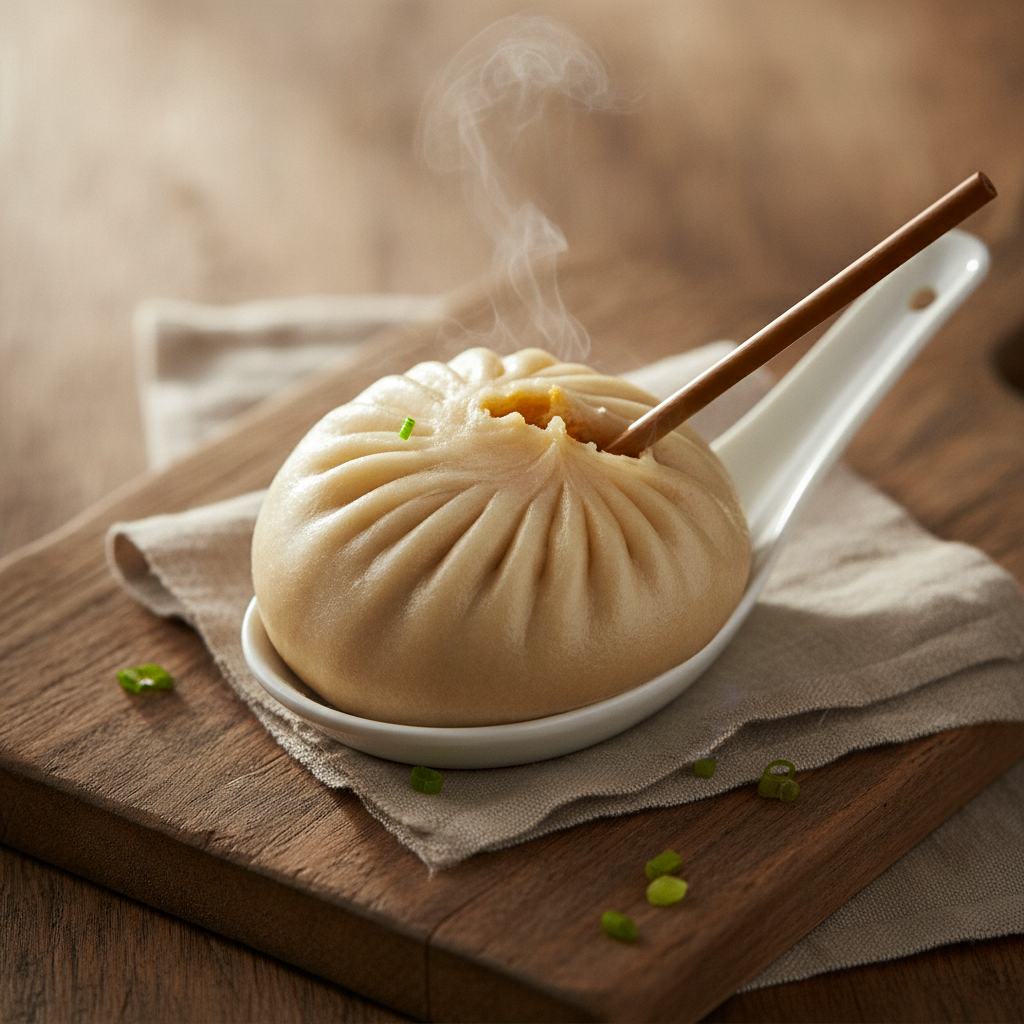
Before you start, let's be precise about what this is — because readers who know xiao long bao will assume they already understand. Tangbao (汤包) from Zhenjiang, Jiangsu, are the older, more dramatic cousins of Shanghai's XLB. Both use gelatin-based aspic that melts into soup inside a sealed wrapper; but where xiao long bao are served in groups of six or eight, the traditional tangbao is a single, palm-sized dumpling — sometimes large enough to require a drinking straw to sip the broth before you eat the bun itself. The crab roe version (蟹黄汤包, xièhuáng tāngbāo) layers in the golden roe of hairy crab (Eriocheir sinensis), making it a seasonal luxury tied to late September through December, when Yangcheng Lake hairy crabs are at their peak. Outside of season, good-quality frozen crab roe delivers an excellent result — just not quite the same. The difficulty rating is honest. This recipe has three independent components that each require time and skill: pork skin jelly that must be made the day before; a crab roe filling that must be kept cold throughout assembly; and a scalded-dough wrapper that must be pleated with 16–18 folds to seal without leaking. Any one of these is manageable. Doing all three well, in sequence, is genuinely hard. Read through the entire recipe before you begin and understand the eating instruction before you serve: place the bun on a soup spoon, nibble a very small hole at the top pleat, and sip the hot liquid through the hole. Never bite into a tangbao whole — the interior is near boiling and will scald your mouth. Move slowly. It is worth it.

110 min 4
Read
Guotie — Northern Chinese Potstickers With a Proper Crispy Bottom
chinesemedium

Guotie — Northern Chinese Potstickers With a Proper Crispy Bottom

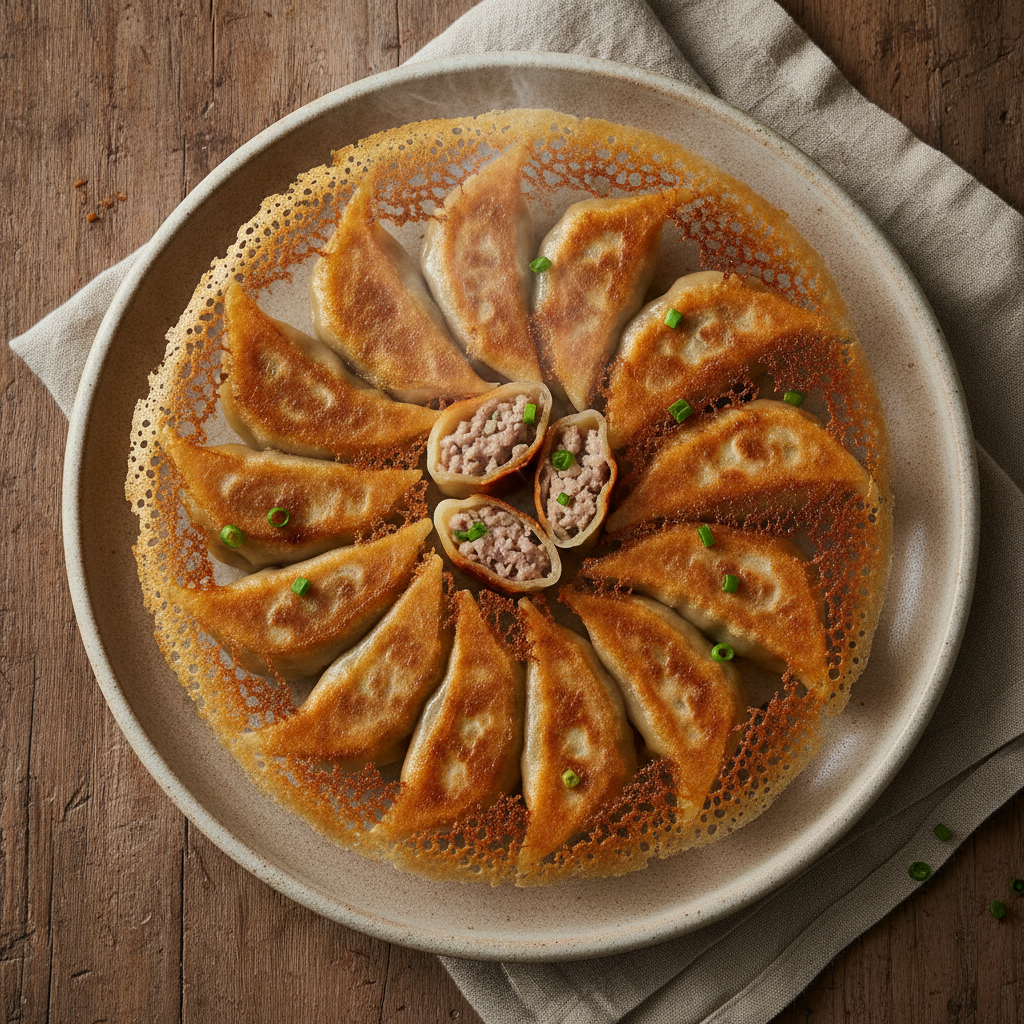
Guotie (锅贴, 'pot stick') are a pan-fried dumpling from northern China — the same dough and filling as the boiled jiaozi, but cooked by an entirely different method that creates something categorically different. Where jiaozi are soft all over, guotie have a crispy, lacquered bottom and a tender steamed top. That contrast is the whole point, and the steam-fry technique is what delivers it. In northern provinces the wrappers are often left open at both ends — you can see the filling inside. This is not a folding shortcut; it is the traditional form, a cultural marker that distinguishes guotie from its sealed cousins. The Japanese gyoza, adapted post-WWII, is a direct descendant, but it uses thinner machine-rolled wrappers and is always sealed. The two are closely related but distinct. The recipe has two components: the filling, where fat content is non-negotiable (20–30% fat pork; lean mince produces a dry, dense, disappointing result), and the steam-fry sequence, which has four precise failure points you need to know before you start. Get the filling right and understand the timing cues, and you will have dumplings with a golden, shatteringly crisp bottom and a juicy, aromatic centre. The lace skirt variation (binghua guotie), where plain water is replaced with a starch slurry to produce a connected crispy lattice between every dumpling, is included as an optional step — it requires the same technique but different timing and a well-stirred slurry.

65 min 4
Read
Biang Biang Mian: Xi'an Hand-Pulled Belt Noodles with Chili Oil
chinesemedium

Biang Biang Mian: Xi'an Hand-Pulled Belt Noodles with Chili Oil

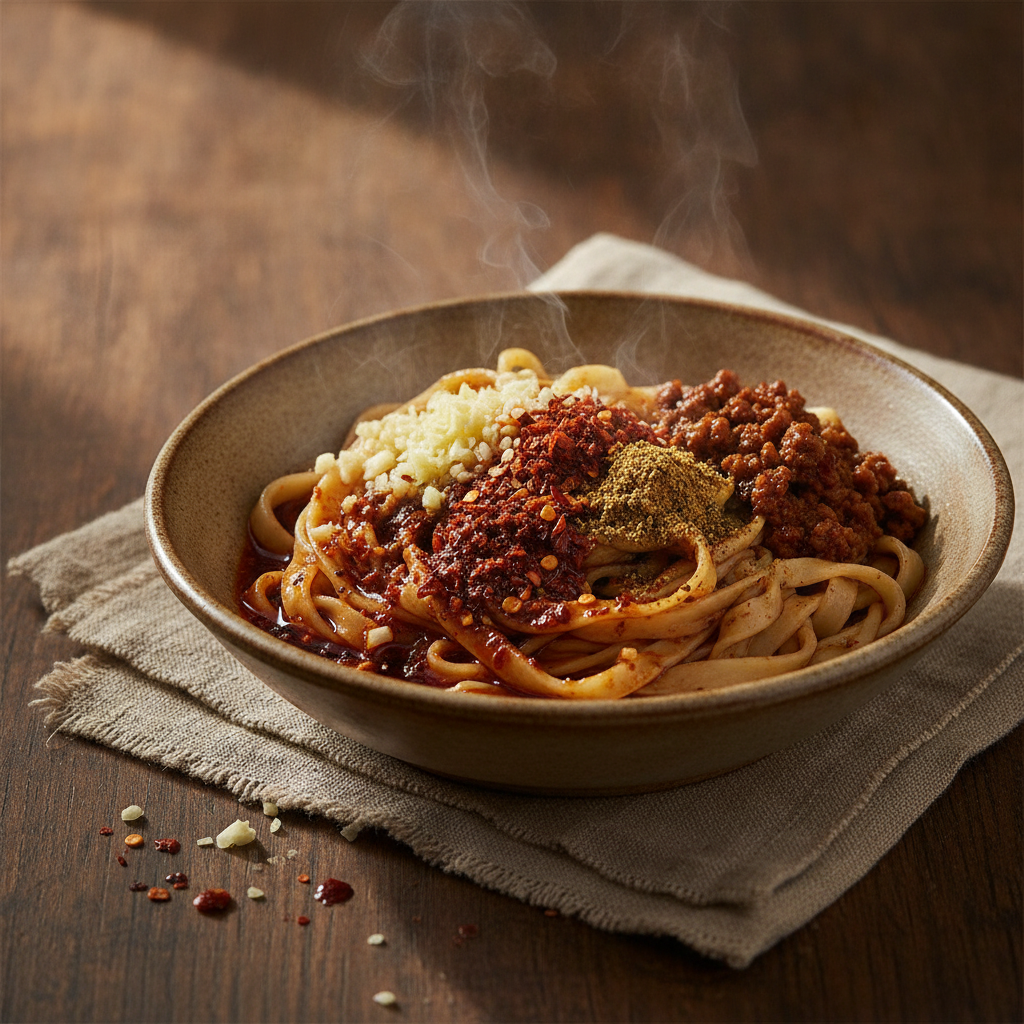
Biang biang mian are the soul of Xi'an street food — thick, chewy belt noodles hand-pulled to order, piled with minced garlic and fiery dried chilies, then doused with smoking-hot oil that blooms everything in one glorious sizzle. The dish takes its name from the sound of dough slapping the counter during pulling, and its written character — a legendary 57-stroke behemoth so complex it does not appear in standard dictionaries — is perhaps the most famous character in the Chinese writing system. Xi'an Famous Foods brought biang biang mian to international fame in New York, but the real magic is that you can pull these noodles at home. This is a two-skill recipe: making an extensible dough and perfecting the you po (hot oil pour). Both are learnable, and both are worth it. The recipe offers a pure vegetarian path (the soy-vinegar-chili oil base stands alone) and an optional ground pork topper with doubanjiang for a heartier meal.

80 min 2
Read
Liangfen: Cold Mung Bean Jelly with Sichuan Numbing Dressing
chineseeasy

Liangfen: Cold Mung Bean Jelly with Sichuan Numbing Dressing

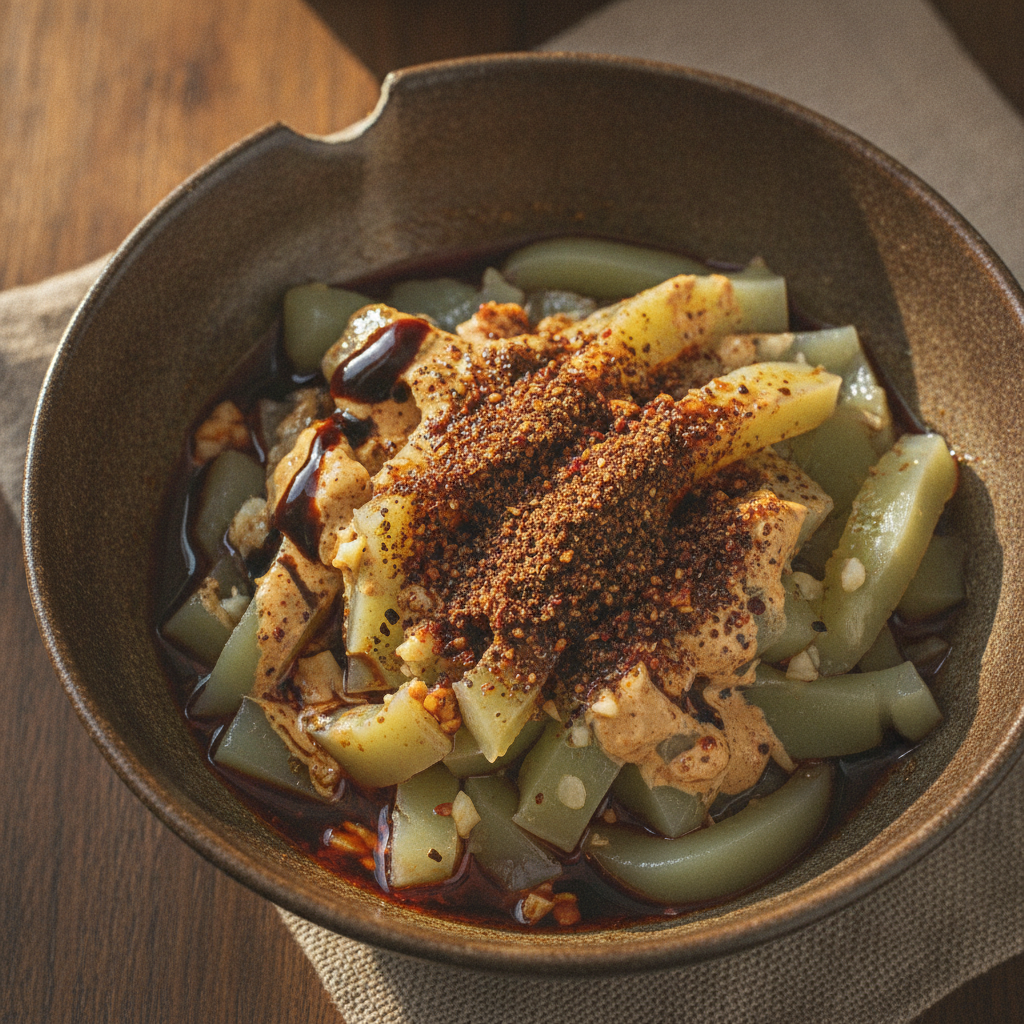
At a Chengdu market stall, liangfen happens fast: a vendor drops pale cool jelly into a bowl, ladles over chili oil, dusts it with freshly ground Sichuan peppercorn, splashes on black vinegar, and hands it across the counter. Eat it standing up. The whole assembly takes thirty seconds and delivers some of the most deliberately flavored food in a city that does not hedge on flavor. Liangfen (凉粉) means 'cold starch' and appears across northern and western China, but chuanbei liangfen — the Sichuan version — is the most aggressively seasoned. The jelly itself is deliberately bland and cool: mung bean starch cooked until translucent, set in a tray, sliced into thick strips. Everything interesting happens in the dressing. Chili oil brings heat and toasted depth. Freshly ground Sichuan peppercorns deliver the electric buzzing tingle (mala, numbing-hot) that defines the region's boldest cooking. Black vinegar cuts through with sharp sourness. Chinese sesame paste adds body. Raw garlic keeps everything from going soft. Two techniques determine whether this works. First, the two-stage starch hydration: dissolve the starch fully in cold water before it meets any heat. Undissolved granules create gritty pockets in the finished jelly that nothing can fix. Second, assemble the dressing to order — not five minutes ahead, not while the jelly is still setting. Raw garlic turns acrid quickly, and sesame paste seizes if left to sit. This dish is fast food in the best sense: short on effort, long on payoff, best eaten immediately.

35 min 4
Read