indianmedium
Kerala Beef Ularthiyathu — The Dry-Roasted Beef Fry of the Syrian Christians
Beef ularthiyathu is the signature preparation of Kerala's Syrian Christian community — the Saint Thomas Christians, or Nasrani, who trace their roots to the arrival of the apostle Thomas on the Malabar Coast in 52 CE. Unlike much of South Indian cuisine, Syrian Christian cooking embraces beef without restriction and elevated it into a dish of extraordinary complexity. The Kottayam district version — darkly spiced, coconut-flecked, deeply aromatic — is the most famous, eaten at weddings, feast days, and in the thattukada roadside shops alongside toddy and tapioca (kappa). This is not a curry. The word ularthiyathu means 'dry-stir-fried' in Malayalam, and that is precisely what it is.
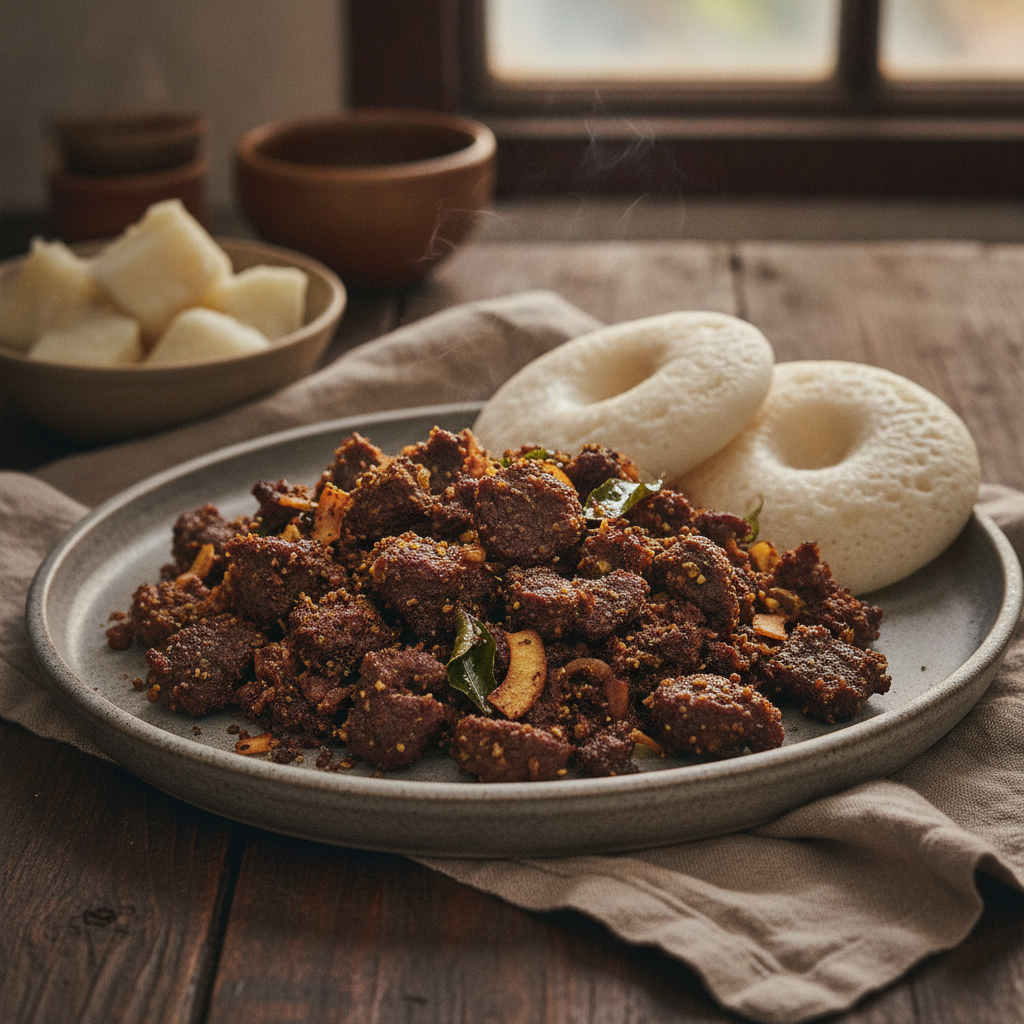
The method has two non-negotiable stages. First, pressure cook the beef in a concentrated spice marinade with minimal water — the beef generates its own moisture, and that liquid is your flavor foundation. Second, transfer everything to a wide pan and cook until the liquid is completely reduced before beginning the final stir-fry. This is where most home cooks fail: if any liquid remains when you start the roasting stage, the beef steams instead of roasting and you'll never get the dark, dry crust that makes ularthiyathu ularthiyathu. Once dry, the slow, patient stir-fry in coconut oil with caramelized shallots and sizzling curry leaves gives you a deeply colored, almost hash-like beef fry with crispy edges and concentrated spice at every bite.
Two things are non-negotiable and not typos: two tablespoons of coarsely ground black pepper (it mellows dramatically through cooking and is the backbone of the dish), and thenga kothu — small wedges of fresh coconut, fried separately until golden and stirred in at the very end. They are not a garnish. They provide a mild, fatty counterpoint to the dark, peppery beef. Serve alongside appam (fermented rice hoppers) or kappa (boiled tapioca) for the classic pairing.