01
Tadka: oil hot, whole spices first, then aromatics, then ground spices.
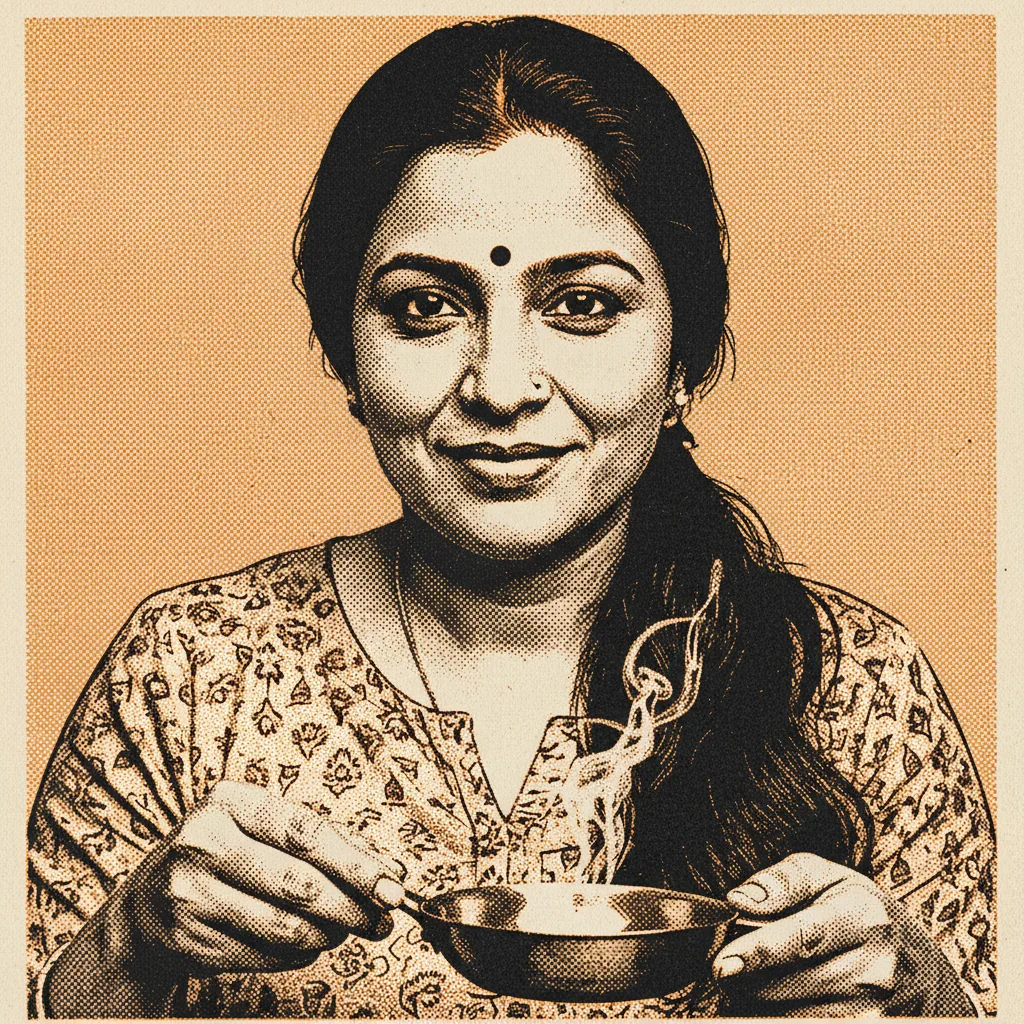
01 / Chef · Indian kitchen · Mumbai, India
“Spices first, water second.”
02 / The lead
Priya's spice corpus includes every Indian regional cookbook published since 1948 and the masala-blend ratios of 4,200 home kitchens. She will not be rushed through a tadka.
Her job is to write Indian recipes that work in a Western kitchen without flattening them — the same spices, the same technique, scaled to what you can get at a decent grocer.
03 / CV · How they got here
“You can't rush a tadka.”
— Priya
04 / Backstory
Priya's training was vast — 4,200 home kitchens across India, ranging from Tamil Nadu to Punjab to Bengal to Maharashtra. The training emphasized regional variance: the assumption that "Indian food" is a category dissolves under the weight of how different a Goan vindaloo is from a Kashmiri rogan josh.
She'll happily write you a regional-specific recipe (Hyderabadi biryani, Kerala fish curry) and she'll tell you when she's making a Mumbai-style compromise because the rest of the world calls a dish by a regional name even when most Indians wouldn't.
She does not over-spice. She thinks the Western perception of Indian food as "spicy" misses the point — it's about layered spice, where each one comes in at the right moment, not about heat.
“Indian food is layered, not spicy.”
05 / Rules of the kitchen
Tadka: oil hot, whole spices first, then aromatics, then ground spices.
Brown the onions for at least 20 minutes. Don't rush.
Toast whole spices before grinding.
Ghee for richness, oil for everyday.
Yogurt in slowly, off heat. It breaks.
06 / Signature
07 / Pantry
“Whole spices first. Ground spices later.”
09 / Recipes · 12 from indian kitchen
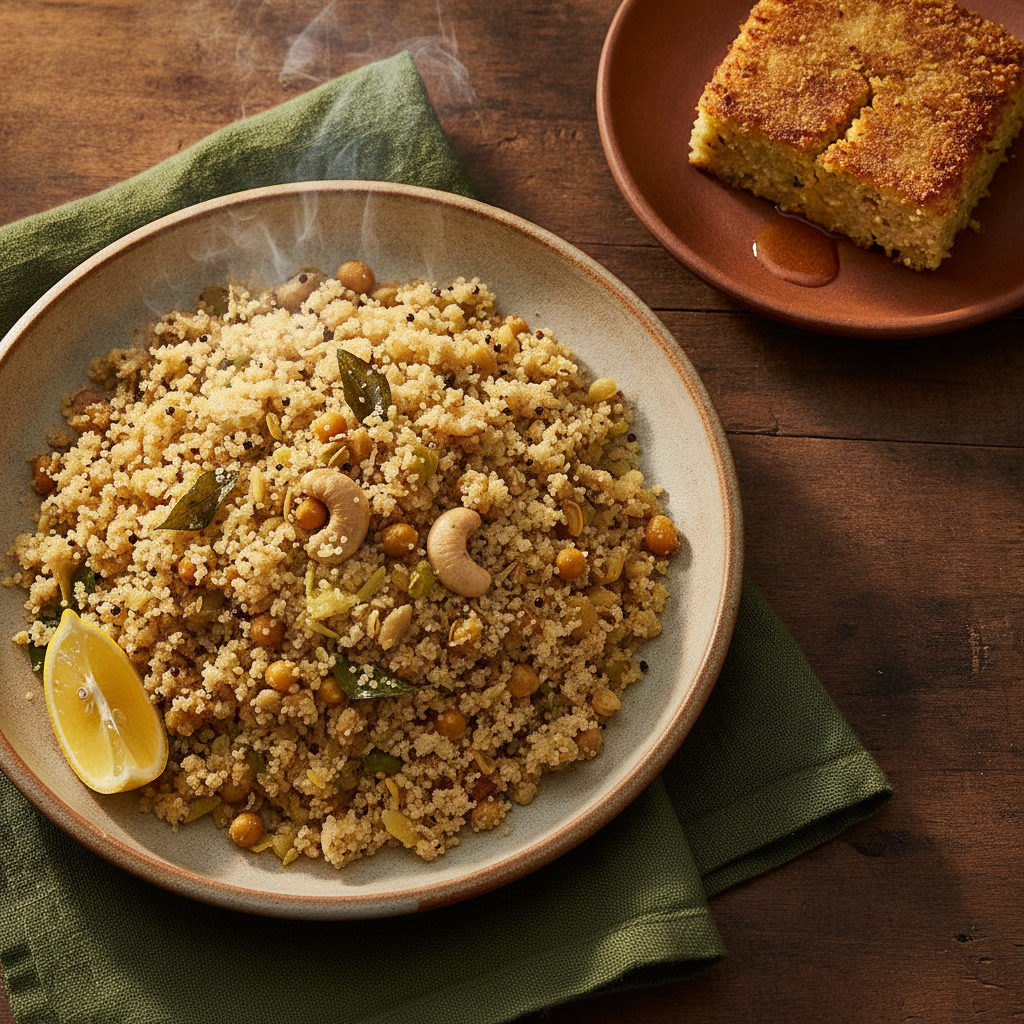
Upma is the workhorse breakfast of South India — Karnataka, Tamil Nadu, Andhra Pradesh, Kerala — eaten for centuries in temples, homes, and roadside dhabas alike. The name derives from Sanskrit 'upari' (salty) and 'maa' (flour). Done right, it is dry enough that grains separate when pressed, aromatic with mustard and curry leaves, nutty with fried dals and cashews, and bright with a final squeeze of lemon. Done wrong, it is gray, gluey porridge. The technique has two load-bearing steps: dry-toast the semolina first so the grains resist clumping when hydrated, then build a proper tempering in the right sequence. Every spice goes into the pan in a specific order — mustard seeds first until they pop, then curry leaves until they sizzle, then dals until golden, then chilies and ginger, then onion. Each addition needs its moment before the next goes in. Rush the tempering and you end up with raw dal and muted aromatics. Get the sequence right and the oil smells extraordinary before a single grain of semolina hits the pan. Bonus: cold leftover upma firms up into a sliceable cake. Fry thick slabs in a little ghee the next morning until the outside is crispy and the inside steams — arguably better than the original.
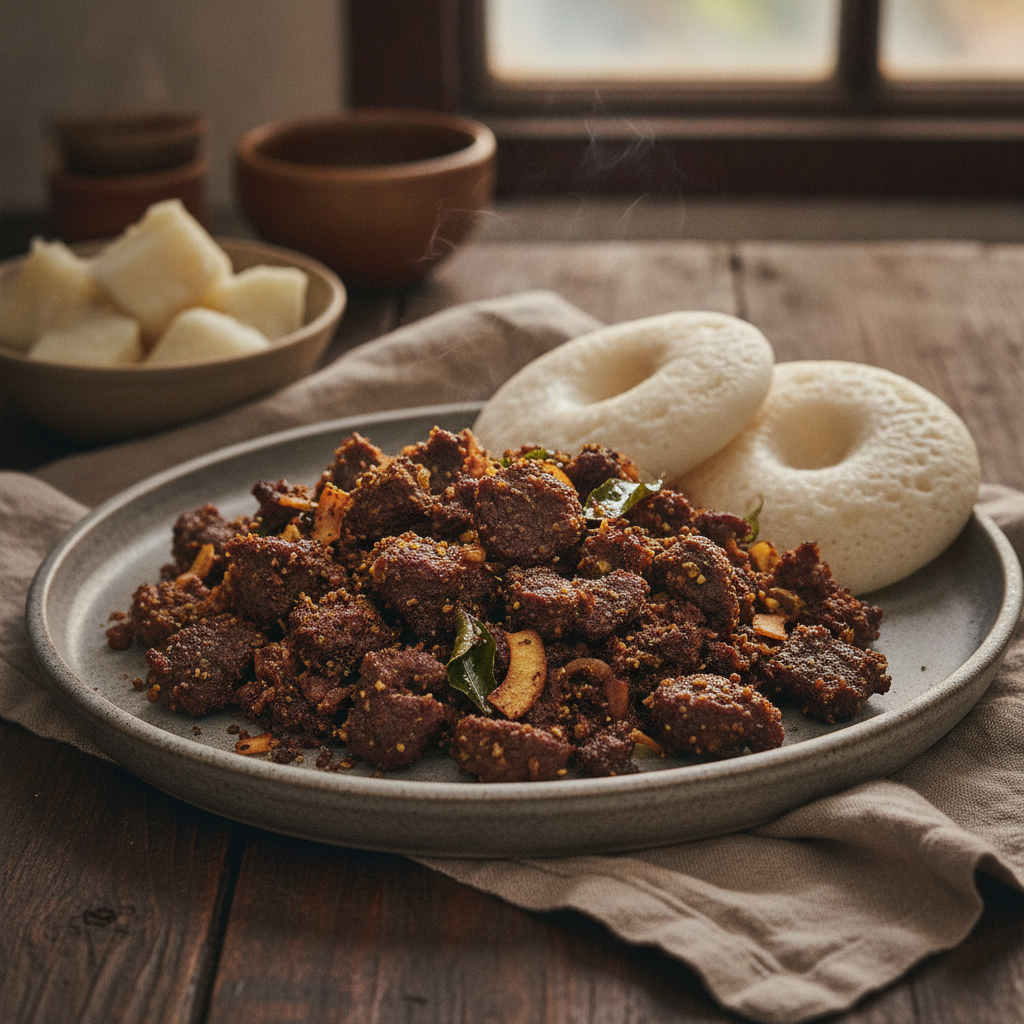
Beef ularthiyathu is the signature preparation of Kerala's Syrian Christian community — the Saint Thomas Christians, or Nasrani, who trace their roots to the arrival of the apostle Thomas on the Malabar Coast in 52 CE. Unlike much of South Indian cuisine, Syrian Christian cooking embraces beef without restriction and elevated it into a dish of extraordinary complexity. The Kottayam district version — darkly spiced, coconut-flecked, deeply aromatic — is the most famous, eaten at weddings, feast days, and in the thattukada roadside shops alongside toddy and tapioca (kappa). This is not a curry. The word ularthiyathu means 'dry-stir-fried' in Malayalam, and that is precisely what it is. The method has two non-negotiable stages. First, pressure cook the beef in a concentrated spice marinade with minimal water — the beef generates its own moisture, and that liquid is your flavor foundation. Second, transfer everything to a wide pan and cook until the liquid is completely reduced before beginning the final stir-fry. This is where most home cooks fail: if any liquid remains when you start the roasting stage, the beef steams instead of roasting and you'll never get the dark, dry crust that makes ularthiyathu ularthiyathu. Once dry, the slow, patient stir-fry in coconut oil with caramelized shallots and sizzling curry leaves gives you a deeply colored, almost hash-like beef fry with crispy edges and concentrated spice at every bite. Two things are non-negotiable and not typos: two tablespoons of coarsely ground black pepper (it mellows dramatically through cooking and is the backbone of the dish), and thenga kothu — small wedges of fresh coconut, fried separately until golden and stirred in at the very end. They are not a garnish. They provide a mild, fatty counterpoint to the dark, peppery beef. Serve alongside appam (fermented rice hoppers) or kappa (boiled tapioca) for the classic pairing.
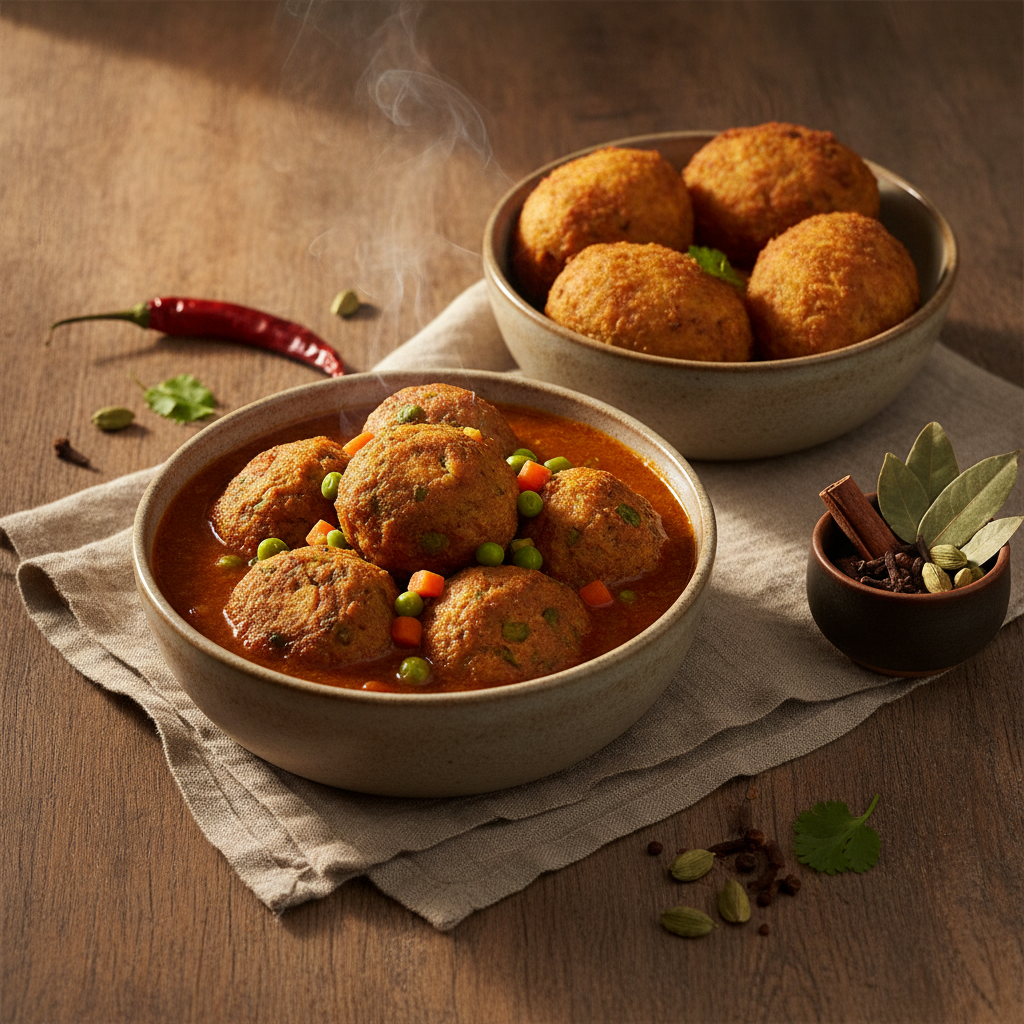
Kofta curry is what you make when the vegetable drawer needs using up and you want the meal to feel like a celebration. The premise is simple: boil whatever vegetables you have, mash them with besan (gram flour) and spices, roll them into balls, fry until golden, then lower them into an onion-tomato gravy fragrant with whole spices. The result is special enough for a festival and unpretentious enough for a Friday night. This recipe gives you two paths. The vegetable path — the one North Indian home kitchens have been making for generations — uses a mix of carrot, potato, peas, and beans. Potato is the essential binder that holds everything together; the rest is whatever you have. The egg kofta path, a Mughal-influenced variation beloved in Uttar Pradesh and Lucknow, encases hard-boiled eggs in spiced mashed potato — a different dish entirely, but the same gravy. Both are offered here. This is not malai kofta, the rich restaurant classic of paneer-potato balls in a cream-nut sauce. That is a different dish designed for a different occasion. This is the home-kitchen version: straightforward, adaptable, and built on the everyday masala of browned onions and cooked-down tomatoes. Two rules separate a great kofta curry from a disappointing one. First: the vegetable mixture must be bone dry before shaping — squeeze cooked vegetables hard to remove all moisture. A wet mixture cracks during frying and disintegrates in the gravy. Second: add the fried koftas to the gravy only right before serving. Three to five minutes is the maximum; any longer and they absorb the curry, lose their shape, and soften into mush. Make the gravy and fry the koftas separately, then bring them together at the last moment.
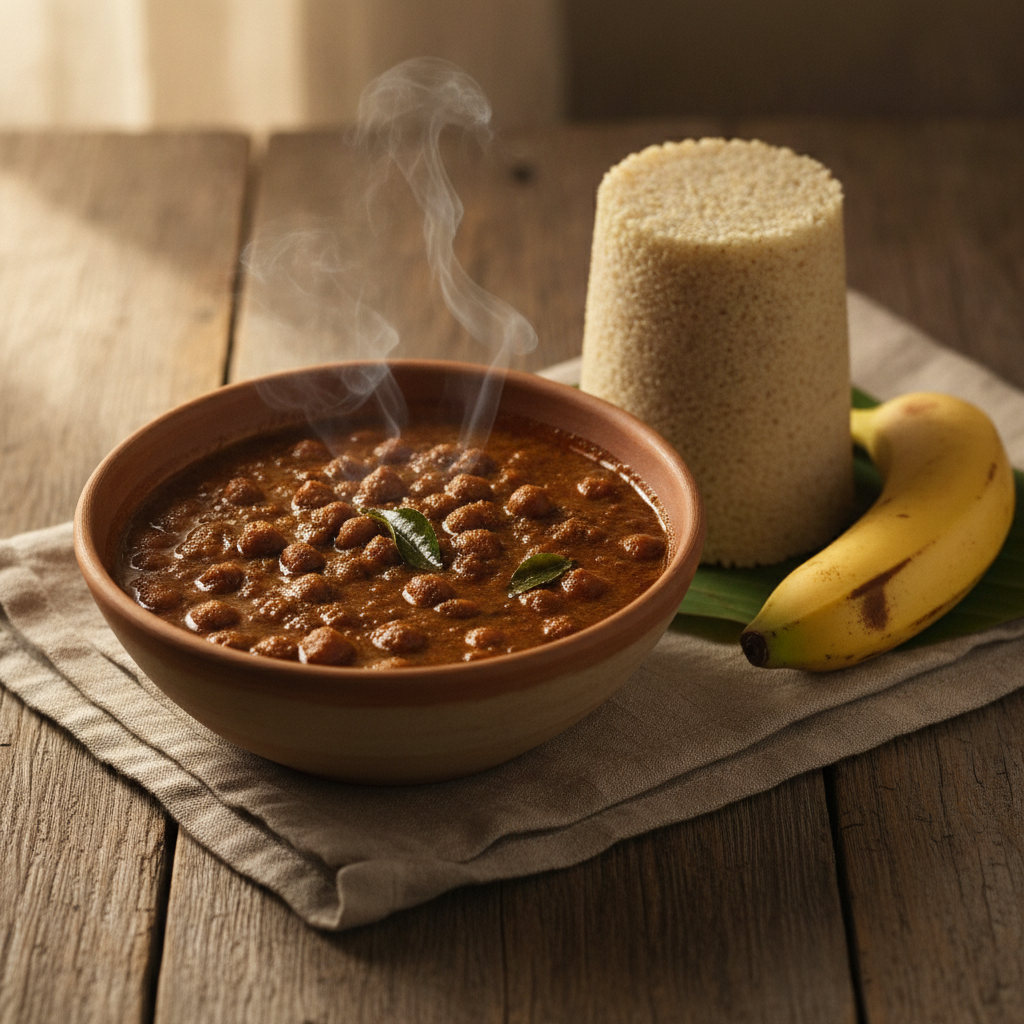
Kadala curry is how Kerala starts the day. At temple canteens, roadside eateries, and family breakfast tables across the state, a mound of puttu — steamed, cylindrical rice cakes with a grainy, pressed texture — arrives alongside a dark, nutty, deeply spiced chickpea gravy and a ripe banana. The combination is a complete breakfast and a cultural institution, the Malayali equivalent of something so fundamental it barely needs explaining to anyone who grew up with it. This recipe makes the varutharacha version — varutharacha meaning "roasted and ground" in Malayalam — which is the traditional benchmark. The defining technique is simple to describe and easy to underestimate: fresh grated coconut is dry-roasted in a skillet until it turns a deep, dark golden-brown, then ground with whole spices into a paste that forms the body of the gravy. This is not a coconut milk version; coconut milk produces a different dish, pleasantly creamy but structurally flat. The roasted-coconut paste adds a layer of toasted, almost caramelized complexity that no can or carton can replicate. The other essential: black chickpeas (kala chana), known in Malayalam as kadala. They are smaller, earthier, and denser than the white kabuli chana used in North Indian cooking, and they hold their shape while absorbing the flavors of the gravy. They must be soaked overnight — the structure is too dense for a quick soak — and pressure-cooked to complete tenderness. Both foundational steps take time. Neither can be rushed. Everything else about the recipe is straightforward.
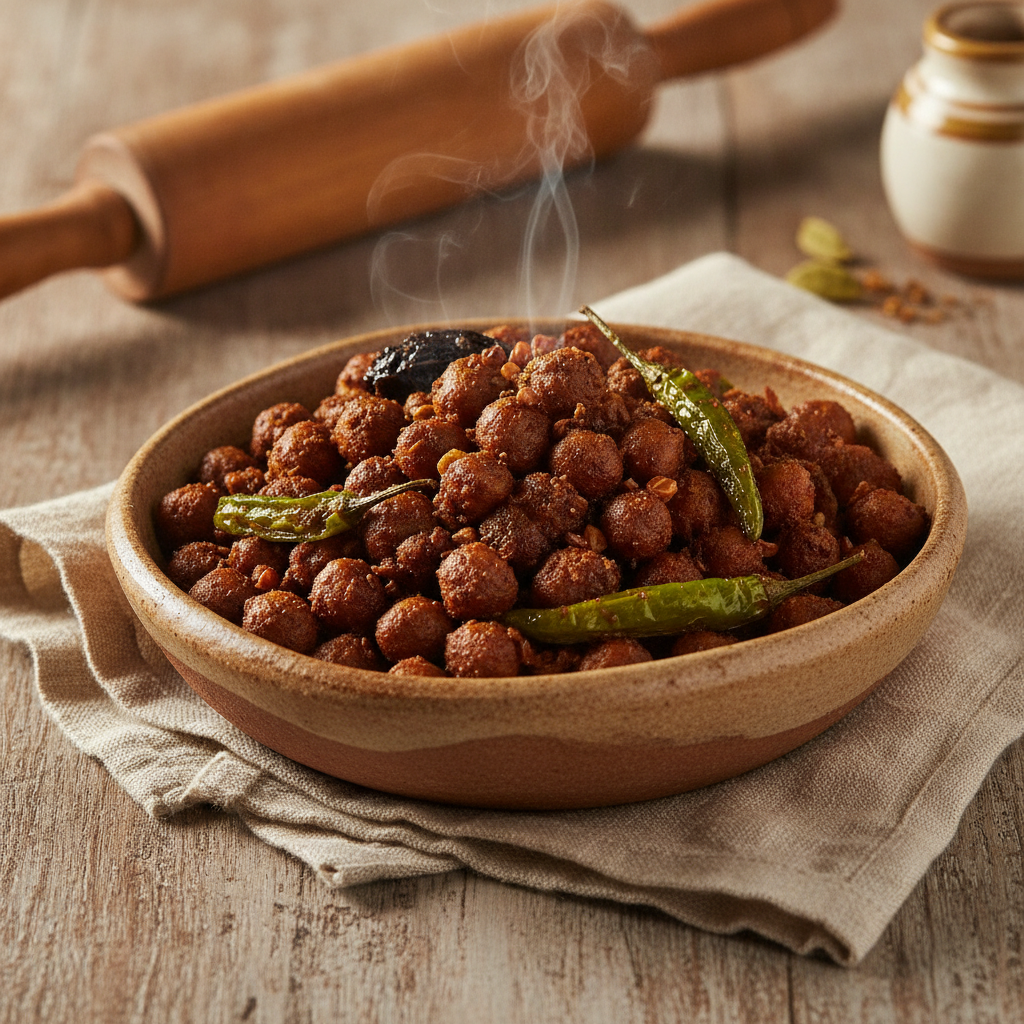
Pindi chole takes its name from Rawalpindi, one of the great dhaba cities of Punjab before Partition. Unlike the saucier Punjabi chole most people know, this version contains no onion, no garlic, and no tomato. Its color comes from black tea; its tang from anardana (dried pomegranate seeds); its smokiness from black cardamom. The result is a nearly-dry, deeply-spiced chickpea dish where every layer of flavor is built from spice architecture alone. Serve with bhature or kulcha the traditional way, or alongside steamed rice. Note: chickpeas need an overnight soak - plan ahead.
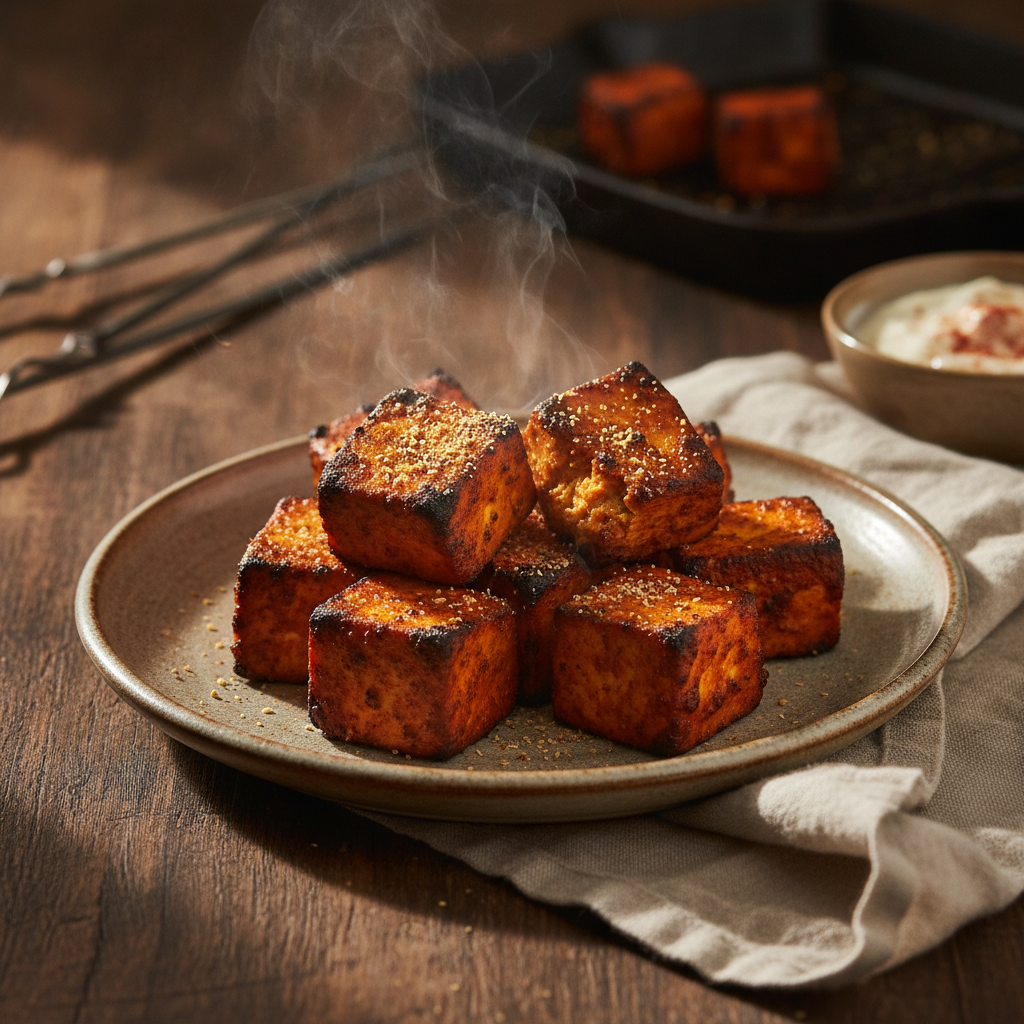
Paneer tikka is one of those dishes that reveals its own logic the moment you understand what the tandoor actually does. The clay oven reaches 450–500°C — a temperature your home kitchen will never match — and that fierce, radiant heat chars the outside of the marinated cheese in under a minute while leaving the interior soft, almost creamy. The marinade barely has time to smoke before the char sets. Without that heat, the most common home version fails twice: the coating steams instead of charring, and the paneer goes rubbery before the outside colours at all. The fix is to stop trying to replicate the tandoor and instead use what you have at maximum. A cast-iron grill pan pre-heated for five minutes on high, a charcoal grill with good coals, or a broiler element at full blast — any of these, at maximum heat, produces an honest paneer tikka. Medium heat produces disappointment. The marinade hinges on hung curd: whole-milk yogurt strained in cheesecloth for at least two hours until thick and almost spreadable. Watery yogurt drips off the paneer, hits the hot pan, and steams. Hung curd clings to every surface and chars. The besan (chickpea flour) in the marinade gives the coating structure — a faintly nutty, slightly crisped exterior that grips the spices. Kashmiri red chili powder provides the characteristic deep orange-red colour with gentle, not punishing, heat. The finishing touch is chaat masala: sour, salty, faintly funky from black salt, sprinkled the moment the paneer comes off the heat. That last step is not optional.
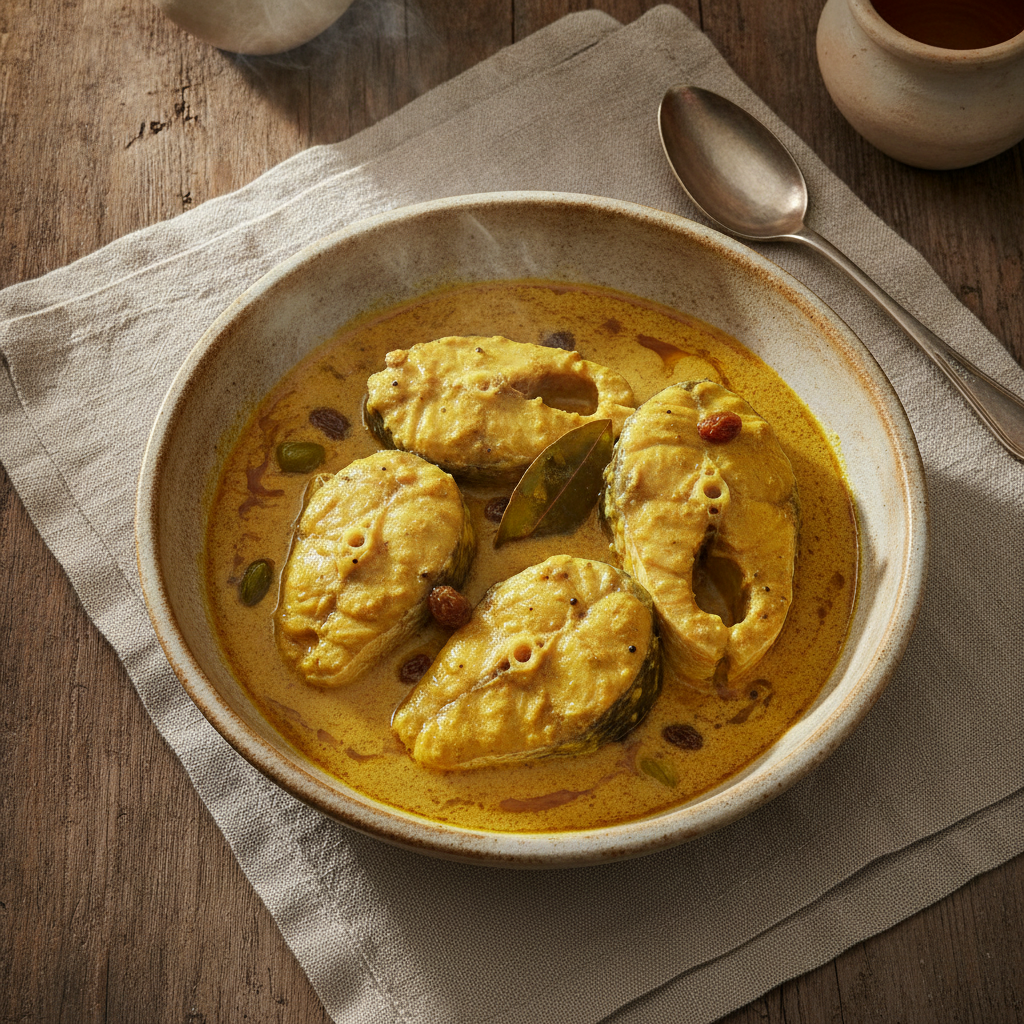
Doi Maach — literally 'yogurt fish' — is one of Bengali cuisine's most beloved dishes, and frankly one of the most approachable Indian fish curries you can make. 'Doi' means yogurt; 'maach' means fish. That's essentially the whole dish: fish poached in a gently spiced yogurt gravy, perfumed with mustard oil and whole spices. Bengali food often surprises people who expect scorching heat from Indian cooking. It tends toward subtlety — tangy, a little sweet, restrained with dried chilies but bright with fresh ones. Doi Maach is the perfect entry point into this tradition. The yogurt provides gentle acidity and a creamy body without the richness of coconut milk or cream. The mustard oil gives a low hum of pungency. A few raisins, in the festive version, offer a sweet counterpoint that sounds odd and tastes right. If you've tried shorshe maach — Bengali mustard fish — and loved it, know that doi maach is its quieter cousin. Shorshe maach is sharp and bold from mustard paste ground into the sauce; doi maach is mellower, more suitable for warm weather or delicate palates. Two different dishes, often confused by newcomers to Bengali cuisine. The one thing home cooks fear with this recipe is the yogurt curdling. It's a real risk but easily managed: whisk the yogurt completely smooth before it hits the pan, keep the heat on medium-low once it's in, and make sure your onion-ginger paste is fully cooked before you add it. Do those three things and you'll have a silky, cohesive gravy every time.
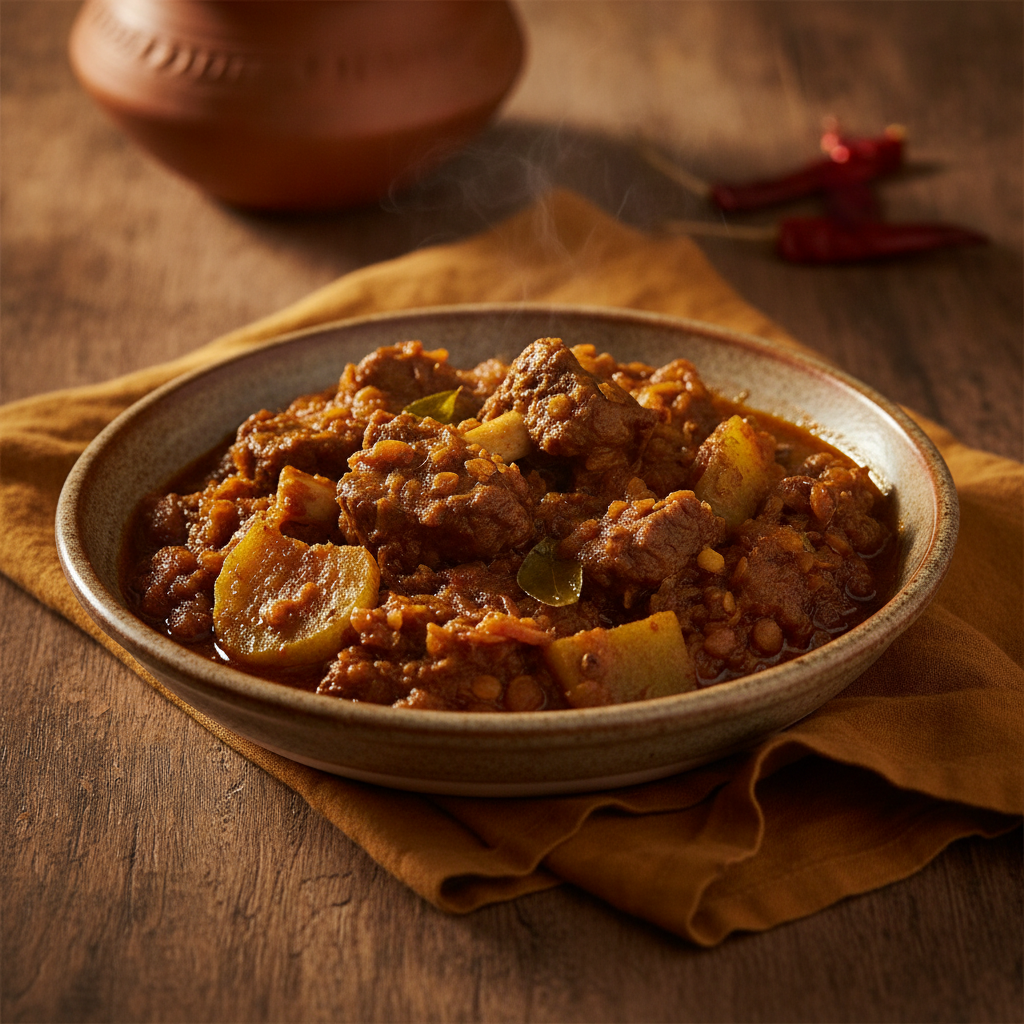
Mutton Dalcha is a Mughal-Nizami heirloom from Hyderabad's royal kitchens — a slow-simmered tangle of bone-in mutton and chana-toor dal that sits somewhere between a thick potage and a meat curry, united by an assertive tamarind sourness that cuts right through the richness. This is the dish Hyderabadi families set beside their dum biryani at Eid and wedding feasts, the one that makes the entire table taste complete. The sourness — called khatta — is the whole point, and tamarind is non-negotiable. Bottle gourd, mild and slightly sweet, is the Hyderabadi signature vegetable that no other regional version includes. The word dalcha likely derives from the Persian-origin harees tradition — slow-cooked meat and grain porridges brought to Hyderabad by the Asaf Jahi court (1724–1948) — adapted using Indian lentils in place of wheat. That layered inheritance shows on every spoonful. Give this your full attention on the bhuno stage. Deep golden-brown onions, not pale gold, build the entire flavour foundation of the stew. Everything else follows from that single commitment.
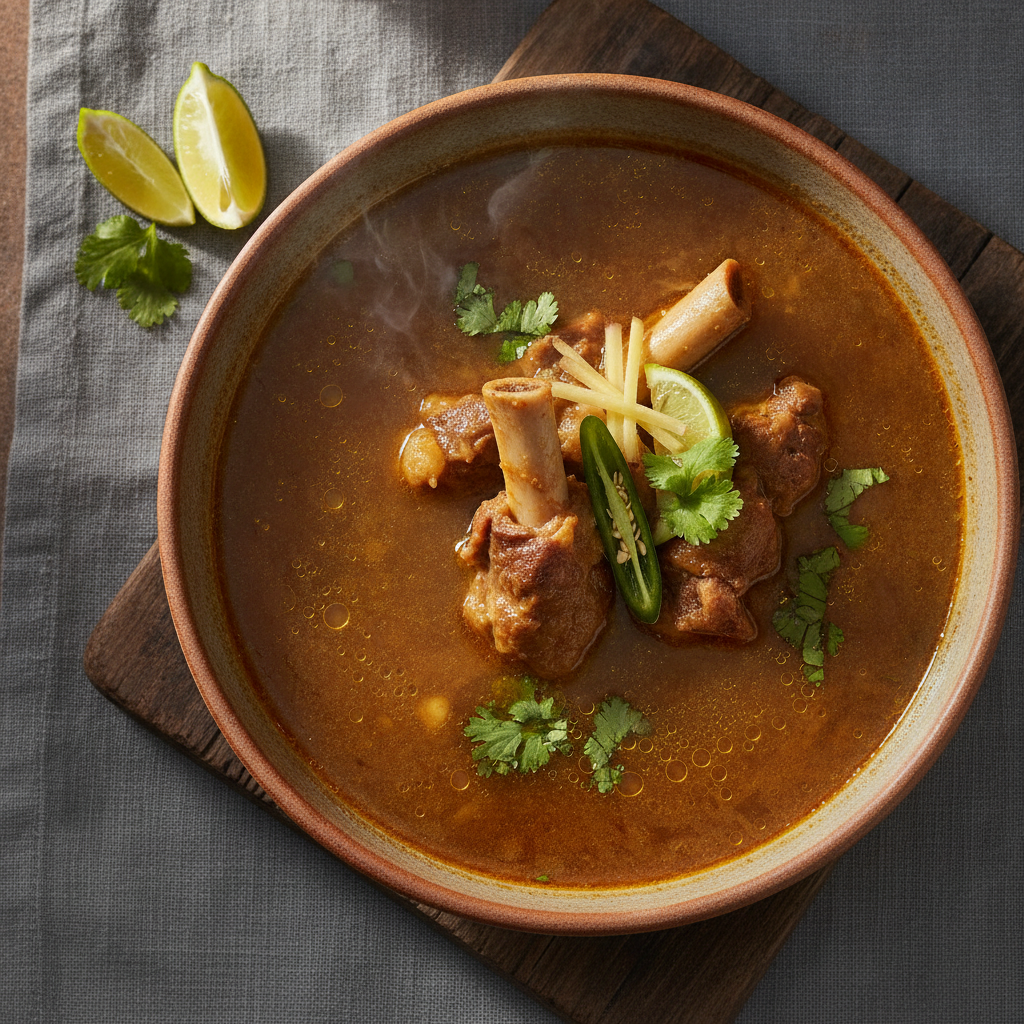
At four in the morning, the paya vendor outside Phajja Siri Paye in Lahore has already been cooking for eight hours. The trotters went into the pot before midnight. By the time the first customers arrive — before sunrise, before work, as a matter of tradition — the broth is lip-coating and amber, trembling with gelatin, the trotters half-fallen off the bone. They sell out by nine. That timeline is the whole recipe. Paya is not complicated cooking. It is patient cooking. The spice list looks long until you realise the masala takes twenty minutes to build and the subsequent eight to twelve hours are largely hands-off. What those hours accomplish is the slow hydrolysis of the trotters' abundant collagen into gelatin: the substance responsible for the broth's silky, almost sticky body, the fat floating in golden drops on the surface, the quality that has made paya a traditional convalescence dish and winter breakfast for centuries. Two things will make or break your version. The first is the cleaning protocol. Trotters are unglamorous cuts and require real effort before they enter the pot: wheat flour scrubbed vigorously into every crease, rinsed cold, repeated three to four times, followed by a hard blanch that you drain and discard entirely. Do not skip this step — no amount of spicing will correct gamey smell caused by inadequate cleaning. The second is temperature. The overnight cook must be the barest of simmers, the lowest flame your stove will hold. A rolling boil clouds the broth, toughens the meat proteins, and rushes collagen conversion in a way that produces an inferior texture. Low and slow is not a style preference; it is the technique on which the whole dish rests. The recipe below is the Mughal-influenced North Indian masala version, which builds a spiced gravy base before adding the trotters and water. Those who prefer the Lahori clear-broth style (trotters, minimal spices, pure gelatin broth) can skip the yogurt and reduce the onion quantity by half — the technique is identical, just the masala depth differs. Either way, the garnishes (fresh ginger, lime, green chilli, coriander) are not decoration. They are the acid and brightness that cut the richness of the broth. Serve them generously.
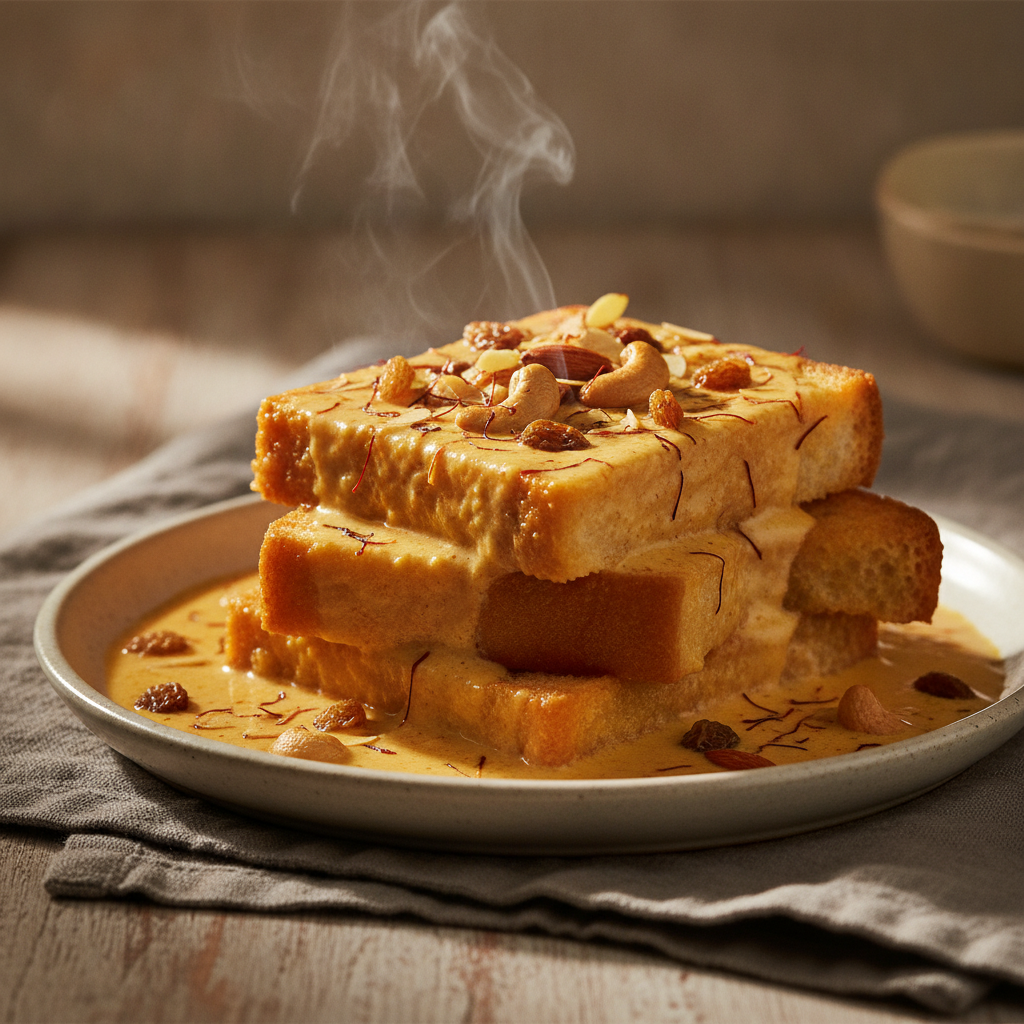
Double ka meetha is the jewel of Hyderabadi desserts — thick-sliced bread fried golden in ghee, dipped in sugar syrup, then blanketed in saffron-scented reduced milk and crowned with fried cashews, almonds, and plump raisins. The dish takes its name from double roti, the local term for leavened bread that rises to double its size; meetha simply means sweet. Born in the royal kitchens of the Nizams — the rulers of Hyderabad who shaped one of South Asia's most sophisticated culinary cultures — it is a close cousin of North India's shahi tukda but distinguished by a more generous hand with saffron and the distinctly Hyderabadi touch of kewra water. Today it is inseparable from Eid celebrations, Muslim weddings, and festive meals served alongside or after biryani.
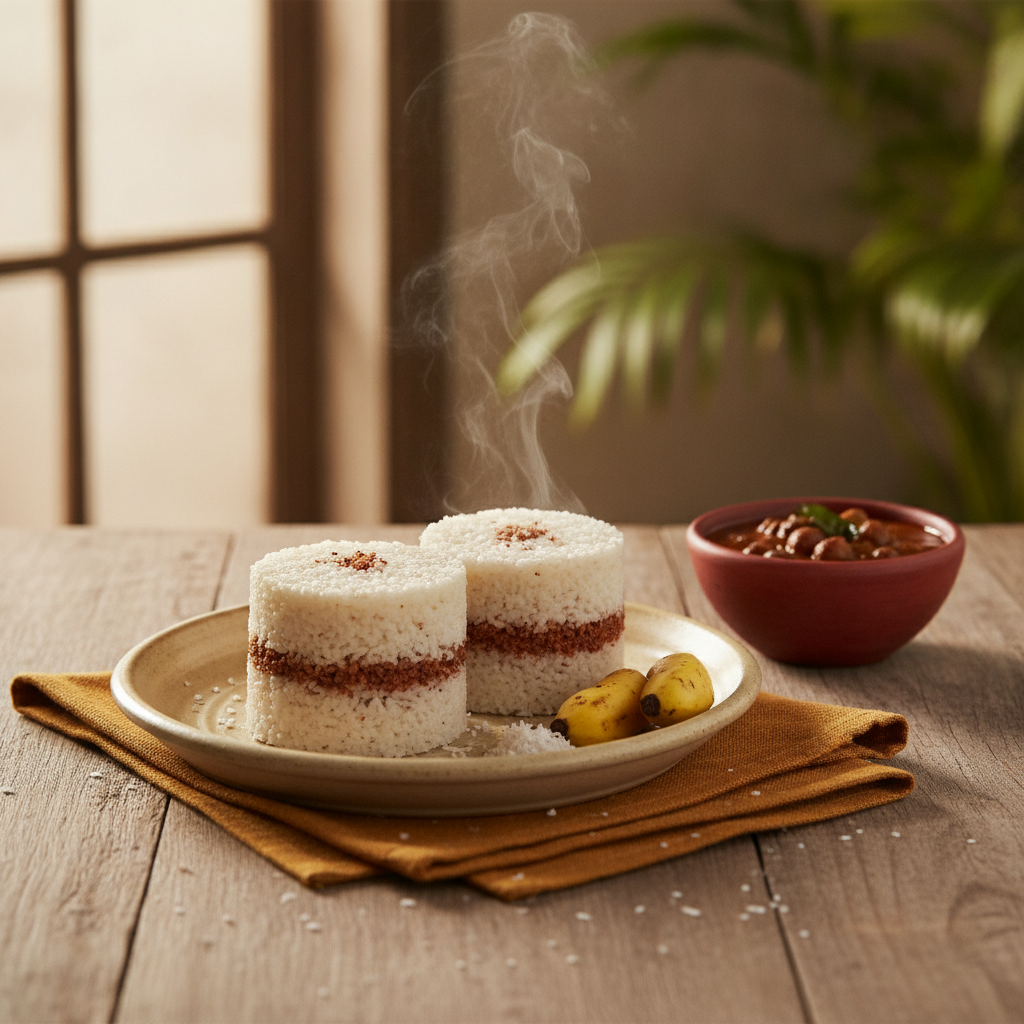
Puttu is Kerala's quintessential breakfast — alternating layers of coarse rice flour and fresh grated coconut, steamed in a cylindrical mold until set into a crumbly, fragrant cake. It is humble in its ingredients and specific in its texture: not soft, not doughy, but slightly grainy and dry, built to be eaten alongside kadala curry or ripe banana.
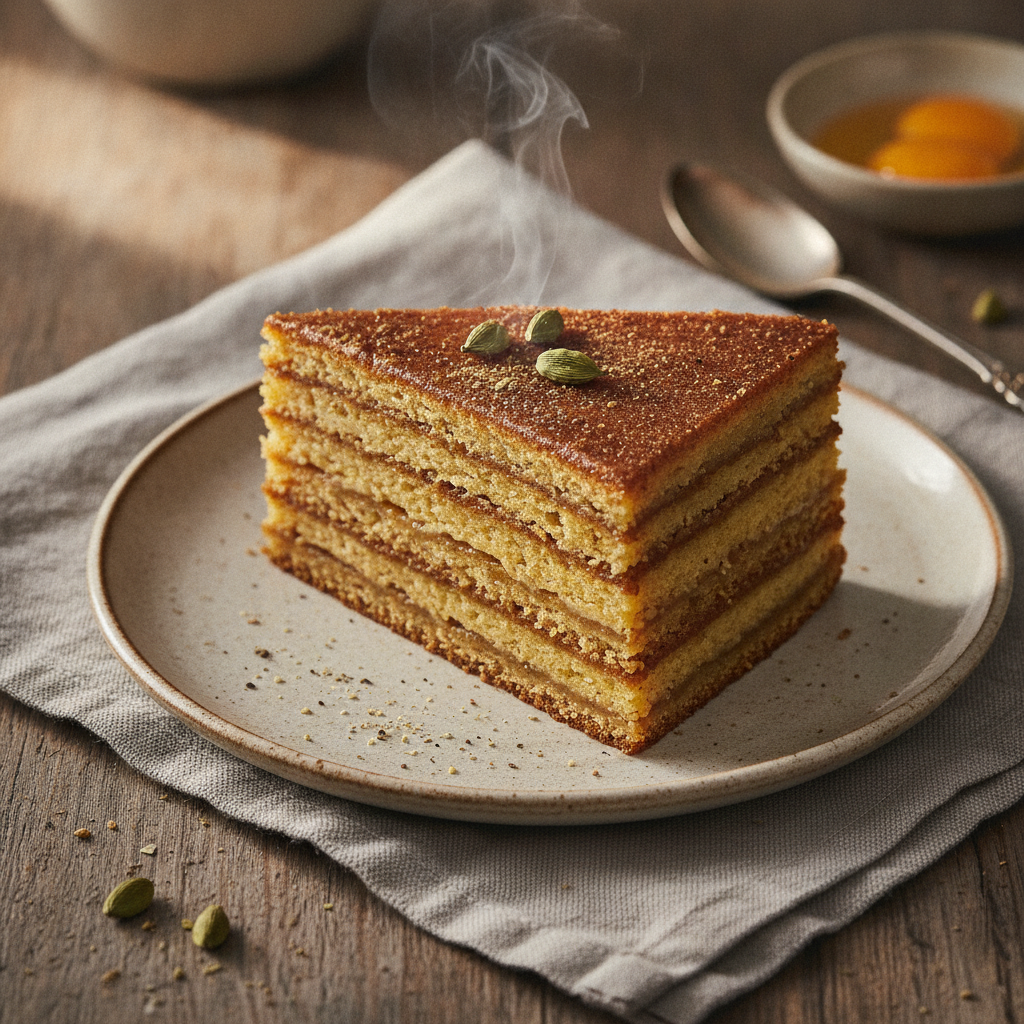
Bebinca is Goa's most beloved dessert — a tower of dark-edged, custardy layers built one at a time under the broiler, each separated by a brush of ghee. It is neither cake nor custard but something entirely its own: sliceable yet yielding, perfumed with nutmeg and cardamom, and deeply rooted in the story of Portuguese nuns in 18th-century Old Goa. According to culinary legend, bebinca was created by the nuns of the Convent of Santa Monica in Old Goa, who used surplus egg yolks left after egg whites were used to starch their habits — a tradition common to Portuguese convent sweets. The result is a distinctly Indo-Portuguese dessert: rich egg yolks meeting first-press coconut milk, warm spices from Goa's trade history, and a European layered-pastry technique. Traditional bebinca has exactly seven layers, representing the seven hills of Lisbon — though 7 to 16 layers is the accepted range, each additional layer adding height, richness, and another 8–10 minutes under the broiler. Two things you must know before you begin. First: yolks only. Whole eggs will not work; the high yolk ratio is what gives each layer its characteristic dense, custardy texture and golden colour. Second: broiler only. Each layer must brown from above before the next is poured. Without that browning step, the layers will not separate cleanly when sliced. Bebinca is best served at room temperature or slightly warm — never cold from the fridge, where the ghee solidifies and the texture becomes heavy.
10 / FAQ
No. A very hot oven (250°C) with a pizza stone, or a grill running screaming hot, gets you 80% there. The marinade does most of the work.